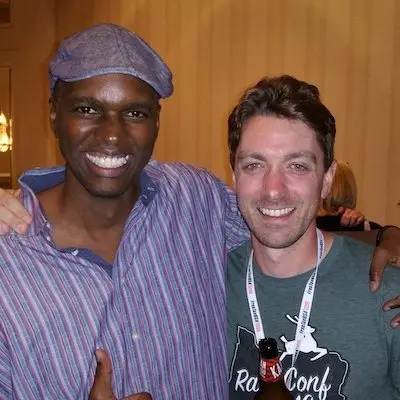





Marking a major personal milestone, the creator behind the popular Financial Independence Podcast has reflected on a full decade since leaving the traditional workforce. In a candid retrospective episode, the long-time financial independence advocate discussed the profound psychological shifts, unexpected lifestyle evolutions, and new challenges that have emerged during ten years of post-work life. While expressing deeper gratitude and financial security than ever before, the host also opened up about navigating uncharted territory, the disruptive shadow of artificial intelligence on the tech sector, and the transition from hyper-optimization to a focus on simplicity and the present moment.
Reflecting on the past ten years, the podcaster emphasized that the sense of gratitude for early retirement has not faded. Instead, appreciation has grown stronger, driven largely by the ability to spend entire days with his children, witness their milestones firsthand, and remain an active, daily presence in their upbringing. Beyond family life, financial peace of mind has offered a unique form of security, particularly regarding modern technological shifts. As a former software developer, the host noted that he previously assumed he could easily re-enter the workforce as a fallback option if needed. However, after spending recent months deeply exploring emerging developer tools like Claude Code, his perspective has shifted dramatically. Acknowledging that artificial intelligence is poised to fundamentally disrupt the software engineering job market, he expressed profound relief that he no longer relies on a developer salary to survive and invest.
This realization directly informs his updated perspective on wealth accumulation strategies, particularly the debate between lean FIRE—retiring on the bare minimum—and fat FIRE, which provides a more comfortable financial cushion. Reflecting on his own trajectory, the host is thankful that his portfolio organically expanded into fat FIRE territory over the years rather than remaining strictly bound to a lean lifestyle. For current workers, especially software developers and high earners in stable positions, he suggests looking beyond bare-bones targets. Given the rising uncertainty surrounding job security in the age of AI, building a larger safety margin offers critical protection against an unpredictable economic landscape.
A key theme of the retrospective was the psychological transition required to actually enjoy accumulated wealth. Outwardly, the podcaster’s day-to-day existence does not resemble traditional notions of extravagant luxury, such as purchasing yachts or flying private. Yet, internally, the shift has been monumental. Knowing that a robust investment portfolio safely covers an upper-middle-class lifestyle has eliminated daily financial anxiety. Decisions about routine purchases, such as premium morning coffee or full-course family dinners complete with appetizers and desserts, are made without consulting price tags because the underlying expenses do not threaten long-term financial stability.
Over time, experimentation revealed that money is rarely the ultimate limiting factor in lifestyle design. Instead, constraints are dictated by natural human boundaries, such as available time, personal energy, and family life stages. Traveling extensively or dining out frequently with young children comes with its own logistical hurdles and stress, meaning natural preferences often lean toward simpler pleasures, like visiting a local pub for a casual meal rather than seeking out fine dining establishments. These realizations mirror advice previously shared by financial expert Ramit Sethi, whose controversial guidance—such as questioning why one should spend less when they can spend more, and embracing waste to reduce cognitive fatigue—began to make complete sense only after years of lived experience.
De-programming a lifelong dedication to extreme efficiency has proven challenging, but embracing sunk costs and tolerating minor inefficiencies has yielded significant emotional dividends. Citing recent trips to Canada and Italy, the host shared how he and his family chose to return home early simply because their vacations had peaked after celebrating a fantastic weekend with visiting relatives. Rather than forcing themselves to endure an extra nine days of travel out of a sense of obligation to maximize a pre-booked itinerary, they opted to cut the trip short. The decision preserved the trip’s fondest memories, avoided travel fatigue, and ultimately saved money on lodging, proving that optimizing for happiness often supersedes optimizing for financial efficiency.
This philosophical shift extends directly to portfolio management and annual spending. Rejecting the negative connotations often associated with lifestyle creep, the podcaster argued that asset-driven lifestyle inflation is entirely sustainable. When a growing portfolio organically increases annual spending power in alignment with the standard four percent rule, gradual increases in consumption feel just as rewarding as corporate performance bonuses, but with the permanence of lifelong sustainability. This philosophy inspired the creation of his custom software project, Wealth Machines, designed to help individuals better utilize surplus wealth to enhance their current standard of living rather than endlessly hoarding capital for a distant future.
Simplicity has similarly replaced optimization as the guiding principle for financial administration. Discarding complex strategies like backdoor Roth contributions or speculative individual stock holdings in favor of broad, permanent fund allocations has eliminated unnecessary mental baggage. To further reduce risk now that the financial game has effectively been won, the portfolio has been adjusted to include a 10 percent allocation in 30-year Treasury Inflation-Protected Securities (TIPS). Offering near three percent real yields, these inflation-adjusted bonds provide a reliable spending floor designed to mature precisely when standard retirement age approaches and required minimum distributions from tax-deferred accounts begin.
Despite enjoying complete financial freedom, the host noted that current spending still falls well below portfolio limits, prompting an ongoing exploration of how best to utilize remaining resources to maximize quality of life. Entering what he anticipates will be peak spending years—marked by healthy parents, growing children, and a vibrant family life—the primary consideration involves potentially relocating to a new home base. The goal is to establish a permanent property in a walkable, beautiful community with excellent weather, offering ample space to host visiting friends and family while deeply integrating into a local neighborhood. By creating a physical and cultural hub with strong gravitational pull, the long-term vision aims to ensure that children and loved ones will naturally want to return even as they grow older.
Evaluating the ideal destination involves balancing various priorities, from proximity to existing social networks to access to outdoor recreational activities and superior community infrastructure. Ongoing experiments involving long-term rentals in prospective areas will guide the search over the coming years as family milestones approach.
Ultimately, reaching the ten-year mark of post-financial independence life has brought a unique psychological adjustment. Having successfully achieved the long-term milestones that once drove his career escape and early retirement, the podcaster finds himself in unfamiliar territory without a major horizon goal for the first time in his adult life. Rather than looking exclusively toward the future, the focus has shifted entirely to the present. By prioritizing daily enjoyment—such as playing tennis instead of enduring disliked forms of cardio—and collecting memory dividends with his family, he embraces a lifestyle centered on the present moment. Supported by sustainable wealth generation and a deeply content household, the next decade begins as an exciting exploration of the unknown.