



As the calendar turns to March 31, 2026, many individuals and businesses find themselves navigating a familiar convergence of financial milestones. For the author of this commentary, currently winding down a decades-long professional career with fewer than sixty days remaining until retirement, the final day of March marks both the close of the fiscal year and a moment to reflect on a career’s worth of financial habits.
Coinciding with the end of March is the observance of Holy Tuesday, sometimes colloquially referenced in certain traditions through historical or agricultural metaphors such as "Fig Tuesday." While the theological significance points to traditional narratives from Holy Week, the practical reality for most contemporary taxpayers involves less contemplation of fig trees and significantly more attention to deadlines, ledgers, and administrative chores. With March 31 serving as the fiscal year-end for numerous entities, the day acts as an annual financial punctuation mark.
Against this backdrop of year-end accounting, everyday challenges continue to intrude, most notably in the form of automotive maintenance and escalating vehicle reliability concerns.
Auto Fignations
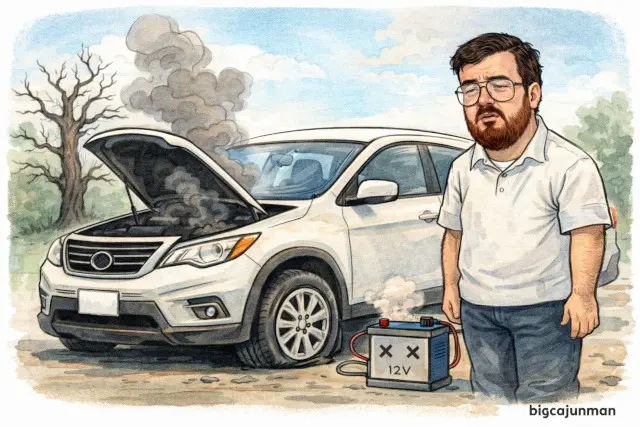
Vehicle ownership in a changing climate presents its own unique economic hurdles. Routine maintenance recently took center stage during a semi-annual service appointment for a 2024 Nissan Rogue in Ottawa. The visit involved an early attempt to swap out winter tires—a calculated gamble given the unpredictable spring weather patterns typical of the region. However, the service appointment quickly highlighted broader frustrations with modern vehicle reliability.
The experience brings to mind the ongoing conversation surrounding automotive quality and the frustrating phenomenon of vehicles that flirt dangerously with lemon status. Such mechanical headaches often prompt a broader reassessment of transportation choices. Like a growing number of Canadian motorists navigating fluctuating fuel costs and environmental considerations, the prospect of transitioning to an electric vehicle (EV) in the near future is becoming increasingly appealing. Alongside potential EV adoption, exploring residential solar panel installations is also entering the strategic planning phase for long-term energy management.
Vehicle reliability issues, much like unexpected tax liabilities, underscore the importance of maintaining financial buffers. As fiscal years close and household budgets are audited, the hidden costs of day-to-day infrastructure—from commuter vehicles to home energy systems—demand careful consideration.
Tax Time
The arrival of late March and early April brings the universal burden of tax preparation. For most taxpayers, the instruction remains straightforward: ensure all financial documentation, receipts, and records are properly organized well in advance of filing deadlines.
The process of collating records is rarely described as enjoyable. Assembling comprehensive medical expense claims, for instance, requires considerable time and meticulous record-keeping to ensure eligibility under current tax guidelines. Similarly, specialized dietary requirements, such as gathering receipts for gluten-free foods required for managing Celiac disease, represent an ongoing administrative task that demands consistent diligence throughout the year. While the administrative fatigue associated with tax season can lead some individuals to abandon certain expense tracking efforts, the financial impact of missed deductions remains a persistent factor in household financial health.
Beyond annual tax filings, long-term financial planning requires strategic decision-making regarding government benefits and retirement timing.
CPP at 65 for Me?
Decisions surrounding the timing of government pension benefits represent another critical component of long-term financial strategy. For workers approaching retirement age, the question of when to begin drawing the Canada Pension Plan (CPP) involves balancing immediate income needs against lifetime optimization.
Current plans involve delaying the collection of CPP past the standard age of 65, with a target horizon closer to age 70. This approach requires establishing a clear financial baseline to ensure sufficient support during the intervening years without relying prematurely on government pensions. While personal circumstances or unexpected health outcomes can always alter long-term calculations, the strategy reflects a conservative approach to maximizing future benefit payouts.
This deliberate approach to retirement security is built upon a foundation of four decades of continuous workforce participation. Throughout a working life spanning forty years, the individual has maintained employment without ever collecting Employment Insurance (EI), a streak that endured even through a challenging period involving a full year of being laid off earlier in the career timeline. As the final countdown to retirement ticks away, that resilience continues to inform a pragmatic and occasionally sarcastic perspective on personal finance.