



The landscape of personal finance software has long forced users to choose between sleek, modern design and deep, analytical power. Often, individuals pursuing Financial Independence, Retire Early (FIRE) have had to rely on clunky spreadsheets or rigid, generic retirement calculators that fail to capture the nuanced realities of early retirement. Addressing this gap, indie software developer Kyle has introduced ProjectionLab, a comprehensive financial planning application built specifically for those aiming to achieve financial independence on their own terms.
The tool has quickly garnered attention within the FIRE community, earning praise from prominent financial commentators, including the creator of The Mad Fientist, who highlighted it as the most visually appealing and functionally useful planning tool available for the movement.
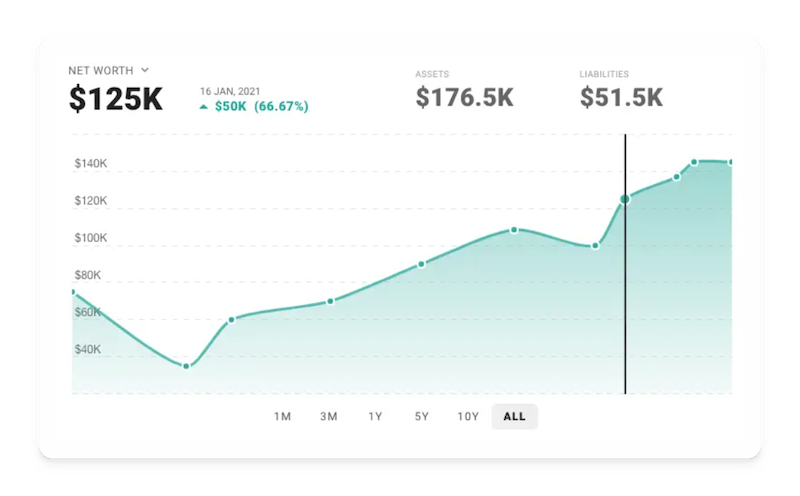
For Kyle, the journey toward building the application began nearly a decade ago. Graduating from college in 2015, he spent his early years in the workforce rarely thinking deeply about money, aside from adhering to basic rules of thumb like saving for retirement and keeping rent reasonable. Instead, most of his energy was focused on daydreaming about future travel and outdoor adventures. Yet, those daydreams were frequently accompanied by a lingering sense of dissatisfaction with the traditional career trajectory, prompting questions about whether decades of corporate meetings and bureaucracy truly constituted an ideal life.
That perspective shifted dramatically when he encountered the foundational voices of the modern financial independence movement, including Pete Adeney, J.L. Collins, and Vicki Robin. The core message resonated immediately, inspiring him to take active control of his financial future. Immersed in the various branches of the FIRE movement—ranging from leanFIRE and fatFIRE to coastFIRE and Barista FIRE—he sought a hands-on, visual way to map out long-term options, explore life trade-offs, and test different forecasting scenarios. Unable to find an existing tool that offered the desired level of fluidity, modern design, and analytical depth, he decided to build one himself.
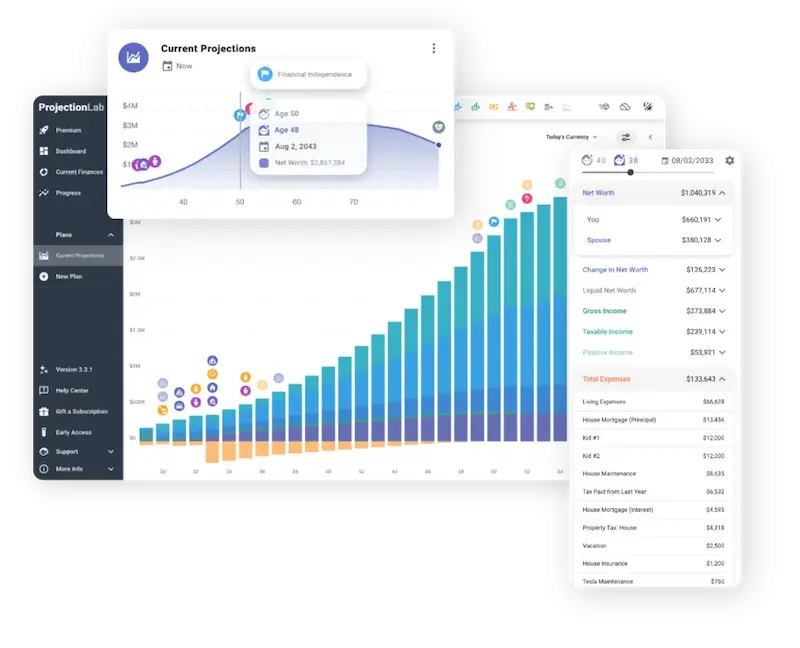
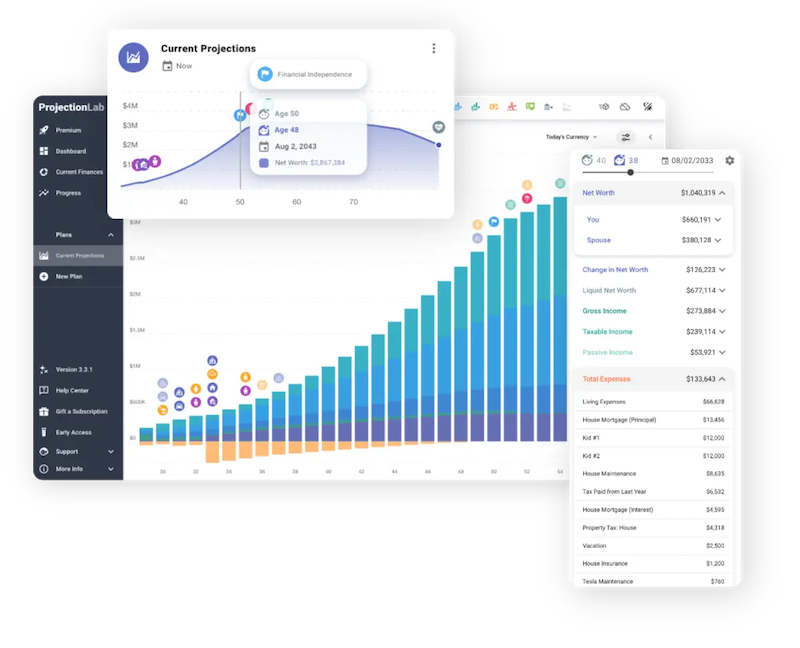
What followed was a personal project spanning thousands of hours of coding during nights and weekends. ProjectionLab emerged from this caffeine-fueled effort as an alternative to standard retirement calculators, offering users the ability to model complex life choices with granular precision. The platform enables individuals and couples to visualize long-term cash flow, run Monte Carlo simulations based on historical market data, review estimated tax burdens across different income types, and test advanced strategies such as Roth conversions and early withdrawal distributions under rule 72(t).
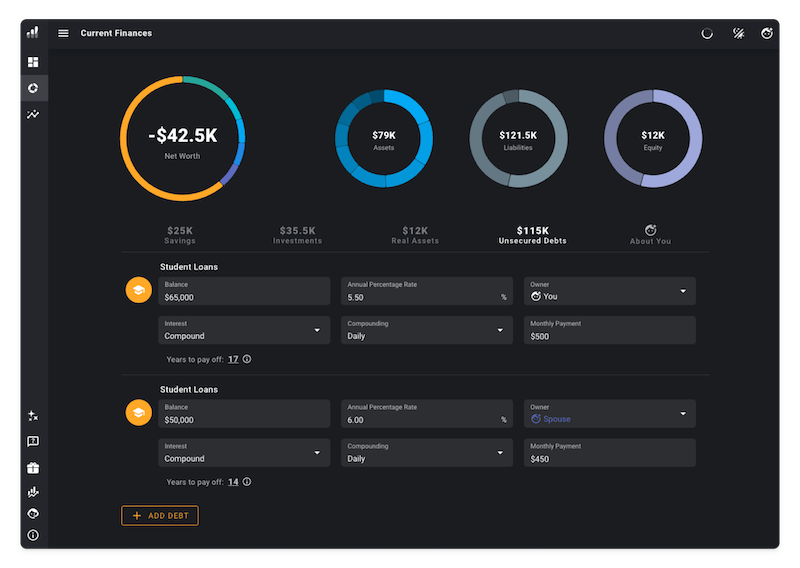
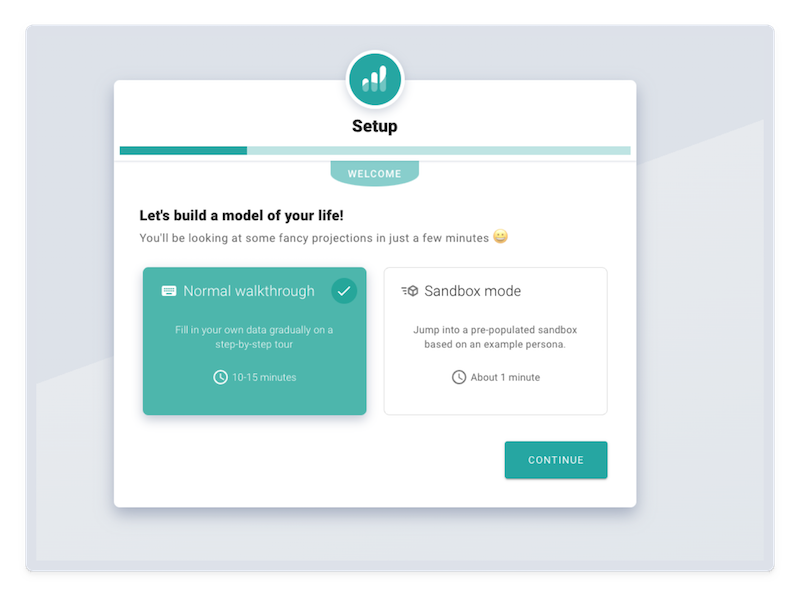
Designed with user privacy in mind, the platform provides a free sandbox mode that operates without requiring users to link external financial accounts or even create an account. It respects user data and avoids the common industry pitfalls of upselling proprietary advisory services. Instead, it functions as a flexible instrument designed to help users map out their financial futures, whether they are planning for traditional retirement, career changes, extended travel, home ownership, or international relocations.
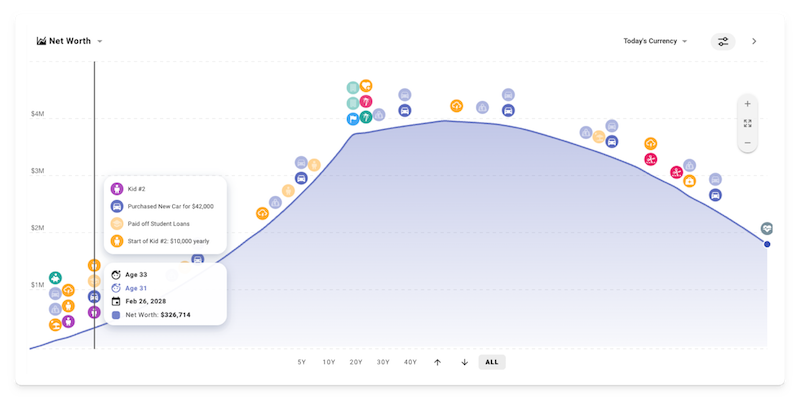
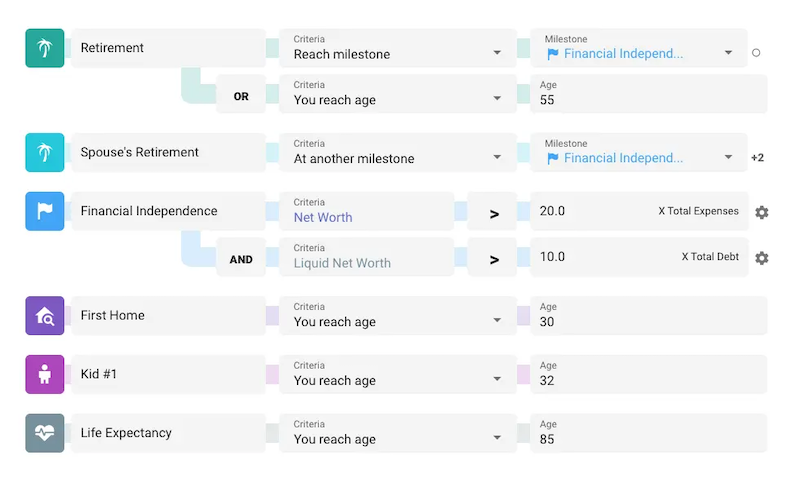
To demonstrate the capabilities of the software, the development of a baseline scenario illustrates how a young, early-career couple with student loans and rented housing can project their financial trajectory. By incorporating milestones—such as reaching a net worth equal to 25 times annual expenses—users can anchor future events like career transitions, family planning, and major asset purchases. Milestones act as dynamic variables within the software, meaning adjustments to future goals automatically propagate through connected income streams and expense projections.
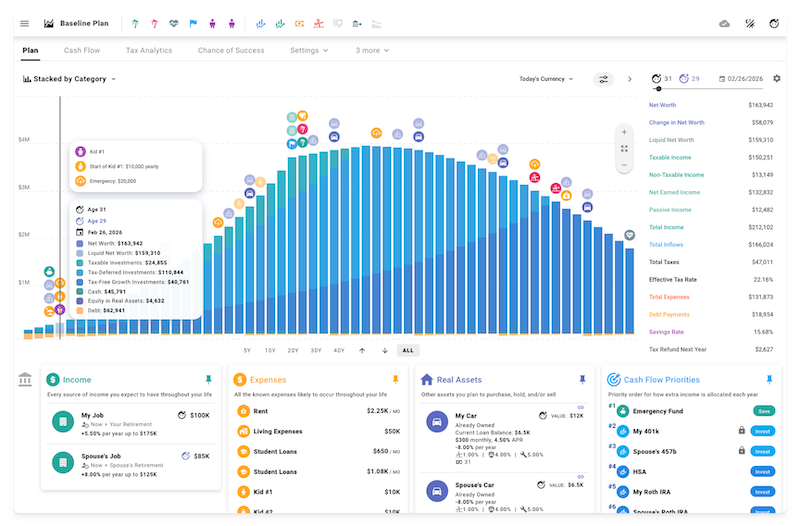
Cash flow dynamics within the platform are illustrated using Sankey diagrams, showing how earnings, employer matches, and tax withholdings flow into debt service, living expenses, and investment contributions. Furthermore, the built-in tax analytics module allows users to examine projected future income against effective tax brackets for various revenue streams, providing a clearer picture of long-term tax liabilities.

Moving beyond deterministic planning, which assumes steady rates of return, ProjectionLab incorporates Monte Carlo simulations to test plans against historical market volatility. By running trials using S&P 500 returns, dividend data, and U.S. inflation metrics, users can analyze the statistical probability of success for different life paths. For instance, comparing a baseline plan of full-time work until an older age against a more ambitious dream plan—which involves buying a home, transitioning to part-time work at age 40, and retiring fully at 45—reveals the distinct trade-offs between lifestyle choices and financial security. Through iterative modeling, users can test variables such as incremental salary increases or side business revenue to optimize their chances of success while designing a lifestyle they genuinely want to live.

Following its introduction to the broader community, the software has established a permanent presence within educational resources for the FIRE movement, offering users an accessible way to run complex projections as they monitor their progress toward financial independence.