


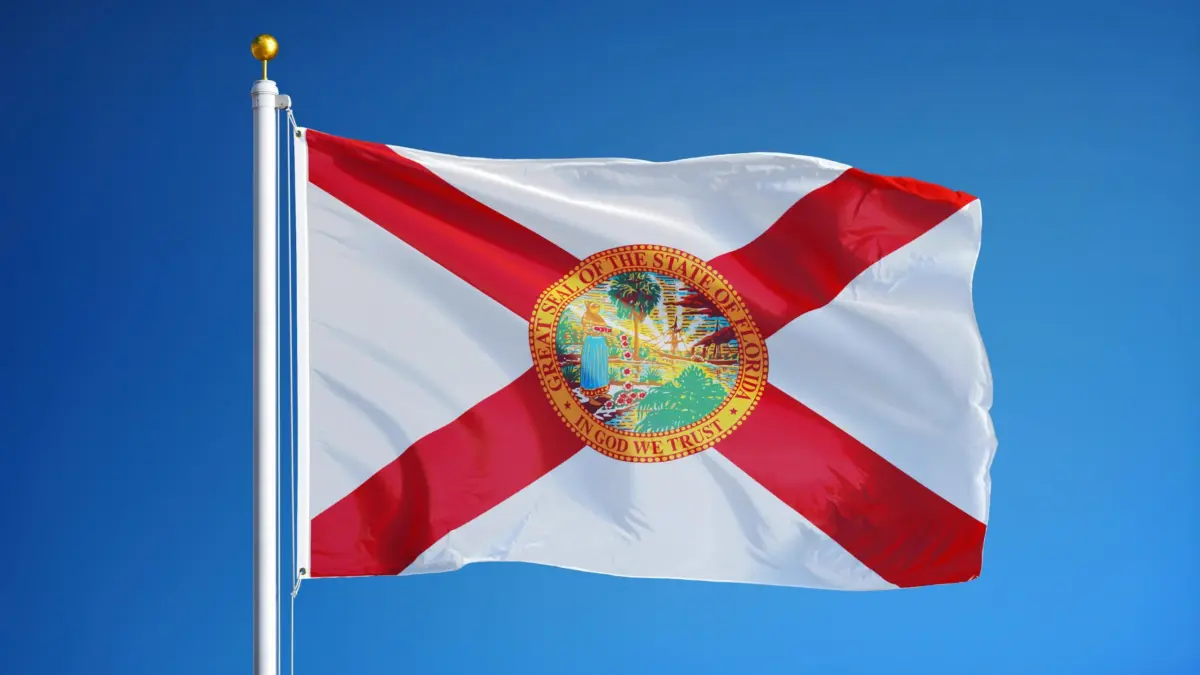
Florida has long maintained a reputation as one of the most economically competitive states in the nation, anchored by a pro-growth tax code that features no individual income tax, a modest corporate income tax, and relatively lower combined sales taxes than its southern neighbors. This fiscal structure has successfully attracted a steady wave of new residents, businesses, and retirees, while simultaneously funding the vital public infrastructure and services that maintain high community standards.
However, as voters prepare to head to the polls on November 3, 2026, to consider Amendment 3, fiscal analysts and policy experts are warning that the monumental constitutional amendment could upend the state’s local financing structure. While the ballot measure promises substantial property tax relief for primary homeowners struggling with skyrocketing housing costs, its profound structural changes could create severe fiscal and economic ripple effects across the entire state, impacting everyone from renters and small business owners to local government operations.
Florida’s Current Tax Code Is Consistently in the Top 5
For over two decades, Florida’s tax environment has consistently earned top-five rankings in national competitiveness indexes, reflecting a deliberate strategy to avoid economically harmful taxes. Economic research consistently demonstrates that individual income taxes heavily penalize work, savings, investment, and business formation. By eschewing a state personal income tax entirely and maintaining a competitive 5.5 percent corporate income tax rate, Florida has kept its tax climate welcoming. Furthermore, the state’s combined average state and local sales tax rate sits at a manageable 6.98 percent, comfortably below regional competitors like Alabama and Georgia.
This success is not merely a product of low tax burdens, but rather the result of a balanced revenue ecosystem. Florida’s local governments have historically relied on a stable, predictable property tax framework to fund critical community needs, including local infrastructure, public safety, emergency services, and public education. This delicate balance of attracting talent and commerce while generating dependable public revenue has underpinned the state’s economic vitality.
Amendment 3 Would Fundamentally Change Florida’s Property Tax System
Florida’s tremendous population growth and economic success have inevitably driven up housing demand, resulting in rapid property value appreciation. Although existing constitutional measures like the "Save Our Homes" (SOH) assessment limitation and the current homestead exemption offer some insulation, rising values have driven up tax bills—particularly for new and first-time homebuyers. Under current law, qualifying homestead owners receive a $25,000 exemption from all property taxes, alongside a second inflation-adjusted $25,000 exemption that applies to non-school levies.
Amendment 3 proposes a dramatic departure from this framework. If approved by at least 60 percent of voters, the amendment would preserve the $25,000 homestead exemption for school district taxes but significantly expand the exemption for all other property levies. It would raise the non-school homestead exemption to $150,000 beginning in 2027, and further elevate it to $250,000 by 2028, with subsequent annual adjustments for inflation starting in 2029.
To qualify, property owners must have established permanent Florida residency by December 31, 2026. Those establishing homesteads on or after January 1, 2027, would face a five-year waiting period, restricted to a smaller $50,000 exemption for non-school levies before eventually unlocking the full enhanced benefit. Furthermore, the amendment compels the state legislature to create a uniform procedure allowing counties and municipalities to further increase exemptions up to the complete exclusion of all homestead property value.
Concurrently, Amendment 3 would lower the annual assessment increase cap for non-homestead properties—such as commercial real estate, rental apartments, and second homes—from 10 percent down to 5 percent starting in 2027. While designed to curb tax pressures on non-homestead parcels, these changes collectively shrink the overall property tax base available to finance vital municipal services.
The Property Tax Is a Locally Accountable, Stable, and Economically Efficient Revenue Source
Understanding the risks of narrowing the property tax base requires examining why local governments depend heavily on this specific revenue stream. Rooted in the economic "benefit principle," the property tax aligns the taxes paid by homeowners with the local services—such as police, fire protection, and infrastructure—that directly enhance neighborhood quality and property values. This direct link fosters robust local accountability.
Unlike income and sales taxes, which fluctuate wildly during economic downturns due to shifts in consumer spending, employment, and corporate earnings, real estate is immobile. Land and physical structures cannot easily be relocated or laid off during a recession. This structural immobility and the diverse composition of property tax rolls—spanning residential, commercial, industrial, and agricultural assets—make the property tax remarkably stable. This predictability ensures that local governments can maintain essential safety and emergency services even during periods of broader economic uncertainty.
Homestead Property Is a Substantial Portion of Florida’s Property Tax Base
Property taxes serve as the bedrock of local finance in Florida, accounting for roughly 41.5 percent of total own-source local revenues and 75.8 percent of all local tax collections in fiscal year 2024. Homestead properties represent a massive slice of this foundation, accounting for roughly 46.7 percent of all parcels and over 36 percent of total taxable real property value statewide.
State estimates project that the initial implementation of Amendment 3’s $150,000 exemption would strip $4.9 billion from local government revenues in its first year, jumping to $8.7 billion under the $250,000 threshold, and reaching an estimated annual impact of $11.8 billion by tax year 2031. Because the amendment also permits future legislative expansions up to total exemption, the long-term fiscal erosion remains heavily understated. Proponents cannot rely on recent years’ robust property value growth to absorb these losses, as those same valuation gains are precisely what make exempting homesteads increasingly expensive over time.
Amendment 3 Would Shift Who Pays
Because a sharp contraction in the tax base does not eliminate the underlying costs of running local governments, Amendment 3 would force a massive financial reallocation. Rather than reducing government spending, the tax burden would inevitably shift toward non-homestead property owners, including local businesses, commercial landlords, second homeowners, and recent buyers.
For the state’s business community, the impacts could be severe. Businesses are subject to local millage rates not only on real estate but also on business tangible personal property (TPP). Higher effective tax rates resulting from shifted tax burdens would increase operational overhead, potentially discouraging capital investment, employment recruitment, and consumer price stability.
Roughly one-third of Florida residents are renters, living in communities where occupancy rates range widely from under 15 percent to nearly 48 percent in counties like Miami-Dade. Because renters do not directly receive homestead exemptions, landlords facing surging property tax liabilities frequently pass those costs through to tenants. Economic research consistently shows that landlords pass a significant share of increased property tax burdens directly into monthly rents. Consequently, single-family and apartment renters statewide could face sharp rental price increases, exacerbating ongoing housing affordability challenges and straining income-restricted housing developments.
Similarly, second homeowners—who inject substantial capital into local economies through retail and service spending while placing minimal demands on public school systems—would face heavier tax loads. This sudden shift could diminish Florida’s attractiveness compared to competing retirement and vacation destinations. Furthermore, newly arrived residents and first-time homebuyers would face years of steep tax discrimination, paying significantly higher property taxes than their established neighbors simply due to the timing of their home purchase.
Many Local Governments Could Raise Property Tax Rates
While Florida law features a rollback mechanism designed to prevent local governments from capturing windfalls from rising property values without formal public hearings, Amendment 3 would disrupt this process. As exemptions hollow out existing property tax revenue collections, local governing boards would face immediate pressure to adjust millage rates upward to maintain baseline operations.
Local governments are constitutionally limited to a 10-mill cap for general operating expenses, but actual operating rates vary widely across the state. Rural counties in North Florida and the Panhandle often maintain higher millage rates, while affluent coastal jurisdictions feature much lower rates. Jurisdictions operating well below the 10-mill ceiling possess significant latitude to hike tax rates to offset revenue losses, potentially exporting higher tax burdens across their remaining tax base. Conversely, municipalities already operating near their statutory limits would find themselves forced to choose between severe service cuts or seeking alternative, highly restricted revenue streams.
Where Would the Money for Public Services Come From?
Local governments forced to bridge multibillion-dollar funding gaps would have to evaluate alternative revenue sources. While Florida authorizes several non-property taxes—such as the Discretionary Sales Surtax (DSS), local business taxes, municipal public service taxes on utilities, and local option tourist taxes—most are heavily restricted by statutory caps, narrow definitions, and mandated spending categories. For instance, sales surtaxes are typically restricted strictly to capital infrastructure projects rather than general day-to-day operations like public safety and police protection.
When existing local taxes and fees hit their statutory limits, local governing boards would likely have no choice but to scale back public investments, defer crucial infrastructure maintenance, or curtail public safety services. Ultimately, the fiscal squeeze would affect all Floridians, translating higher costs into everything from utility bills and business overhead to deteriorated public services.
The Consequences of Constitutional Tax Policy
Enshrining major tax policy directly into the state constitution creates long-term rigidity. While ordinary legislation can be easily debated, enacted, or amended during standard legislative sessions to adapt to shifting economic realities, constitutional amendments require arduous statewide campaigns and supermajority voter approval to alter. Florida has already embedded several restrictive property tax policies into its foundational charter, reducing the flexibility of lawmakers and local officials during economic downturns or unexpected fiscal emergencies.
Because rewriting constitutional mandates is exceptionally difficult, voters must carefully weigh the irreversible structural trade-offs of Amendment 3. Recent ballot rejections in other states—such as Missouri’s overwhelming defeat of an income tax overhaul due to uncertainty over revenue replacements—demonstrate that voters approach sweeping tax restructuring with heightened caution when clear funding solutions are absent.
Conclusion
Amendment 3 is far more than a simple tax cut; it represents a fundamental financial restructuring of local government operations in Florida. While primary homeowners would experience immediate relief, those financial benefits come with massive downstream trade-offs. The collective cost of municipal services would not disappear; instead, the burden would be aggressively shifted onto renters, business owners, new homebuyers, and commercial enterprises via higher taxes, increased rent, and elevated fees.
By eroding the stability of Florida’s local tax base and forcing reliance on volatile alternatives, the amendment threatens to undermine the fiscal predictability that has long anchored the state’s economic competitiveness and appeal.