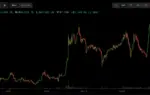




Gold prices are taking a heavy punch once again as global bond yields surge sharply higher. Yet, for veteran observers of the precious metals market, this latest downturn is not necessarily a cause for alarm. Instead, it may be unfolding as precisely the kind of market correction that savvy participants have been anticipating.
To understand why, one must look beyond the immediate knee-jerk reaction that higher yields are inherently bearish for gold. The dynamics driving the precious metals market have evolved significantly over the past couple of years, and the underlying message sent by the current macroeconomic environment remains profoundly bullish.
For roughly the first 18 months of the current bull market, central bank buying served as the dominant and defining force. Sovereign buyers steadily accumulated physical gold with little regard for short-term price fluctuations. This institutional accumulation helped propel the metal higher in a steady, unbroken ascent, largely bypassing the kind of meaningful, volatile corrections that market participants would normally expect from a major commodity trend.
That initial phase has now concluded.
That is not to suggest that central bank buying has stopped or even slowed to an insignificant trickle. Sovereign accumulation remains an important and robust underlying source of structural demand. However, over the past year, Western investors have returned to the market in a powerful way. Alongside individual Western buyers have come institutional players, including hedge funds, active futures traders, momentum-driven funds, and an increasingly prominent layer of algorithmic trading programs.
The inevitable result of this broader participation has been a structural shift in market behavior characterized by heightened volatility. The market now sees stronger, more aggressive rallies followed by deeper corrections and significantly bigger swings in sentiment in both directions.
This environment inevitably creates victims among reactive traders who buy at the peak of euphoria and panic-sell during routine drawdowns. Yet, for those who understand how to navigate and utilize these mechanics, it creates distinct victors.
Buy the Dips, Skim the Froth
The current market environment brings to the forefront a timeless lesson in investing that becomes especially crucial during powerful secular bull markets. Once a long-term trend has been firmly established, market participants must actively resist the psychological temptation to turn bearish during every routine correction. Equally, they must fight the impulse to become overly euphoric during every aggressive rally.
At its core, navigating a secular trend boils down to a simple discipline: buyers accumulate during the dips, and when the market overheats and conditions turn frothy, capital is skimmed off the top to lock in gains.
While the concept is straightforward to state in theory, it is infinitely harder to execute in practice. This difficulty is magnified when prices are moving at a rapid pace and daily financial headlines seem to validate whatever short-term direction the market happens to be taking at that exact moment.
This dynamic brings the conversation directly to the current market crossroads. Gold recently emerged from its first genuine, meaningful correction in early August. Western trading participation played a major role in driving that correction downward, just as those same Western traders later fueled the powerful, rapid rally that lifted prices away from those summer lows.
Now, those exact same market forces are pushing gold prices lower once again as sovereign bond yields go vertical across major global markets.
The immediate, reflexive explanation offered by mainstream financial commentary is simple and familiar: higher yields are bad for gold because the metal offers no yield and must compete with rising risk-free returns. However, there is a fundamental flaw in applying that simplistic narrative to the current environment.
Earlier in the cycle, gold was actually rising right alongside those very same climbing bond yields.
The natural question is why that decoupling and recoupling occurred. The answer lies in the fact that both markets were responding to the exact same underlying macroeconomic fear. Specifically, both sovereign bonds and gold were reacting to growing, palpable concerns over enormous and expanding sovereign debt loads, persistent inflationary pressures, and the accelerating depreciation of fiat currencies globally.
This shared foundation is precisely why analysts and investors must look past short-term price action and noise to evaluate the broader macro picture.
Two Essential Lessons for the Metals Market
Evaluating the current weakness in precious metals requires keeping two critical lessons in mind as the broader cycle unfolds.
The first essential takeaway is that the long-term, foundational drivers for gold remain firmly intact and structurally sound. In fact, the recent surge in sovereign bond yields around the world suggests that several of these core drivers are actually intensifying at this very moment. A clear parallel can be seen in emerging political and fiscal crises, such as the mounting debt concerns in France, which serve as a pure analog to fiscal pressures unfolding in economies around the world, including the United States.
Financial markets are beginning to wrestle much more seriously with the inescapable consequences of sovereign debt loads that cannot realistically be paid down in sound, uninflated currencies. Ultimately, these staggering debts will have to be managed, mitigated, and resolved through ongoing currency depreciation.
While the precise timing of these monetary shifts remains difficult to predict, the overarching direction is clear. This reality underpins a secular bull market in gold that shows no signs of ending anytime soon.
This leads directly to the second critical lesson: if this is indeed a secular bull market, participants must learn to utilize market volatility rather than fear it.
No investor or trader is going to successfully pick the precise bottom of every market correction. Attempting to do so is a fool’s errand, and no one should exhaust their resources trying to achieve perfection. What market participants can do, however, is recognize when a powerful, overarching secular trend is offering a rare opportunity to acquire quality assets at significantly lower prices.
In practical terms, this means taking profits off the table when speculation becomes excessive, cleaning up portfolio holdings during routine corrections, and systematically rotating away from equities or assets that fail to demonstrate relative strength.
At the same time, it means using market weakness to accumulate quality positions in companies and assets that continue to show resilience. Viewed through this strategic lens, corrections are not an uncomfortable trial to be passively endured, but rather an opportunity to be actively exploited.