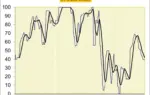





The precious metals sector is confronting a challenging phase as a prominent proprietary technical cycle indicator has officially shifted to a downward trajectory. Widely followed by traders and market participants who rely on disciplined timing frameworks, this cycle indicator serves as a foundational metric for assessing market momentum. While market analysts acknowledge that no technical tool is entirely infallible—pointing to periodic market volatility that can occasionally trigger short-term whipsaws—the overall consensus provided by the model points to a clear and cautious directional bias for speculators navigating the current macroeconomic environment.

In light of the shifting technical landscape, strategic positioning recommendations for market participants have crystallized around risk mitigation. Investors are currently advised to maintain a defensive posture by holding cash or implementing hedging strategies to protect capital against potential further downside. Meanwhile, active traders are reminded to adhere to the core principles of the cycle-based trading model: entering positions strictly at established cycle bottoms and exiting promptly at cycle tops to capture short-term profits, rather than attempting to fight the prevailing macro trend.

The broader technical weakness is reflected uniformly across major gold-backed exchange-traded products and mining equities. Prominent investment vehicles, including GLD, which tracks the price of physical gold, are currently flashing short-term sell signals. This sentiment is mirrored across the mining sector. Major equity indices such as GDX, representing global gold miners, XGD.to, tracking Canadian gold equities, and GDXJ, focusing on junior gold miners, have all triggered short-term sell signals, indicating widespread liquidation and lack of immediate buying support across the entire precious metals complex.

Detailed technical analysis of the current market structure underscores a broader expectation of lower gold prices overall in the near term. The primary trend for gold has officially transitioned into a downward slope. This bearish momentum is not confined to the metal itself; gold mining stocks are exhibiting a parallel downward trend, reflecting diminished appetite for mining equities among institutional and retail participants alike.

In contrast, the broader currency landscape presents a starkly divergent picture. The US Dollar (USD) is currently maintaining a firm upward trend, acting as a persistent macroeconomic headwind for dollar-denominated commodities like gold. Furthermore, key intermarket ratios closely monitored by technical analysts have generated firm sell signals, aligning with the broader narrative of dollar strength and precious metals weakness.

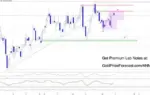
A closer inspection of price charts reveals that gold has recently broken down from a multi-week consolidation range. This breakdown leaves the precious metal poised to test significant major support levels in the sessions ahead. For gold mining stocks, the technical outlook highlights a critical threshold; prices must stabilize and hold their current levels to preserve the structural integrity of a potential inverted head and shoulders pattern, which could otherwise be invalidated by sustained selling pressure.

The overarching summary of the current market environment is unambiguous. The gold sector cycle is definitively pointing downward, underpinned by a rising US Dollar and concurrent downtrends in both physical gold and gold equities. Market participants are advised to exercise patience, resisting the temptation to force trades while waiting for the cycle to reach a definitive bottom.

Market commentators emphasize that the underlying methodology does not rely on subjective predictions or long-term macroeconomic forecasts. Instead, the approach utilizes a systematic trading model designed to generate objective signals and setups, dictating whether to maintain a long, short, or cash position at any given time. Because real-time entry points and stop-loss levels are continuously distributed to subscribers, retrospective market updates may not always fully capture instantaneous tactical adjustments made during active trading sessions. Consequently, market participants are reminded to execute all trades at their own discretion and in alignment with their individual risk tolerance parameters.