


By Professional News Desk
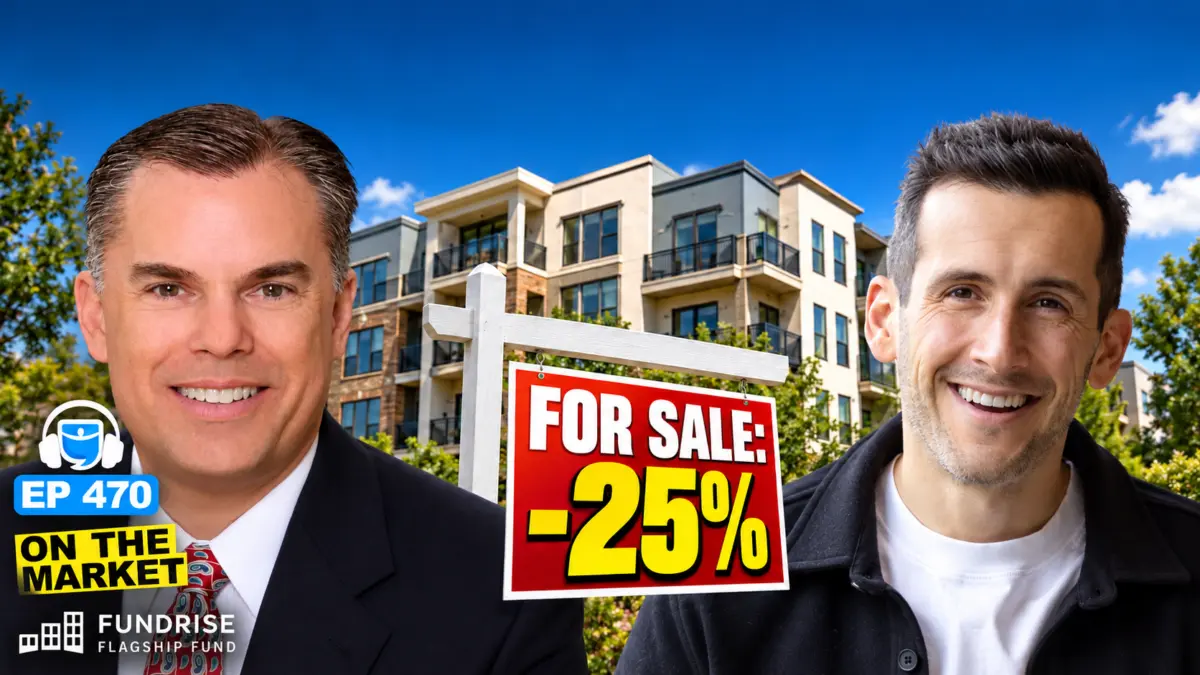
The commercial real estate sector is facing a profound and extended market correction, with multifamily real estate emerging as a primary focal point for potential distress. According to recent market analysis and discussions on the On the Market podcast hosted by Dave Meyer, commercial real estate values have already experienced widespread downward pressure, falling by at least 20 percent overall and up to 50 percent in specific office sectors. While residential real estate, equities, and commodities remain elevated, commercial property classes are undergoing a fundamental valuation reset that market veterans compare to historical economic turning points.
During a detailed discussion featuring real estate investor and multifamily expert Brian Burke, Meyer noted that the current environment shares structural parallels with the residential housing crash of 2007 and 2008. While widespread distress is never an outcome to root for, market participants are increasingly acknowledging that the multifamily sector faces significant headwinds that will likely take years to fully resolve. What began as isolated financial pressure is now rippling across the broader market, resembling a slow-moving economic correction that is finally coming to a head.
The Anatomy of a Four-Way Market Collision
The challenges currently confronting the multifamily sector are not the result of a single economic shock, but rather a convergence of pressures that Burke previously described as a traffic collision at a four-way intersection. During the economic expansion leading up to the pandemic, multiple market indicators—including cap rates, interest rates, rent growth, and occupancy levels—trended favorably in unison. However, those conditions have reversed course, creating severe friction across the industry.
A primary catalyst for the current distress involves the rapid escalation of borrowing costs. While initial market disruptions were triggered by the Federal Reserve raising overnight borrowing rates—which directly impacted short-term floating-rate debt tied to indices like the secured overnight financing rate (SOFR)—the pressure has since expanded to long-term debt instruments. The 10-year Treasury bond yield, which dictates long-term multifamily debt rates, has climbed significantly due to broader macroeconomic pressures, inflation, and shifting capital demands.
This environment has trapped many property owners who anticipated refinancing short-term, higher-rate debt into more stable, long-term products. With long-term debt remaining expensive, property owners find themselves unable to solve their short-term liabilities through traditional refinancing. Consequently, a necessary process of cap rate decompression is underway. Properties purchased at four and five percent cap rates can no longer pencil out in an economic environment where baseline Treasury yields and borrowing costs are substantially higher.
Furthermore, these financial pressures have collided with shifting demographic and supply fundamentals. The primary demographic cohort for apartment rentals—individuals aged 18 to 30—is facing a shrinking population pipeline as birth rates have declined consistently over the past 18 years. Concurrently, historic multi-family construction booms in high-growth markets such as Austin, Texas, and Denver have created significant supply imbalances. Even as new supply flooded the market, population growth slowed to historical lows, leaving many regional markets oversupplied and forcing property owners to rely heavily on rental concessions and negative lease trade-outs to maintain occupancy.
Navigating a Multi-Year Correction and Long-Term Opportunity
Despite the considerable turbulence, industry veterans suggest that the unfolding correction will ultimately establish a once-in-a-generation buying opportunity for disciplined investors. However, market participants are cautioned against attempting to time the exact bottom of the trough too early. Historical data indicates that commercial real estate downturns often involve extended flat periods rather than sharp, immediate rebounds. For instance, following the double-digit price declines of the early 1990s, property values remained largely flat for roughly five years before beginning a sustained recovery.
Rather than rushing to acquire distressed assets at the earliest sign of a downturn, experienced investors recommend waiting for clear empirical evidence that the market has stabilized. Key indicators to monitor include stabilizing rental concessions, positive lease trade-outs where incoming tenants pay higher rents than departing occupants, and declining vacancy rates. Because the current correction is expected to play out over several years, investors do not need to absorb excessive risk by jumping into the market prematurely.
For those positioning themselves to capitalize on upcoming distress, success relies heavily on established industry relationships, robust capital access, and thorough preparation. Finding deeply discounted properties typically requires working directly with local property management companies, commercial brokers, and lenders who manage assets transitioning into receivership or facing imminent restructuring. Furthermore, buyers must demonstrate absolute certainty of execution to lenders and asset managers eager to offload distressed properties quickly. This requires pre-arranging capital commitments, building a clear investment thesis, and utilizing appropriate debt structures tailored to asset stabilization rather than speculative growth.
As the market continues to work through its current structural imbalances, disciplined investors who focus on cash flow fundamentals, positive leverage, and rigorous underwriting are expected to find compelling opportunities within the multifamily space once the broader correction runs its course.