



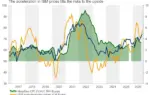

As prospective homebuyers, real estate investors, and industry analysts continue to monitor the pulse of the American housing market, a persistent narrative often dominates financial discussions: the burden of elevated borrowing costs. For years, headlines have been saturated with warnings about how borrowing expenses have soared to restrictive levels, pricing countless buyers out of the market and locking homeowners into a state of mortgage imprisonment. Yet, when taking a broader, historical perspective, a different reality begins to emerge. Perhaps, much like economic cycles of the past, these current mortgage rates are a temporary phenomenon that will eventually pass, or perhaps they represent a return to a long-term baseline that previous generations accepted as standard.
To fully understand the current psychological barrier facing buyers, it is helpful to look backward. For more than a decade following the global financial crisis of 2008, the housing market operated in an artificially suppressed interest rate environment. Central banks across the globe slashed rates to historic lows to stimulate economic recovery, eventually bringing benchmark borrowing costs down to near-zero levels. During the height of the COVID-19 pandemic, this trend reached its zenith, with standard 30-year fixed mortgage rates dipping below three percent. Millions of Americans took advantage of this once-in-a-lifetime window to purchase homes or refinance existing debt, locking in historically cheap capital that fundamentally altered consumer expectations.
When the macroeconomic tides shifted—driven by a surge in post-pandemic consumer demand, supply chain disruptions, and aggressive monetary policy tightening by the Federal Reserve to combat rampant inflation—borrowing costs rose sharply. For those accustomed to sub-four percent financing, the sudden leap to the six and seven percent range felt like an insurmountable shock. However, financial historians and market veterans are quick to point out that what the market has experienced over the past four years is actually a return to a historically normal range. Over the longer arc of the past several decades, a 30-year fixed mortgage rate hovering between six and eight percent was not considered an emergency or an anomaly; it was simply the cost of doing business in a functioning, growing economy.
The real friction point in today’s housing economy is not necessarily the cost of borrowing money, but rather the compounding pressures of inflation and historic home price appreciation. While interest rates have normalized to pre-crisis averages, the underlying valuation of residential real estate has not retreated in tandem. Throughout the pandemic boom years, home prices skyrocketed due to a severe structural shortage of housing inventory combined with a massive demographic wave of millennials reaching peak homebuying age. Even as borrowing costs climbed, home prices remained stubbornly high, sustained by the very same lack of inventory. Homeowners who locked in ultra-low mortgage rates in 2020 and 2021 have little financial incentive to sell their properties today, knowing that doing so would mean trading a three percent mortgage for a seven percent mortgage while purchasing a similarly priced or more expensive home. This dynamic, often referred to in real estate circles as the lock-in effect, has kept inventory remarkably tight, preventing the natural price corrections that typically accompany a higher interest rate environment.

Consequently, the burden carried by today’s buyers is twofold: they are contending with elevated home price valuations that reflect years of intense appreciation, and they are doing so while facing a cost of capital that requires a significantly higher monthly payment than it did a half-decade ago. Inflation has further eroded household purchasing power, driving up the cost of everyday goods, insurance, and property taxes, leaving less discretionary income available to service housing debt. When consumers look at the market, they frequently misdirect their frustration entirely toward mortgage rates, viewing them as the primary villain, when in reality, the convergence of inflated home prices and persistent macroeconomic inflation is doing the heavy lifting to strain affordability.
This delicate balancing act within the housing sector was thrown into sharper relief as real estate metrics continued to fluctuate. Market indicators recently revealed that pending sales of existing homes in September plunged, highlighting the ongoing volatility and hesitation gripping prospective buyers. Pending home sales data, which measures signed contracts on existing single-family homes, condominiums, and co-ops, serves as a reliable forward-looking indicator for the housing market, typically translating into closed sales one to two months down the line. A sudden drop in this metric signals that buyers are frequently stepping back, pausing their searches, or finding themselves priced out as affordability constraints reach a boiling point.
The September decline underscores the profound sensitivity of today’s buyers to even minor fluctuations in borrowing costs and home prices. Every time rates tick upward, a fresh wave of potential purchasers is pushed to the sidelines, waiting for a more favorable entry point that may or may not materialize in the near term. Sellers, meanwhile, are increasingly forced to adjust their expectations, occasionally resorting to price reductions or offering concessions to entice hesitant buyers in a market that no longer moves with the blistering speed of the pandemic era.
As the industry navigates this transitional phase, market participants are left weighing the permanence of these conditions against the historical cyclicality of real estate. While the past four years have established a new baseline of mortgage rates that feels jarring to recent market entrants, the broader economic ecosystem continues to adapt. Whether future monetary policy shifts will provide relief to buyers or whether the market will simply consolidate around these current levels remains the central question for economists and industry professionals alike. For now, buyers and sellers must navigate a landscape where historical norms have returned, but the fundamental structure of home prices and inventory continues to define the realities of the modern real estate market.