



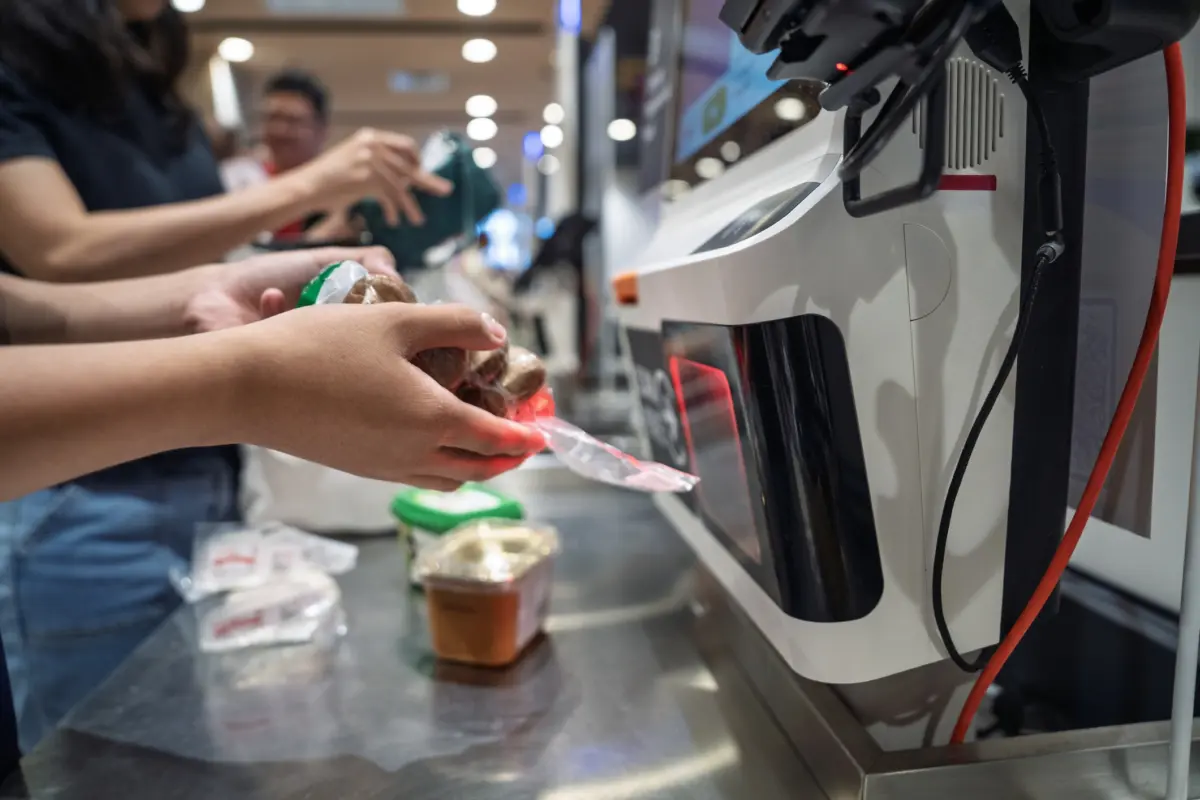
If you have ever stood at a self-checkout kiosk in the fluorescent glare of a local supermarket, meticulously scanning your own groceries while listening to an automated voice bark warnings about unexpected items in the bagging area, you have likely wondered why you are suddenly performing unpaid labor for a major corporation. As it turns out, you are far from alone in that frustration. More importantly, after years of pushing automated lanes as the future of retail efficiency, store executives are beginning to feel the exact same way.
The honeymoon phase between big-box retailers and autonomous checkout technology appears to be officially over. According to data from the 2026 Voice of the Retail Industry Survey, only 36% of the 340 retail executives surveyed plan to invest in self-checkout systems moving forward. That figure represents a notable seven-point drop compared to the previous year, highlighting a rapid cooling of enthusiasm across the sector. Within the broader landscape of retail technology investments evaluated in the survey, self-checkout emerged as the least popular option and the single category actively losing momentum, signaling a profound strategic shift in how stores intend to manage customer traffic and store operations.
This widespread cooling off represents a dramatic reversal from the narrative that has dominated the retail industry for decades. When self-service kiosks first began proliferating across grocery chains, drugstores, and mass-market retailers, the pitch to corporate boards was simple and intoxicatingly lucrative: promise massive labor savings, reduced overhead, and faster throughput for consumers eager to bypass traditional human cashiers. For years, executives chased these theoretical efficiencies, replacing human-staffed registers with rows of glowing screens and digital scanners, assuming that shoppers would happily trade social interaction for speed and convenience.
Yet, a closer look at the operational reality reveals that self-checkout was built on a foundation of faulty assumptions. The fundamental premise that machines inherently speed up the checkout process has long been a fallacy. Decades ago, during the nascent stages of automated retail experiments in the late 1980s, a Kroger executive candidly admitted that scanning your own merchandise actually takes significantly longer than letting an experienced, professional cashier handle the items.
The perceived speed of self-checkout is largely an illusion born of psychology rather than mathematics. When consumers are actively engaged in the physical labor of lifting, barcode-hunting, and bagging their own goods, time feels like it is passing more quickly because they are mentally and physically occupied. In reality, everyday shoppers scan items at a much slower pace than trained cashiers and are substantially more prone to making operational mistakes, such as misidentifying loose produce items or struggling to find proper barcodes on irregularly shaped packaging.
These small friction points quickly compound into system-wide bottlenecks. A comprehensive 2021 survey investigating consumer attitudes toward retail technology found that over two-thirds of shoppers had personally encountered irritating snags, technical glitches, or system lockouts while attempting to use self-checkout machines. Instead of streamlining the shopping trip, malfunctioning scales, age-verification pauses, and relentless error prompts frequently transform a quick run to the store into an exercise in patience, often requiring customers to stand around waiting for an overworked floor attendant to clear an administrative override.
Compounding these operational inefficiencies is the massive financial headache associated with theft and shrinkage. While self-checkout was originally envisioned as a way to cut labor costs by reducing staff, retailers quickly discovered that machines do not possess the situational awareness, vigilance, or judgment of human employees. The widespread adoption of self-checkout opened the floodgates to inventory shrinkage, driven by a combination of deliberate shoplifting and accidental scanning errors. Whether shoppers intentionally bypassed scanning expensive items or simply failed to register a barcode in the rush of a busy afternoon, the resulting losses ate heavily into profit margins, ultimately forcing companies to reevaluate whether the savings on cashier salaries were worth the staggering cost of stolen goods.
Faced with mounting consumer backlash, technical frustrations, and unsustainable inventory losses, major retail chains across the country are now aggressively walking back their heavy reliance on automation. Rather than charging full speed ahead into a completely cashierless future, industry giants are quietly pivoting toward a hybrid model that restores human presence to the checkout floor.
Major players are actively restructuring their store layouts and staffing policies to regain control over the shopping experience. Walmart, Costco, and Kroger have all taken steps to reintroduce human staff directly into self-checkout zones, deploying employees to oversee lanes, assist flustered customers, and deter potential theft. This physical presence serves as both customer service and loss prevention, bridging the gap between automation and human oversight.
Other national chains have taken even more drastic measures to curb the dominance of autonomous kiosks. Dollar General made waves by completely pulling self-checkout kiosks out of roughly 12,000 stores in an effort to reduce shrinkage and improve customer interactions. Meanwhile, Target implemented strict limitations on its self-checkout lanes, capping transactions at ten items to ensure that the technology is reserved for quick-trip shoppers rather than massive weekly grocery hauls, while simultaneously opening more traditional, staffed checkout lanes to accommodate families and high-volume buyers.
The retreat from unmitigated automation extends even beyond traditional supermarkets and big-box discounters. High-profile technological experiments, such as Amazon’s much-hyped cashierless convenience stores, have also faced major stumbling blocks and high-profile recalibrations. The retail giant ultimately moved away from its signature "Just Walk Out" technology in various locations after investigative reports revealed that the fully automated stores relied heavily on a massive behind-the-scenes workforce of remote human workers in India manually reviewing and processing video feeds to ensure accurate checkouts. The revelation stripped away the illusion of seamless, autonomous artificial intelligence and underscored the persistent difficulty of removing the human element from retail transactions without incurring unsustainable operational costs.
As the retail sector processes the lessons of the past several years, the current landscape reflects a much more pragmatic approach to customer service. The data from the Voice of the Retail Industry Survey demonstrates that the blind rush toward total automation has officially plateaued, replaced by a growing realization that human cashiers, traditional lanes, and personal interaction still hold immense value for both shoppers and store bottom lines. Retailers are finally acknowledging what consumers have known since the first barcode was scanned at a self-service kiosk: convenience is only truly convenient when it actually works.