

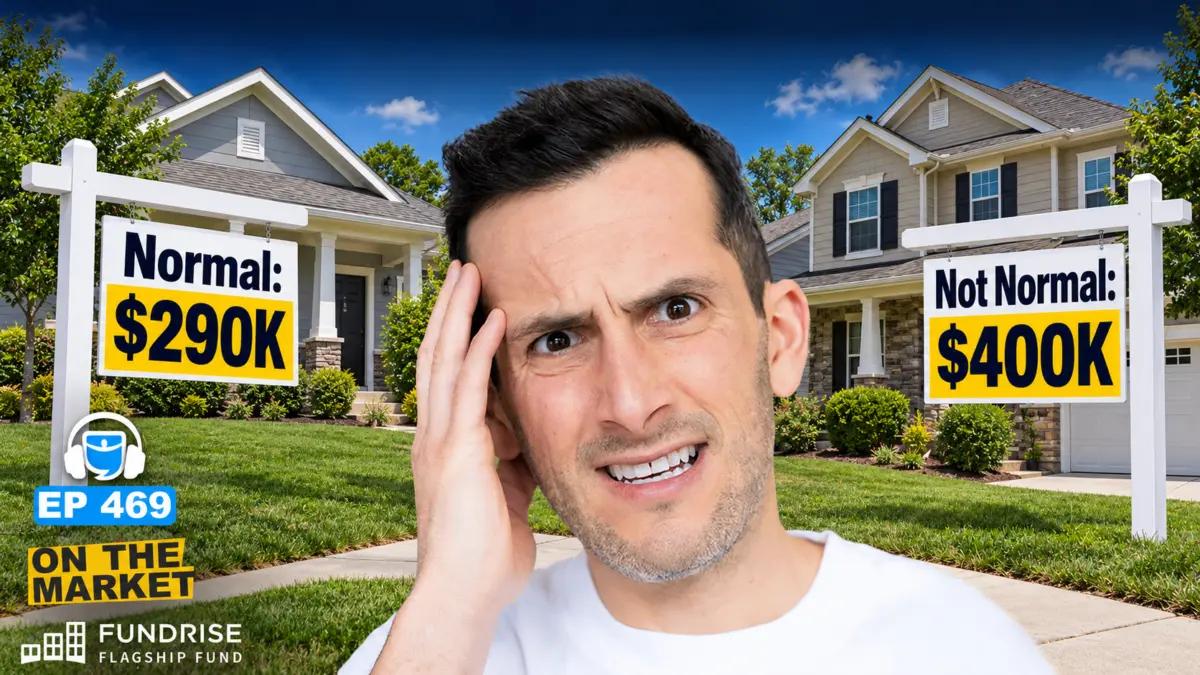
The American housing market is caught in a prolonged period of sluggishness, and according to new market analysis, a return to historical normalcy is not on the horizon anytime soon. With mortgage rates hovering around 7.5%, median home prices anchored near $446,000, and wage growth failing to keep pace, prospective buyers and real estate professionals alike are left wondering when relief will arrive.
Dave Meyer, chief investment officer at BiggerPockets and a housing market analyst, recently crunched the numbers to determine how long it will actually take for the housing market to recover. Rather than relying on gut feelings or social media speculation, the analysis breaks down the fundamental components of housing affordability to paint a realistic, if sobering, picture of the years ahead.
Defining a "Normal" Housing Market
To understand when the market might improve, one must first define what a normal housing market actually looks like. Affordability is the single driving factor behind the current slowdown, meaning the market cannot truly recover until affordability improves.
To evaluate current conditions, analysts typically examine payment-to-income ratios—comparing a monthly mortgage payment directly to a household’s gross income. Historically, two distinct benchmarks serve as a yardstick. The first is the long-term affordability average dating back to 1989, where Americans spent roughly 18.5% of their gross income on mortgage payments. This average accounts for multiple economic cycles, encompassing both boom periods and downturns.
The second benchmark is 2019, the final year before pandemic-fueled inflation dramatically reshaped the economy. Back then, the payment-to-income ratio sat at a much more manageable 15.5%, marking a period of relatively healthy, functioning market conditions.
Today, however, the landscape looks drastically different. Following a massive surge in borrowing costs, the payment-to-income ratio has spiked to roughly 24.5% nationally, and climbs even higher when factoring in mid-October interest rate adjustments. Since 2019, average home prices have surged 63%, while family incomes have grown by only 37%. Combined with higher interest rates, monthly mortgage payments have more than doubled—surging 116%—while incomes have only grown by a third.
The Three Levers of Affordability
Housing affordability rests on a three-legged stool: home prices, mortgage rates, and real wage growth. Evaluating how the market can return to equilibrium requires examining each of these levers independently, holding the others constant, to see if any single factor can pull the housing market out of its current stall.
Can Wage Growth Save the Market?
From a consumer standpoint, rising wages would be the most ideal mechanism to restore affordability without requiring disruptions in home prices or mortgage rates. However, historical data suggests that relying on wage growth is entirely unrealistic.
To return to the long-term historical affordability average of an 18.5% payment-to-income ratio, real inflation-adjusted wages would need to rise by 33%. To get all the way back to 2019 affordability levels, wages would need to skyrocket by 57%.
Historical data shows that achieving a 56% increase in real median wage growth took 58 years, spanning from 1967 to 2025. This equates to an average real wage growth rate of just 0.8% per year. At this historical rate, returning to 2019 affordability solely through wage growth would take nearly six decades, while returning to the 40-year average would still require 40 years. Furthermore, with real wage growth currently turning negative due to stubborn inflation and potential shifts in the labor market driven by automation and artificial intelligence, wage growth is actively moving in the wrong direction and cannot be relied upon to solve the crisis.
Can Falling Mortgage Rates Restore Balance?
Mortgage rates are the most volatile component of the affordability equation and the metric most frequently discussed by prospective buyers. Yet, the math behind rate cuts reveals an equally challenging reality.
To return to 2019 affordability levels based purely on interest rate adjustments, mortgage rates would need to plummet to 2.7%. Even during the pandemic-era housing boom, when borrowing conditions hit historic lows, average rates bottomed out around 3%. Expecting rates to drop to 2.7% ignores current macroeconomic fundamentals.
Even reaching the long-term average affordability benchmark would require mortgage rates to drop to 4%. While a 4% mortgage rate is theoretically possible over a long enough timeline, it would likely require significant and painful economic shocks to bring inflation down well below the Federal Reserve’s 2% target. Given that inflation has hovered above target levels for years and the bond market continues to reflect elevated Treasury yields, expecting a return to ultra-low rates in the near term is unrealistic. Optimistic projections place 6% rates as a best-case scenario for the coming years, which still falls short of restoring historical affordability.
Do We Need a Massive Price Crash?
The final lever of affordability is home prices. For prices alone to restore the market to 2019 affordability benchmarks, the national median home price would need to experience a staggering 36% crash. To reach the long-term historical average, prices would need to fall by 25%.
For context, the most severe price correction in modern U.S. history occurred during the Great Financial Crisis of 2007 to 2008, when national home prices dropped by roughly 20% to 22%. That crisis was fundamentally rooted in real estate distress, lax lending standards, and widespread foreclosures—conditions that do not exist in the current market.
A national price crash of 25% to 35% remains unlikely due to several structural defenses, most notably the "lock-in effect." Roughly 80% of existing mortgages feature interest rates below 6%, with half sitting below 4% and a fifth below 3%. This massive incentive for current homeowners to stay put has severely constrained housing inventory. Unlike the Great Financial Crisis, when homeowners faced negative equity and adjustable-rate resets that forced sales, today’s homeowners sit on substantial equity and low fixed payments, resulting in historically low levels of distress and delinquency rates that remain lower than 2019 levels.
While regional corrections are already underway in overheated markets across the Sunbelt and parts of the West—where prices have pulled back modestly—a widespread national housing crash is not supported by current fundamentals.
The Most Likely Path Forward
Because no single lever can fix the affordability crisis on its own, a return to a functioning market will require a slow combination of modest rate stabilization, muted wage growth, and prolonged flat or slightly declining real home prices.
Even under a reasonable base-case scenario where mortgage rates gradually ease toward 6%, home prices remain relatively flat, and income outpaces inflation slightly, analysts project it could take roughly seven years for the housing market to fully normalize. If key variables shift even slightly—such as rates remaining closer to 6.5%—that timeline stretches past a decade.
For real estate investors and market participants, this environment demands a strategic shift. Transaction volumes will likely remain constrained until affordability improves, making appreciation difficult to count on in the immediate future. Consequently, successful investing in the current climate requires disciplined underwriting—specifically targeting properties significantly below current market comps or focusing on value-add opportunities to force appreciation from the start.
Navigating the housing market over the next few years will require patience, realistic expectations, and an understanding that the market is unlikely to return to the abnormally low rates and high affordability seen in the prior decade anytime soon.