

After stepping away from his popular annual update tradition in 2021, the prominent financial independence blogger and podcaster known as the Mad Fientist has returned to reflect on a surprising evolution in his post-work life. Marking his eighth year of freedom since leaving his traditional career on August 1, 2016, the creator admitted that his perspective on money, material possessions, and life planning has shifted dramatically over the past three years.
When he initially halted his year-in-review posts, he believed he had the puzzle of Financial Independence (FI) fully solved. Living a quiet, seemingly normal life, he feared he was no longer offering meaningful advice to his audience. However, looking back over the subsequent three years, he realized how much his mindset has transformed. Furthermore, with the rapid ascent of artificial intelligence threatening to flood the internet with machine-generated text in the coming decade, he concluded that preserving authentic human stories and real lived experiences has never been more vital.
The Mental Shift: Learning How to Spend After a Lifetime of Saving
The most profound realization of his eighth year of freedom centers on money utilization. Having spent his entire life focused on rigorous saving, investing, and accumulation, using money always felt like a last resort—an admission of a mistake because spent capital could no longer compound. Making the mental pivot from hoarding wealth to actively spending it has been an unexpected challenge, but also a rewarding one.
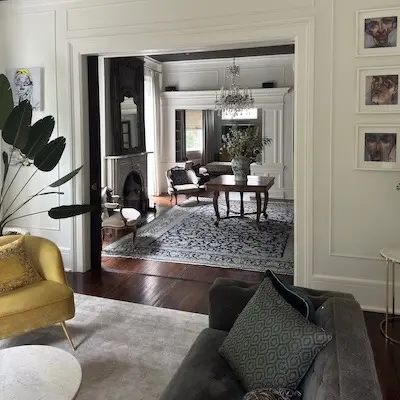
This evolution is best encapsulated by a major life milestone: purchasing a home. After selling their previous house in 2014, the family spent years embracing the flexibility of renting. However, with the arrival of their young son, priorities changed. Eager to provide stability rather than moving annually, and recognizing the sheer volume of belongings children tend to accumulate from well-meaning relatives, they decided to buy a stone house in the countryside.
It marks the third home he has owned, following previous stints in Scotland in 2005 and Vermont in 2011. Yet, it is the first time he has genuinely enjoyed homeownership. During his aggressive pursuit of FI, unexpected home expenses would have caused immense anxiety. Today, viewed through the lens of established financial security, a home is appreciated as a true luxury. He even spent months designing and building a custom home studio, noting that his past thrifty self would have balked at both the splurge and the inevitable maintenance costs.
This newfound appreciation extends beyond real estate into physical goods. Having spent years in furnished rentals with minimalist provisions to ease the burden of frequent relocations, he previously believed that physical possessions added little to happiness. Now, curated items—ranging from a high-end coffee grinder and quality mugs to an integrated whole-house sound system—actively enhance his daily life.
Reframing Wealth and the ‘Die With Zero’ Philosophy
This journey into spending has forced a broader reassessment of his path to financial independence. He now views his early accumulation phase with a critical eye, noting that the firehose-like focus on saving often leaves individuals completely unprepared for the reality of actually spending money later in life.
Drawing inspiration from a podcast discussion with Bill Perkins regarding the principles of Die With Zero, he frequently asks himself a central question: "When’s the party?" The underlying philosophy is that capital must eventually be deployed, whether supporting one’s own life experiences during retirement, funding charitable causes, or passing wealth to heirs. Without intentional spending or giving during one’s lifetime, the money will ultimately be given away at the end, meaning individuals miss the opportunity to participate in the celebration of their own wealth.
Executing this philosophy has also meant witnessing the tangible payoff of past investments. Using a portion of his investment portfolio to purchase his home provided a striking counterpoint to the abstract nature of FI numbers. While a brokerage balance sheet theoretically signals freedom, clicking a button to execute a major real estate transaction made the accumulated wealth feel concrete for the first time.
Beyond financial assets, he emphasizes the compounding returns of non-monetary investments. Decades of prioritizing health allow him to feel like a twenty-something in his early forties, capable of keeping up with an active toddler with an eye toward skiing and playing ice hockey for decades to come. Long-term investments in friendships and a 22-year relationship with his partner have likewise yielded profound emotional dividends. Moving forward, his strategy involves using financial resources to intentionally bolster these vital areas—such as renting Airbnbs near long-term friends to spend extended periods living close to them rather than relying on brief visits.
The Complications of Stock Picking and the Ease of Index Funds
Reflecting on his investment history, the blogger addressed the often-overlooked complications of individual stock selection. While failures in stock picking are obvious, he highlighted two historical successes that still carried unintended drawbacks.
In 2012, working as a software developer who anticipated the rising importance of graphics processing, he invested early in Nvidia. Although the stock climbed 20 to 25 percent, he sold it quickly, missing out on thousands of percent in subsequent gains. Conversely, around the same period, he purchased Apple stock when it was trading near its cash value and let dividends reinvest. While successful, the position has swelled within a taxable account to a point where it vastly exceeds his target allocation for individual equities. Pruning the position now would trigger massive capital gains tax liabilities, creating a logistical headache.
These experiences reinforced his commitment to passive index fund investing. By removing the need to monitor, trade, or time the market, broad-market index funds allow portfolios to compound quietly in the background without the administrative and emotional complications of individual equities.
Looking Forward
As he looks past his eighth year of freedom, the podcaster plans to publish detailed writings exploring his transition from saver to spender, alongside an updated version of his vintage "Perfect Life" essay to evaluate how his actual lifestyle compares to his early predictions. While future updates may eventually migrate to video format depending on community engagement, he expressed deep gratitude for his audience, whose thoughtful correspondence continues to validate his long-standing commitment to putting readers and listeners first.