



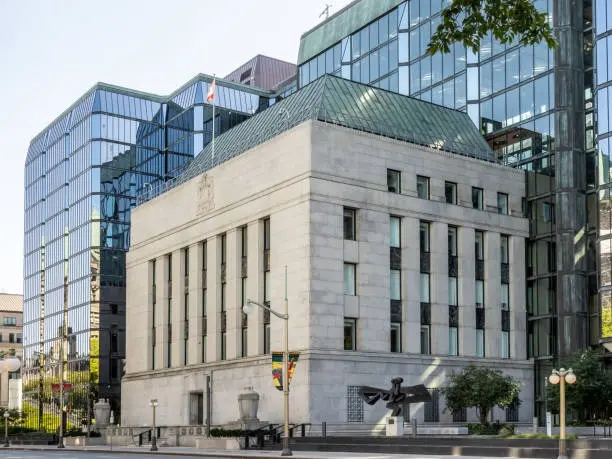
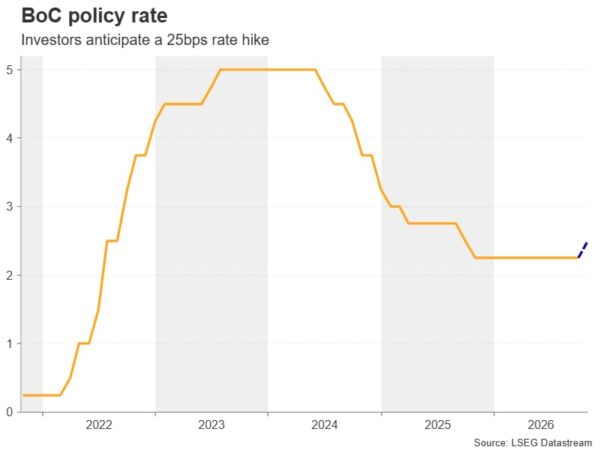
The Bank of Canada stands on the verge of shifting its monetary policy stance this week, with financial markets and economists overwhelmingly anticipating a quarter-percentage-point increase in the overnight rate. Scheduled for Wednesday, October 28, the central bank’s upcoming decision is projected to lift the benchmark rate to 2.50% from its current resting place of 2.25%. This move would mark the first policy tightening by the institution in a full year, following a prolonged sequence of holds that succeeded a 25-basis-point reduction in October 2025. By moving to raise borrowing costs, the Bank of Canada is aligning itself with a broader global trend among central banks that are pivoting toward tighter policy as policymakers grapple with renewed inflation risks stemming largely from escalating energy prices.
Market pricing heavily reflects this anticipated pivot. A recent Reuters survey of economists indicates that a clear majority expect the policy rate to move higher this week. Furthermore, pricing in overnight index swaps points to an implied probability of approximately 80% for a 25-basis-point increase. Beyond the immediate decision, market participants and professional forecasters are increasingly factoring in the likelihood of at least one additional rate increase by the end of March. This outlook represents a dramatic reversal from prevailing consensus expectations earlier in the year, which had assumed that borrowing costs would remain completely stationary through the entirety of 2026.
This notable repricing across financial markets was largely catalyzed by public remarks from Bank of Canada Governor Tiff Macklem. Governor Macklem recently signaled that the central bank’s upcoming Monetary Policy Report is likely to feature upward revisions to its core inflation forecasts. Compounding these signals, the Bank of Canada’s most recent business and consumer surveys revealed a marked uptick in forward-looking inflation expectations. These survey results have intensified concerns among policymakers that elevated energy expenses could successfully permeate the broader economy, triggering persistent and generalized pricing pressures rather than remaining isolated to the energy sector.
With a rate increase now heavily factored into asset valuations, the primary attention of investors and analysts has shifted toward the central bank’s updated macroeconomic forecasts and forward guidance. The specific phrasing and tone adopted in Wednesday’s policy statement will be critical in determining whether financial markets reinforce their expectations for further monetary tightening well beyond the October gathering, or whether the central bank intends to pause and evaluate the cumulative impact of its policy adjustments.
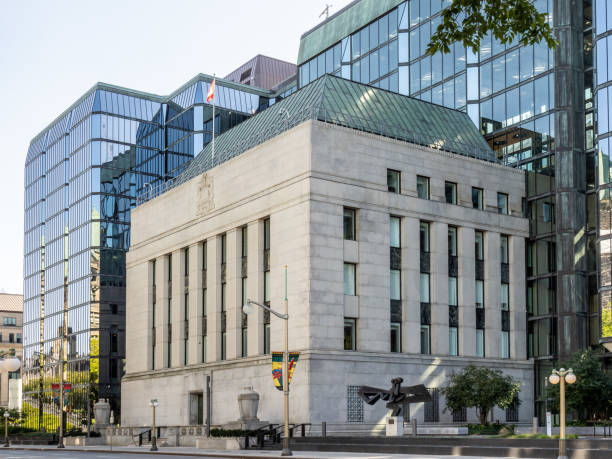
Oil-Driven Inflation Remains the Key Concern
The trajectory of global energy markets has transformed into a central preoccupation for Canadian monetary policymakers. The ongoing surge in international oil prices has dominated economic discussions, underscored by Brent crude futures briefly surging past $117 per barrel earlier this month. This sharp upward movement has been driven primarily by persistent geopolitical tensions in the Middle East, sparking acute anxieties that elevated fuel and energy costs will inevitably feed into broader inflationary trends across the domestic economy.
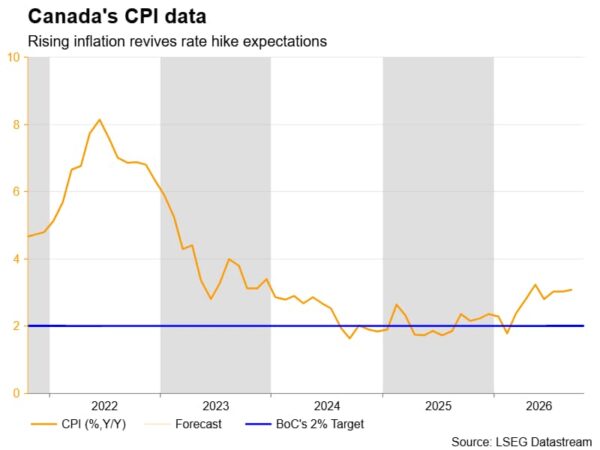
Official inflation data for September underscored these mounting pressures, with headline consumer price growth accelerating to 3.1%. This reading pushed the inflation rate marginally above the upper boundary of the Bank of Canada’s established 1% to 3% target corridor. A granular examination of the data reveals that the acceleration is driven largely by the direct impact of higher energy components, while underlying core inflation measures have remained comparatively subdued.
The core dilemma facing policymakers is whether this energy-driven headline inflation will successfully transition into broader secondary effects. Higher fuel and energy costs inevitably inflate transportation, manufacturing, and general operating expenses for businesses. This dynamic fosters the genuine risk of second-round effects, where firms attempt to pass rising operational costs onto consumers, and workers subsequently demand higher wages to offset the rising cost of living.
This theoretical concern has found empirical backing in the Bank of Canada’s most recent Business Outlook Survey, which highlighted rising inflation expectations among commercial enterprises. When combined with elevated headline figures and persistently high global energy costs, these survey responses have significantly strengthened the macroeconomic argument for a preemptive tightening of monetary policy. Consequently, analysts anticipate that the central bank will revise both its near-term inflation projections and its broader economic growth forecasts higher in its forthcoming policy documents.
Growth Remains Resilient Despite Trade Headwinds
Despite the increasingly hawkish pivot in monetary policy discussions, the Canadian economy has demonstrated a degree of resilience that has consistently surprised economic forecasters. Real gross domestic product growth for the second quarter came in stronger than anticipated, expanding at an annualized rate of 3.3%. Furthermore, the nation’s export sector has managed a credible recovery, weathering ongoing trade frictions and uncertainties with the United States following the recent breakdown of formal bilateral trade negotiations.
Domestic consumer demand has similarly maintained a firm footing. Retail sales posted a healthy 1.2% gain in August, and preliminary macroeconomic estimates point toward an additional 0.7% expansion for September. This sustained momentum in consumer spending and broader economic activity strongly suggests that the domestic economy has absorbed recent trade-related shocks far better than many analysts initially feared. Current tracking data indicate that third-quarter GDP growth is on track to print at approximately 2%, providing a solid economic foundation that supports the central bank’s move toward higher interest rates.
Nevertheless, policymakers cannot afford to dismiss clear, emerging signs of economic moderation. The Bank of Canada’s corporate surveys consistently indicate that business leaders remain genuinely anxious regarding the potential long-term impact of proposed tariffs on capital investment and hiring intentions. Concurrently, consensus medians derived from Reuters polling suggest that national economic growth will decelerate noticeably to 1.0% over the course of 2026, before staging a modest recovery to 1.7% in 2027.
The domestic labor market has also begun to exhibit tangible signs of softness, complicating the economic backdrop. Employment figures dropped by 68,300 net positions in September, registering the second consecutive month of job losses. This contraction has pushed the national unemployment rate modestly higher. At the same time, annualized wage growth has cooled significantly, moderating to approximately 2.3% compared to 3.3% twelve months prior. This deceleration indicates that labor market pressures are considerably less acute today than they were during the turbulent, post-pandemic inflationary spike.
USDCAD Outlook Hinges on Guidance
The performance of the Canadian dollar has found fundamental support from elevated global crude prices and the rapid escalation of market expectations surrounding this week’s anticipated rate increase by the Bank of Canada. The recent market repricing has successfully narrowed the yield differential between Canadian and United States two-year government debt, effectively eroding a portion of the traditional rate advantage that the US dollar has enjoyed over its northern counterpart.
Even so, the foreign exchange landscape remains nuanced. While the Federal Reserve is widely expected to keep US interest rates unchanged during its concurrent policy meeting, underlying inflation in the United States remains relatively elevated. As a result, financial markets continue to price in the possibility of additional monetary tightening south of the border in the months ahead. Conversely, existing consensus forecasts imply that the Bank of Canada may adopt a more limited path of subsequent rate hikes following this week’s anticipated adjustment.
Given this divergence, a standard 25-basis-point increase by itself is unlikely to radically narrow the overarching US-Canada policy rate gap. Instead, foreign exchange traders and institutional investors will concentrate heavily on the specific forward guidance provided by Governor Macklem and his colleagues. Clear signals regarding the potential for further tightening will be vital to prevent yield spreads from widening once again in favor of the US greenback.
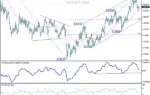
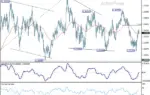
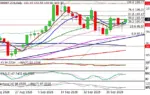
If the Bank of Canada delivers a quarter-point rate increase accompanied by upwardly revised inflation forecasts and a demonstrated openness to subsequent policy tightening by March, the recent narrowing of yield differentials could be reinforced. Such an outcome would likely exert downward pressure on the USDCAD exchange rate, potentially driving the pair below the 1.4000 threshold and toward the 200-day simple moving average resting near 1.3880. Conversely, if the central bank adopts a cautious or dovish tone, financial markets are likely to refocus their attention on the comparatively tighter stance maintained by the US Federal Reserve. This alternative scenario could easily spark a rebound in USDCAD, allowing the pair to retest resistance levels near 1.4100 and potentially challenge the eighteen-month high approaching 1.4230 as market participants digest the shifting monetary policy landscape.