

For many prospective real estate investors, the past few years have felt like an impossible window to enter the market. Between the post-2008 era’s missed opportunities and the historic low-interest-rate wave of 2021, buyers facing today’s elevated home prices and high interest rates often feel they have missed their chance. However, real-world examples continue to prove that consistent strategy can triumph over macroeconomic timing.
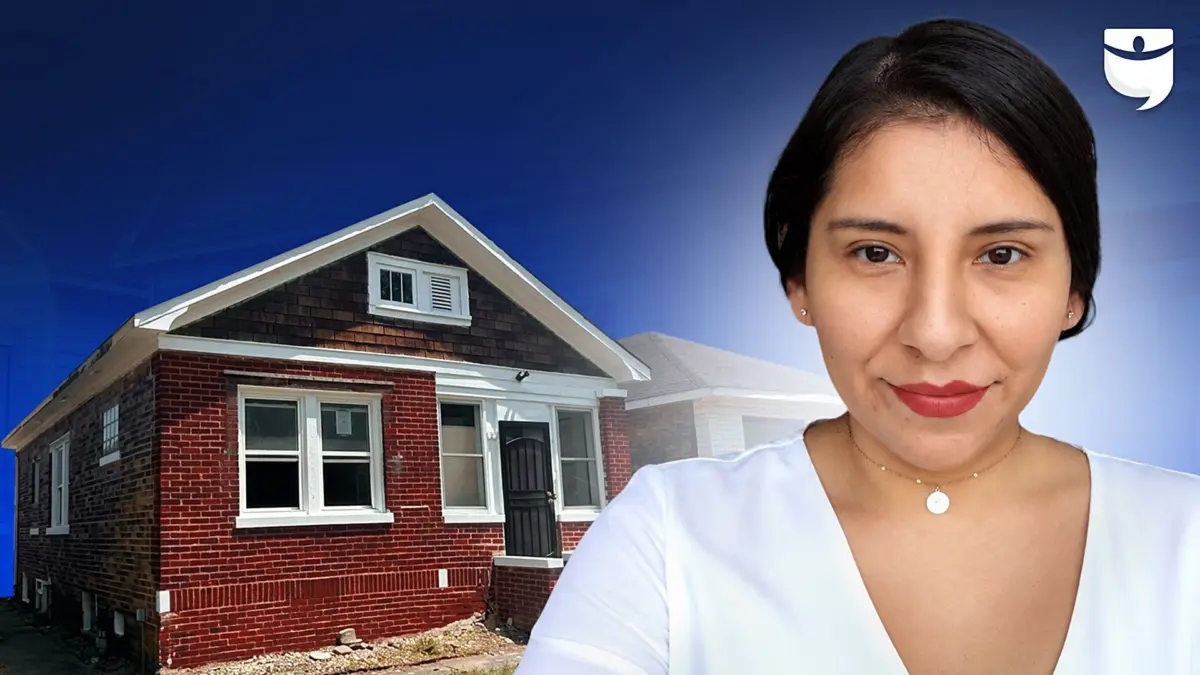
Lindsay Barrientos did not start buying rental properties after a major market crash, nor did she catch the low-interest-rate wave. She officially entered the market in late 2022, exactly when home prices and borrowing costs had spiked significantly. Armed with an understanding of real estate’s long-term potential and a commitment to trusting the process, she began buying single-family homes one at a time, banking her rental income to fund subsequent down payments.
Just four years later, Barrientos has accumulated a 12-property portfolio. This achievement has provided her with the financial flexibility to leave a grueling W-2 career, return to school, and launch her own business. Her journey highlights that an average investor can still succeed in today’s environment without requiring a massive initial bank account or perfect timing—only a solid plan and consistent execution.
Overcoming the High-Cost-of-Living Barrier
Living in Los Angeles, California, Barrientos faced a common hurdle for aspiring investors in high-cost-of-living metropolitan areas: local real estate prices made traditional acquisitions financially daunting. A conventional loan on a standard million-dollar home in her local market required a 20 percent down payment amounting to roughly $200,000—a sum far beyond her immediate resources as a registered nurse.
Rather than abandoning her investment ambitions, Barrientos applied a strategy common among out-of-state investors. She realized her capital would stretch much further in a market located miles away from her home base. Working as a nurse for over a decade, her perspective shifted dramatically following the onset of the COVID-19 pandemic in 2020. Serving as a frontline healthcare worker exposed her to intense professional stress, tragedy, and exhaustion, prompting her to reevaluate her long-term career path.
At age 30, after utilizing therapy and medication to navigate the emotional burnout, Barrientos began searching for alternative income-producing ventures that could eventually replace or supplement her nursing income. Her initial steps into real estate actually began organically at home. Living in a four-bedroom Los Angeles property, she practiced house hacking by renting out individual rooms to traveling nurses, effectively offsetting her primary mortgage while living a communal lifestyle with friends.
When searching online for avenues to build wealth and generate passive income, the results pointed consistently toward starting a business or investing in real estate. Having already experienced the financial relief of offsetting housing costs, Barrientos decided to explore real estate more formally. Realizing that local expansion was out of reach due to high capital requirements, she turned her focus toward out-of-state markets.
Leveraging Community and Strategic Out-of-State Investing
To bridge the 2,000-mile gap between Los Angeles and her target investment region, Barrientos relied heavily on research, educational resources, and a supportive network of peers. Through real estate podcasts, books, and online content, she researched market indicators such as cash-on-cash return, cash flow, repair costs, and landlord-friendly state laws.
When planning a temporary relocation for a potential travel nursing contract, she considered cities like New York and Chicago. Ultimately, she looked at surrounding areas within driving distance of Chicago and identified Northwestern Indiana—specifically Hammond—as a viable, landlord-friendly market with strong cash-on-cash return potential.
Rather than navigating an unfamiliar market entirely alone, Barrientos sought out smaller content creators, online forums, and active community groups. By connecting with transparent investors sharing their metrics on social media and participating in regional messaging chats with dozens of other investors, she gained access to vetted recommendations for realtors, property managers, and local contractors. This network provided her with critical on-the-ground intelligence regarding neighborhood stability, upcoming municipal developments, and optimal zip codes.
Scaling Through Disciplined Execution and Creative Financing
Barrientos purchased her first property in Hammond, Indiana, acquiring a three-bedroom, two-bathroom single-family home with a conventional loan requiring a 25 percent down payment. The purchase price was $135,000, and with an interest rate of 6.01 percent, her debt service totaled $880 a month. The property rented immediately for $1,400 a month, generating approximately $400 in monthly cash flow after accounting for property management fees.
Rather than aggressively expanding immediately, Barrientos treated this first property as a proof of concept. She allowed the property to run autonomously for a full year, treating the venture as an additional bill and banking her returns. After twelve months, she had saved $16,000 and felt prepared to tackle a more challenging market in nearby Gary, Indiana, where single-family homes were listed at much lower price points ranging from $50,000 to $80,000.
Applying a value-add strategy, she purchased her second home in Gary for $55,000. After investing roughly $16,000 into a new roof and new floors, she rented the two-bedroom, one-bathroom home for $1,100 a month to a Section 8 voucher holder, achieving a strong return relative to her capital outlay.
Her third project tested her risk tolerance further when she attempted a BRRRR (Buy, Rehab, Rent, Refinance, Repeat) strategy on a $33,000 property. After completing about $30,000 in renovations, and narrowly navigating a minor kitchen fire right before her scheduled appraisal, she completed the rehabilitation. The appraisal ultimately came in at $160,000, allowing her to recover all her renovation capital—initially drawn from a home equity line of credit on her primary Los Angeles residence—and successfully recycle the funds.
Over the span of four years, Barrientos scaled her portfolio to 12 single-family properties and one duplex. Her later acquisitions incorporated creative financing techniques, including seller financing. Inspired by established creative finance strategies, she instructed her real estate agent to submit dual offers on properties—a traditional cash offer alongside a structured creative financing offer featuring terms more favorable to the seller. This approach proved effective with motivated sellers who had previous investment experience and were open to receiving passive income over time through structured payments.
Achieving Life Flexibility and New Ventures
Back in Los Angeles, Barrientos also maximized her primary property by building an accessory dwelling unit (ADU), which she rents as a mid-term rental for $2,000 a month, while pursuing the permitting process for a second ADU.
Having successfully completed her education to become a nurse practitioner, Barrientos reached her financial milestone to transition away from hospital-based nursing. Supported by the steady income generated by her real estate portfolio and house-hacking strategies, she officially left her W-2 job to launch her own psychiatric nurse practitioner practice.
Alongside her medical practice and real estate portfolio, Barrientos co-hosts a podcast titled Real Estate Chisme and maintains an online community focused on encouraging women and people of color to explore real estate investing and financial literacy. Her progression from a frontline healthcare worker navigating pandemic burnout to a multi-property investor and business owner underscores how consistent, methodical action can overcome unfavorable economic entry points.