




Global financial markets closed out a turbulent week facing a convergence of mounting pressures, spanning aggressive energy price spikes, robust economic data out of the United States, high-stakes central bank meetings, and dramatic political developments in Brazil and France. While the late-week tech sector sell-off that dominated trading floors slightly moderated by Friday, underlying vulnerabilities quickly manifested across broader asset classes, leaving investors on edge and demanding a careful re-evaluation of macroeconomic risk.
Equities experienced broad-based downward pressure as the session progressed. Although the Nasdaq managed to stem its losses to finish down a modest 0.2% on Friday, value stocks bore the heaviest brunt of the risk-off sentiment. The Dow Jones Industrial Average (DJI) suffered a substantial retreat, sliding 1.2% by the closing bell. Meanwhile, equities across the euro area initially tumbled more than 1% before steadily paring losses to settle approximately 0.3 lower by the end of the day.
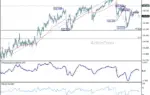
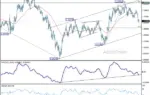
Technical indicators across major indices have begun to flash warning signs that warrant heightened caution among traders and portfolio managers. The S&P 500 is currently hovering uncomfortably close to critical support near the 7,600 level, while the Euro Stoxx 50 (SX5E) has re-entered a distinct downward-sloping channel, firmly confirming a technical break below the crucial 6,118 threshold.
At the same time, the commodities market became the primary driver of macroeconomic anxiety. Surging energy costs triggered a bear flattening dynamic within the German yield curve, with yield changes shifting between +0.3 and 2.7 basis points. Brent crude oil futures surged dramatically to touch a six-month high of $117 per barrel. This sharp escalation was fueled primarily by reports of Houthi militant attacks targeting vital Saudi energy infrastructure, compounded by persistent uncertainty surrounding whether the United States might resume military strikes against Iran, keeping geopolitical risk premiums stubbornly elevated.
The European energy crunch proved even more acute in the natural gas market. The Dutch Title Transfer Facility (TTF) natural gas contract skyrocketed to €93.8 per megawatt-hour. Although Brent crude experienced a slight easing to trade around $114.50 per barrel, European natural gas prices continued their relentless ascent, hitting fresh four-year highs above €96 per megawatt-hour.
In the fixed-income space, United States Treasury rates added between 3.4 and 4.9 basis points across the curve. This upward pressure on yields was strongly reinforced by domestic macroeconomic data that stood in stark contrast to recent cooling trends observed elsewhere. While Europe’s October Purchasing Managers’ Index (PMI) data failed to replicate the robust momentum seen in September—largely dragged down by persistent economic headwinds in France—the United States PMI release painted a fundamentally different picture.
The headline US composite PMI indicator printed at 57.6, a reading that is historically and mathematically consistent with gross domestic product (GDP) expanding at a robust 5% annualized rate. This represents a clear acceleration from the 4% growth rate implied by third-quarter PMI prints, with the official government growth numbers scheduled for release on Thursday. Survey data indicated that, excluding the distortionary effects of the Covid-19 pandemic, recent months have witnessed the strongest growth spell for American businesses since early 2015.
However, this economic vigor comes at a cost. Price pressures within the US economy are intensifying rapidly, culminating in the sharpest increase in selling prices recorded in over four years. Survey findings explicitly noted that the current pace of price growth indicates consumer price inflation is likely to drift further above the Federal Reserve’s established target in the coming months.
This inflationary momentum sets the stage for one of the most critical economic events of the week: the upcoming Federal Reserve policy meeting. Given the robust messaging embedded within the latest PMI data, maintaining the expected interest rate status quo following September’s hike is going to be a remarkably tough sell for central bank leadership. Federal Reserve Chair Jerome Warsh will be forced to deliver a distinctly hawkish pause to the markets; otherwise, he risks severely pressuring the long end of the yield curve and losing credibility on inflation control.

Recent volatility across global equity markets had previously led traders to scale back their expectations, causing them to no longer fully price in a potential December rate hike. Analysts suggest this hesitation may be a stretch given the underlying economic reality. A remarkably similar dynamic has unfolded in Europe, where market pricing currently assigns less than an 80% probability to further European Central Bank tightening. Market observers argue this is a clear underestimation, particularly when viewed through the lens of recent energy price developments.
During a late-September speech, ECB Chief Economist Philip Lane noted that the combined energy price curve for oil and gas had shifted adversely into a severe scenario. Conditions have only deteriorated further since that assessment was made. Furthermore, in the weeks following ECB President Christine Lagarde’s testimony before the European Parliament, the German 10-year yield fell by roughly 30 basis points. Consequently, the argument that market forces are proactively doing the ECB’s job of tightening financial conditions has noticeably weakened.
In general, while financial conditions in both the United States and Europe have tightened perceptibly in the wake of recent equity market declines, they remain broadly accommodative from a historical perspective. While France’s domestic political and fiscal narrative warrants close ongoing monitoring, the ECB theoretically possesses alternative policy tools to address any unwarranted and disorderly market dislocations independently of baseline policy interest rates.
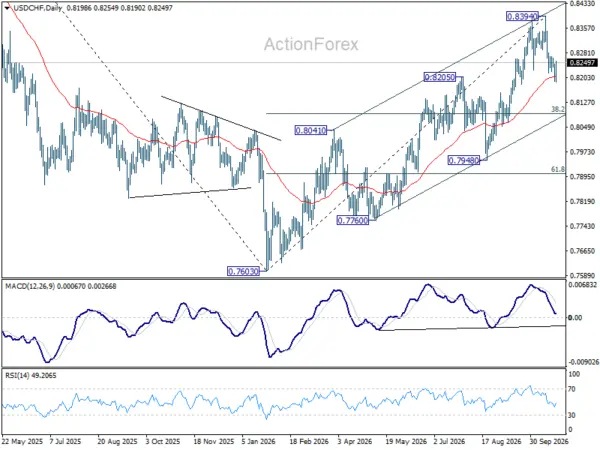
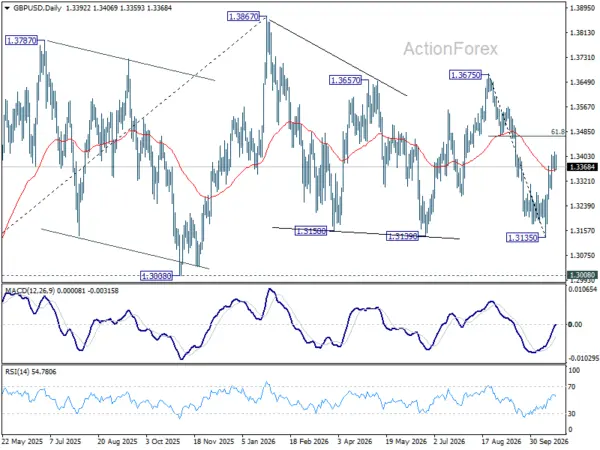
French credit spreads managed to stabilize near record highs against interest rate swaps on Friday. French government bonds (OATs) experienced a relief rally after rating agency Moody’s refrained from executing a feared credit downgrade. Moody’s opted to maintain France’s Aa3 rating with a negative outlook, predicated on the baseline assumption that the French government will successfully enact a credible, deficit-reducing budget for 2027. Foreign exchange markets remained remarkably range-bound over the preceding fortnight, with the EUR/USD currency pair hovering persistently around the 1.12 handle, while the British pound braced for the upcoming Autumn Budget presentation by Chancellor Rachel Reeves on Wednesday.
In political developments, Brazilian President Luiz Inácio Lula da Silva secured a historic victory in the fiercely contested presidential run-off vote, defeating right-wing challenger Flavio Bolsonaro, the son of former president Jair Bolsonaro. Lula da Silva made political history by becoming the first Brazilian politician to successfully win a presidential run-off after trailing behind in the initial first-round ballot. Bolsonaro had unexpectedly won that initial contest on October 4th, securing 47% of the vote compared to 45% for the incumbent.
The final tally from yesterday’s decisive vote ended with 51.8% of the ballots cast in favor of securing a fourth presidential term for Lula, while Bolsonaro finished closely behind with 48.2%. The defeated challenger strongly contested the outcome, refusing to concede defeat cleanly. Bolsonaro asserted that the electoral process was compromised, stating publicly that what transpired was neither normal nor acceptable, and claiming that for the first time in history, a Supreme Court Justice used judicial authority to alter the rules of the game mid-contest. His grievance referred to a judicial order that extended voting hours by two hours just as polling stations were scheduled to close, a decision prompted by complaints from Lula’s Workers’ Party regarding deliberate public transport disruptions designed to suppress voter turnout across multiple states.
Consequently, Brazilian domestic financial markets are bracing for a volatile opening. Local financial assets had rallied steadily since early October, as investors had largely priced in the expectation that a Bolsonaro-led government would prove more market-oriented, business-friendly, and unequivocally committed to the rigorous consolidation of public finances.
Meanwhile, in the Asia-Pacific region, Reserve Bank of Australia Assistant Governor Sarah Hunter signaled that the central bank’s work in subduing domestic inflation is not yet fully complete. While declining to pre-empt the exact outcome of the upcoming November 3 monetary policy decision, Hunter reaffirmed the RBA’s institutional commitment to tackling persistent price pressures and returning inflation securely to target. Hunter, who oversees economic forecasting at the central bank, emphasized her view that higher global oil prices are increasingly likely to become structurally embedded deeper into domestic supply chains.
These comments follow warnings delivered the previous week by RBA official Marion Hauser, who cautioned that Australia’s medium-term inflation outlook had materially deteriorated. Critical third-quarter Australian consumer price inflation figures are scheduled for release on Wednesday, with market consensus widely anticipating a notable acceleration in the headline figures. RBA Governor Michele Bullock is slated to testify before federal parliament on the exact same day.
Market analysts note that the combination of the upcoming inflation prints and the central bank testimony could effectively seal the outcome of the November policy meeting. Currently, Australian overnight money markets are attaching roughly a 60% probability to a 25-basis-point interest rate hike, which would lift the RBA’s cash rate target to 4.85%. Such a move would push the central bank’s policy rate comfortably above its post-pandemic peak of 4.6%, underscoring the global persistence of inflationary pressures and the ongoing challenge facing monetary authorities worldwide.