




While the broader real estate market faces some of its most challenging conditions in over a decade, legendary investor Warren Buffett’s holding company, Berkshire Hathaway, is quietly doubling down on the American housing sector. Amid surging mortgage rates, plummeting buyer traffic, and widespread industry pessimism, Berkshire has deployed hundreds of millions of dollars into home-building equities, signaling a long-term bullish outlook that sharply contrasts with current Wall Street sentiment.
Between September 17 and October 2, Berkshire Hathaway invested nearly $600 million to acquire approximately 29 million shares—representing a roughly 12% stake—in Lennar, one of the nation’s largest home builders. This strategic move unfolded during a particularly difficult quarter for the developer. Lennar recently reported an 8.5% drop in quarterly revenue, marking its weakest financial performance since 2009. Yet, rather than retreating from the downturn, Berkshire has leaned into it, demonstrating a calculated strategy of acquiring premier housing assets while valuations are heavily depressed.
The recent investment in Lennar is part of a broader, multi-year positioning by Berkshire within the residential real estate ecosystem. Earlier in the summer, the conglomerate acquired Taylor Morrison, a major home builder responsible for roughly 13,000 annual closings and nearly $800 million in net income. Combined with its existing subsidiaries, including Clayton Properties Group—which encompasses 15 regional builders and accounted for 23,000 closings last year—Berkshire functions as one of the largest forces in American home building, trailing only industry giants D.R. Horton, Lennar, and PulteGroup.
Furthermore, the conglomerate’s footprint extends across virtually every touchpoint of a real estate transaction. Berkshire owns Clayton Homes, a leading manufacturer of factory-built homes acquired back in 2013, various building product suppliers, the single-family build-to-rent operator Yardley, and Berkshire Hathaway HomeServices, one of the country’s largest residential real estate brokerage franchises. This comprehensive exposure indicates that the recent stock acquisitions are not merely opportunistic short-term trades, but rather a continuation of a disciplined, long-term thesis on the fundamental value of American housing.
Navigating a Difficult Macroeconomic Backdrop
The timing of Berkshire’s aggressive capital deployment has raised eyebrows across the financial sector due to the uniquely hostile environment facing home builders. Average 30-year fixed mortgage rates have hovered near 7.4%, pushing borrowing costs to their highest levels in nearly three years. Consequently, housing affordability has deteriorated significantly, putting immense pressure on both buyers and developers.
Market sentiment indicators underscore the depth of the current slump. The National Association of Home Builders confidence index has dropped to levels not seen since June 2012, while the prospective buyer traffic index sits at an anemic 18 out of 100. Faced with dwindling demand, builders have increasingly resorted to aggressive discounting and sales incentives. Industry data shows that roughly 43% of builders cut home prices by an average of 6% in recent months, while 65% have relied on sales incentives to move inventory.
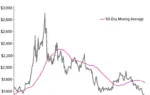
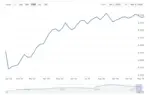
Lennar itself has not been immune to these headwinds. Company leadership noted that roughly half of prospective visitors currently fail to qualify for immediate mortgage financing, compounding the challenge of low foot traffic and contributing to a stock price decline of about 26% year-to-date and 40% over the trailing twelve-year period.
The Bull Case and Long-Term Value Strategy
Despite these severe near-term pressures, the rationale behind Berkshire’s investment aligns with foundational principles of value investing. Speaking publicly on the conglomerate’s strategy, Berkshire leadership has emphasized that the firm is not attempting to time a market bottom or bank on an immediate sector recovery. Instead, the focus remains firmly fixed on a five-to-ten-year horizon, operating on the conviction that the fundamental demand for housing will ultimately overcome cyclical hurdles.
A primary pillar of this bullish outlook is the persistent structural housing shortage across the United States. Independent estimates from organizations like Realtor.com suggest the nation entered the year facing a deficit of more than four million homes, driven by years of underbuilding relative to household formation. While high interest rates have temporarily suppressed effective demand by pricing out buyers, the underlying demographic need for shelter remains robust.
Additionally, Berkshire’s chosen partners possess balance sheet strengths designed to weather prolonged downturns. Lennar, for instance, maintains a conservative debt profile and utilizes a land-light business model that minimizes capital risk. By strategically sacrificing short-term profit margins to maintain construction volume and market share, large-scale developers are well-positioned to outlast smaller regional competitors who lack the liquidity to absorb prolonged market stagnation.
This strategy mirrors Warren Buffett’s famous maxim to be greedy when others are fearful. When market sentiment plummets and traditional analysts issue sell ratings, value investors often find the most compelling long-term entry points. A similar dynamic played out following the 2012 housing crash, where investors who maintained conviction through the depths of the downturn ultimately realized substantial gains as the macro cycle eventually turned.
Risks and Lessons for Individual Investors
Nevertheless, significant risks remain for any investor attempting to follow the "smart money" into home building. Market history shows that even the most sophisticated investors can misjudge macroeconomic timing. During the 2009 financial crisis, Berkshire leadership anticipated a housing recovery much sooner than it actually materialized, leading to acknowledged miscalculations regarding the speed of the market’s stabilization. If elevated interest rates persist for an extended period, holding assets through the interim can impose substantial opportunity costs.
For independent real estate and equity investors observing these market maneuvers, the primary takeaway centers less on mirroring a specific stock purchase and more on adopting a disciplined operational mindset. Navigating a sluggish housing market requires robust balance sheet management, low leverage, and sufficient liquidity to withstand extended periods of minimal price appreciation and rent growth.
As the broader market continues to reprice, disciplined participants who avoid over-leveraging and maintain the financial staying power to look past immediate market turbulence are likely to find durable opportunities across the residential landscape.