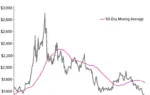



In the ever-evolving landscape of the precious metals market, recent shifts in commodity pricing have begun to alter the behavior of investors, central banks, and industrial participants alike. According to recent market commentary and institutional insights from the Bank of Montreal (BMO), declining gold prices are proving to be a critical catalyst, successfully drawing physical buyers back into the marketplace. As global economic pressures, fluctuating currency valuations, and changing macroeconomic indicators create waves across international exchanges, the intersection of price dips and physical demand has become a central focus for market analysts and institutional investors tracking the yellow metal.
The relationship between falling bullion prices and an immediate uptick in physical acquisition is a well-documented phenomenon within commodity trading, yet its exact timing and magnitude always warrant close observation. When spot prices retreat from recent highs, value-seeking retail investors, regional bullion dealers, and institutional entities frequently view the pullback as a favorable entry point. BMO’s assessment highlights this recurring dynamic, suggesting that the recent downward pressure on gold valuations is encountering a solid foundation of physical support. This dynamic prevents steeper corrections and underscores the underlying resilience of physical gold demand even during periods of broader market consolidation or downward momentum.
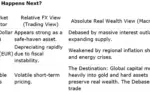
To fully understand the weight of BMO’s market observations, it is essential to examine the broader analytical framework typically applied to the precious metals sector. Financial institutions and market strategists routinely evaluate commodities through a multifaceted lens, breaking down market drivers into distinct categories to gauge the health and direction of an asset class. Within this analytical tradition, market participants dissect the strengths, weaknesses, opportunities, and threats that define the gold market at any given time. By systematically reviewing these four pillars, analysts can construct a comprehensive picture of how macroeconomic headwinds and tailwinds influence both paper trading and physical off-take.
When evaluating the strengths inherent in the gold market, analysts frequently point to the metal’s historic role as an ultimate store of value, an effective hedge against persistent inflation, and a reliable safe-haven asset during times of geopolitical instability. Central banks around the globe continue to hold substantial gold reserves to diversify their sovereign balance sheets, insulating themselves against currency volatility and systemic financial risks. Furthermore, structural supply constraints within the global mining industry ensure that newly mined gold cannot be instantly manufactured to meet sudden surges in demand, thereby establishing a natural scarcity floor beneath the market. These foundational attributes remain steadfast, providing gold with an enduring appeal that transcends short-term price fluctuations and speculative trading cycles.
Conversely, the weaknesses facing the gold market often revolve around opportunity costs and the macroeconomic environment dictated by central bank monetary policies. When benchmark interest rates rise and sovereign bond yields become increasingly attractive, institutional capital frequently flows out of non-yielding assets like gold and into fixed-income instruments. A strengthening U.S. dollar also presents a notable headwind, as gold is globally priced in greenbacks, making the metal more expensive for holders of other currencies. Additionally, shifting sentiment among speculative traders on futures exchanges can trigger rapid liquidations, creating artificial downward pressure that disconnects spot prices from the steady, long-term realities of physical supply and demand fundamentals.
Despite these inherent weaknesses and periodic market pullbacks, the opportunities within the gold sector remain vast and compelling. BMO’s recent insight regarding lower prices attracting physical buyers speaks directly to one of these primary opportunities: the reactivation of retail and regional demand during price corrections. As retail coin and bar sales pick up in major consumer markets across Asia and North America, a solid physical floor is established beneath the paper market. Moreover, ongoing geopolitical tensions, sovereign debt concerns, and the ongoing trend toward currency diversification by emerging market economies create a fertile environment for sustained long-term investment demand. Technological advancements and exploration successes by mining companies also offer avenues for growth, though operational challenges must be carefully navigated.
At the same time, the threats confronting the precious metals space cannot be overlooked. Macroeconomic shocks, unexpected shifts in central bank hawkishness, and rapid interventions in currency markets can introduce severe volatility. Regulatory pressures on financial institutions, changes in tax policies regarding precious metals ownership, and competition from alternative digital or traditional investment vehicles also pose ongoing challenges. Furthermore, environmental, social, and governance (ESG) scrutiny surrounding mining operations can impact capital allocation and project development pipelines, adding another layer of complexity for institutional investors who manage significant exposure to the mining sector.
Navigating these intricate market dynamics requires deep industry expertise and continuous evaluation, a task championed by prominent figures in the financial and investment communities. Among the leading voices analyzing these trends is Frank Holmes, CEO and Chief Investment Officer of U.S. Global Investors. Mr. Holmes has spent decades at the helm of the firm, having purchased a controlling interest in U.S. Global Investors in 1989 and assuming the role of chief investment officer in 1999. Under his visionary guidance and leadership, the company’s managed funds have achieved widespread recognition and numerous accolades, securing more than two dozen Lipper Fund Awards and associated certificates for exceptional performance and disciplined portfolio management.
His contributions to the mining and investment sectors extend far beyond corporate leadership. In 2006, Mr. Holmes was honored as Mining Fund Manager of the Year by the Mining Journal, a prestigious acknowledgment of his astute navigation of resource cycles and commodity markets. He has also shared his extensive knowledge with a broader audience as the co-author of "The Goldwatcher: Demystifying Gold Investing," a publication designed to help investors decode the complex variables that drive precious metals pricing. As a native of Toronto and a graduate of the University of Western Ontario with a bachelor’s degree in economics, he maintains a deep-rooted connection to the global financial and mining hubs that traditionally anchor resource financing.
Beyond his direct financial endeavors, Mr. Holmes is actively involved in international philanthropy and global governance initiatives. He serves as a member of the President’s Circle and sits on the investment committee of the International Crisis Group, an organization dedicated to preventing and resolving deadly conflicts around the world. His commitment to sustainable development is further evidenced by his advisory role with the William J. Clinton Foundation, where he has contributed expertise on sustainable economic practices in countries heavily reliant on natural resource extraction. Having previously served as president and chairman of the Toronto Society of the Investment Dealers Association, Mr. Holmes remains a heavily sought-after keynote speaker at prominent national and international investment conferences.
His analytical commentary is also a regular feature across major financial television networks, including CNBC, Bloomberg, and Fox Business, where he frequently breaks down complex macroeconomic developments for a global audience of investors. His professional milestones and industry influence have earned him in-depth profiles in leading financial publications such as Fortune, Barron’s, and The Financial Times. Through continuous market observation, institutional research updates from firms like BMO, and the expert perspectives provided by seasoned industry leaders, the global investment community continues to closely monitor how physical buyers respond to shifting price paradigms in the gold market.