


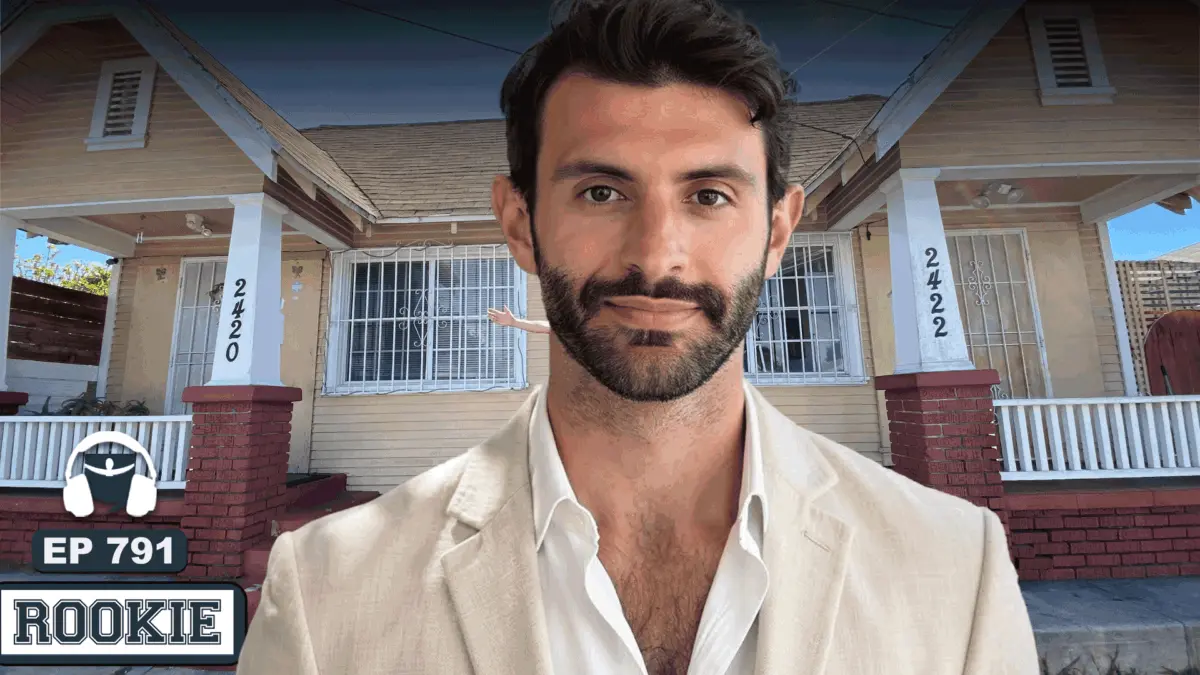
While many real estate novices chase massive portfolios consisting of ten, twenty, or even fifty rental properties scattered across the country, investor Erik Caci believes he only needs two duplexes—totaling four rental units—to secure a financially free future. Even more impressive, Caci managed to purchase both of his multi-family properties in one of the nation’s most competitive and expensive housing markets with under twenty percent down.
Appearing recently on the Real Estate Rookie podcast hosted by Ashley Karr, Caci detailed his unconventional journey from retail sales to medical device sales, and ultimately to multi-family real estate investing in Los Angeles, California. Filling in for regular co-host Tony Robinson, Karr unpacked Caci’s strategy, exploring how a corporate W-2 career, disciplined savings, and a willingness to tackle deferred maintenance allowed Caci to carve out a viable path to long-term wealth in a high-barrier market.
From Luxury Retail to Medical Device Sales
Before diving into real estate, Caci built a foundation in customer-facing roles. While working in retail during high school and college, he broke into the luxury sector, working for Louis Vuitton. That experience shaped his appreciation for client development, relationship management, and personalized service. Following college, Caci transitioned into medical device sales, a career path that eventually relocated him from the East Coast to Los Angeles, California.
Living in New Jersey prior to the move, Caci had purchased a condominium with the expectation of remaining in the New York-New Jersey market. However, when a career opportunity arose in Los Angeles just months later, he found himself managing an out-of-state asset before ultimately deciding to sell it. Although the short ownership period yielded a break-even financial outcome due to regional appreciation, the experience introduced him to property ownership and basic real estate metrics.
Once settled in Los Angeles, a city notorious for high home prices and steep rental rates, Caci began exploring personal finance podcasts. In 2021, references to house hacking and the BiggerPockets platform introduced him to the wider world of real estate investing. Recognizing that traditional single-family investing would be financially prohibitive for a newcomer in Southern California, Caci quickly realized that his entry point into the local market would require a house-hacking strategy utilizing multi-family housing.
Uncovering a Century-Old Opportunity in Jefferson Park
Caci’s first major acquisition in Los Angeles centered on a century-old duplex located in the Jefferson Park neighborhood. Finding the property required nightly searches on Zillow, where he maintained a saved list of potential investments. The property caught his eye after lingering on the market for more than ninety days, accompanied by a notable price reduction. Built in 1924, the home possessed historic architectural charm but came with severe liabilities, including mold, termite damage, a failing roof, and a general state of disrepair that had scared away other prospective buyers.
Furthermore, the property sat within a Historic Preservation Overlay Zone (HPOZ). For many real estate investors, historic preservation zones represent major red tape, requiring strict adherence to local architectural guidelines and committee approvals for exterior modifications such as roofing materials, siding, paint colors, and windows. However, Caci viewed the historical designation as a protective advantage that would preserve the neighborhood’s character and long-term appeal. Noting that the adjacent West Adams neighborhood had experienced some of the highest property value growth in Los Angeles between 2016 and 2024, Caci anticipated that gentrification would naturally extend into Jefferson Park.
To execute the purchase while keeping capital available for necessary repairs, Caci utilized an FHA loan, putting down just 3.5 percent—totaling roughly $23,000—supplemented by approximately $5,000 in closing costs. Total acquisition expenses before renovations hovered around $30,000.
Navigating Renovations and Vacancy Challenges
Because Caci intended to house hack the property, he faced an immediate hurdle: both units were occupied. To secure a vacant unit for himself, he included a vacant delivery condition in his initial purchase offer. Realizing that the sellers were eager to offload a property that had sat stagnant on the market for months, the strategy succeeded. The sellers negotiated a cash-for-keys agreement with one of the existing tenants, paying between $20,000 and $30,000 to expedite a vacancy within a 45-day escrow period.
Upon taking possession, the true condition of the unit became apparent. Stripped of furniture, the interior revealed significant mold in a bedroom ceiling, outdated fixtures, and worn infrastructure that required a near-total cosmetic gutting. Working under a strict 45-day timeline before his existing apartment lease expired, Caci hired a general contractor and utilized professional design consultation to modernize the roughly 650-square-foot unit while respecting local historic guidelines.
Mold remediation added roughly $6,000 to the budget, a cost Caci viewed as a necessary, non-negotiable expense rather than a deal-breaker. Total renovation costs reached approximately $45,000. While the property’s existing mortgage sat at roughly $5,000 per month, and the remaining long-term tenant paid below-market rent, Caci structured the purchase as a long-term buy-and-hold strategy designed for equity growth and steady appreciation rather than immediate monthly cash flow.
Expanding the Portfolio with a Second House Hack
After spending nearly two years stabilizing the Jefferson Park duplex, upgrading its exterior, addressing termite and foundation needs, and installing new windows, Caci sought to scale his portfolio. Bolstered by a successful major deal within his W-2 medical device career, he identified a second multi-family property in Hollywood.
The Hollywood duplex offered a superior location near major thoroughfares and urban centers, ensuring sustained rental demand. This time, Caci chose to deploy a larger down payment of 12 percent, aiming to narrow the monthly gap between expenses and rental income. The property required far less initial deferred maintenance than his first acquisition, allowing him to move into one unit while managing existing tenants in the others.
Across both properties, Caci’s total monthly mortgage obligations now stand at approximately $9,600, offset by rental income generated from the stabilized units. While he currently covers a monthly shortfall out of pocket, the structure allows him to maintain a primary residence in central Los Angeles while tenants steadily pay down his principal balance.
Shifting Focus Toward Future Growth
Reflecting on his progression, Caci credits his stable W-2 income with providing the financial backbone necessary to absorb monthly operational shortfalls and qualify for commercial-scale financing in an expensive housing market. Rather than chasing dozens of low-cost properties across the Midwest right out of the gate, Caci intentionally focused on building a secure, high-quality foundation close to home.
However, looking ahead, Caci has begun exploring new geographic markets and strategies, including single-family BRRRR (Buy, Rehab, Rent, Refinance, Repeat) investments in the Midwest, specifically evaluating opportunities in markets like Memphis and Detroit with the guidance of experienced mentors. By combining disciplined personal finance, strategic house hacking, and a long-term perspective on wealth accumulation, Caci has established a clear blueprint for retirement built on quality over quantity.