



Global financial markets are bracing for a consequential and highly dynamic week ahead, dominated by a heavy calendar of central bank policy rate decisions, major political events in the United States, and critical inflation and manufacturing data releases from across key economies. Investors are carefully weighing shifting monetary policy signals, mixed manufacturing indicators out of Asia and Europe, and fresh geopolitical and commodity market developments that continue to influence currency and fixed-income valuations.
In Focus This Week: Central Banks and Major Data Releases
From the United States, market participants are awaiting the release of the October ISM Manufacturing survey, which is widely expected to continue pointing toward solid and resilient activity within the American manufacturing sector. Later in the day, Federal Reserve official Austan Goolsbee is scheduled to speak. While Goolsbee is a non-voter in 2026 and a voter in 2027, his commentary will be closely scrutinized for insights into the central bank’s internal debates. He has previously flagged persistent inflation concerns, though notably, he was among the committee members who advocated for pushing interest rate hikes beyond the October timeframe. Additionally, the US Treasury is set to announce its latest Quarterly Refunding Announcement (QRA) borrowing estimates, providing crucial guidance for the government’s upcoming debt issuance plans.
Across the Atlantic, the euro area will see the publication of the final manufacturing Purchasing Managers’ Index (PMI) for October. Economists broadly expect the reading to confirm the earlier flash estimate of 52.4, thereby signaling that decent growth momentum remains intact within the currency bloc’s industrial sector.
National manufacturing metrics are also drawing attention, with Sweden releasing its October manufacturing PMI. In September, the Swedish manufacturing PMI climbed to a three-month high of 58.1, propelled by a significant acceleration in new orders and production levels. Swedish manufacturing activity has generally held up remarkably well over the past year, comfortably remaining above its long-term average throughout the entirety of 2026.
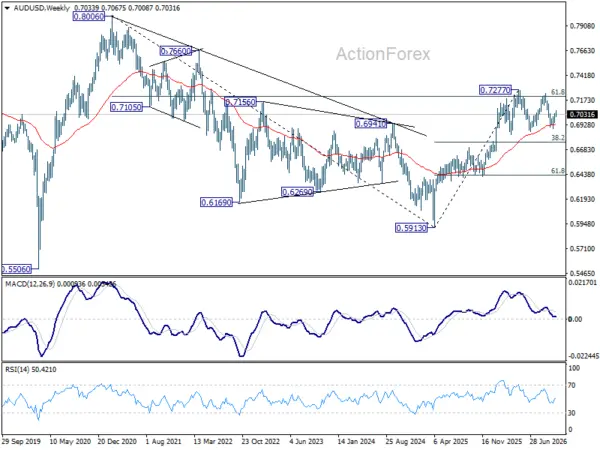
Overnight, the Reserve Bank of Australia (RBA) is slated to announce its latest policy rate decision. Both market consensus and internal projections anticipate a 25 basis point hike, which would lift the official cash rate to 4.85% from 4.60%. If realized, this move would mark the fifth consecutive interest rate increase enacted by the RBA over the course of 2026 as the central bank continues its efforts to cool domestic demand and anchor inflation.
This week stands out as one of the busiest periods of the financial calendar, with the primary spotlight firmly fixed on the United States. Markets are preparing for Tuesday’s high-stakes US midterm elections, the outcome of which could alter the legislative landscape and fiscal policy expectations, followed closely by the crucial nonfarm payrolls report on Friday. Beyond the US, monetary policy meetings are scheduled for the Riksbank on Wednesday, alongside concurrent decisions from Norges Bank and the Bank of England on Thursday. On the inflation front, preliminary prints are due from both the euro area and Sweden, offering fresh clues regarding the broader trajectory of consumer price pressures.
Economic and Market News
What Happened Overnight
In China, the official manufacturing PMI retreated back into contractionary territory in October, dropping to 49.3 from 50.1 in September and falling short of the consensus expectation of 50.0. Underlying details of the official survey painted a weak picture, as both new orders and new export orders remained firmly in contraction, while production indices and purchasing activity also slipped below the critical 50 threshold separating expansion from contraction.
In stark contrast, the private-sector RatingDog Manufacturing PMI maintained its expansionary posture, coming in at 52.0 for October, down only marginally from 52.1 the previous month. According to analysis by Reuters, this notable divergence between the private and official PMI surveys likely stems from fundamental differences in their underlying sample coverage, geographic distribution, and methodological approaches to data collection.
What Happened Over the Weekend
In the United States, the Employment Cost Index (ECI) for the third quarter rose by 0.8% on a quarter-over-quarter basis, matching consensus forecasts and easing slightly from the 0.9% increase recorded in the second quarter. Growth rates across both wages and salaries and employee benefits slowed moderately, indicating that overall wage pressures remain relatively contained for now. Nevertheless, analysts note that should the domestic labor market tighten further in the months ahead, renewed upward pressure on wages could begin to materialize in upcoming quarters.
Meanwhile, commentary from Federal Reserve officials highlighted ongoing nuances regarding the future path of monetary policy. Fed Governor Thomas Barkin, a non-voter in 2026 and voter in 2027, remarked that the "direction of travel" for the central bank is straightforward, while the central question remains the pace of adjustment. He added that a gradual approach continues to be appropriate under current economic conditions.
In a more hawkish tone, Federal Reserve official Loretta Logan—who holds a vote in 2026 but rotates out in 2027—asserted that at least two more interest rate hikes will be necessary to definitively ensure price stability. While Logan has expressed similar views in the past, her remarks carry added weight given that she voted in favor of keeping interest rates unchanged at the Federal Open Market Committee’s most recent October meeting.
In Europe, third-quarter gross domestic product (GDP) growth for the broader euro area surpassed expectations, expanding by 0.4% quarter-over-quarter, comfortably beating the consensus forecast of 0.2%, though moderating from the 0.6% growth rate registered in the previous quarter. Crucially, when excluding the notoriously volatile Irish economy—which often distorts aggregate figures but holds little bearing on the European Central Bank’s core policymaking—the euro area economy grew by 0.2% quarter-over-quarter, broadly matching expectations.
This sustained, albeit moderate, economic momentum in the third quarter was primarily driven by solid performances in Germany and Spain, whereas economic activity in France and Italy disappointed. National breakdown details indicate that domestic demand, particularly private household and government consumption, served as the primary engine of growth during the quarter, while net foreign demand acted as a notable drag.
Preliminary national inflation prints for October across the euro area revealed divergent trends among member states. German inflation figures came in below market expectations, largely offsetting hotter-than-anticipated consumer price readings out of France and Italy, while Spanish inflation printed directly in line with forecasts. Aggregating these regional outcomes brings the overall euro area Harmonised Index of Consumer Prices (HICP) close to initial expectations. Economists anticipate that Wednesday’s official release will show headline inflation ticking upward to 4.0% year-over-year from 3.8% in September, while core inflation is expected to remain steady at 2.50% year-over-year.
The euro area unemployment rate held steady at 6.5% in September, matching consensus expectations following an upward revision of the August figure from 6.4% to 6.5%. The total number of unemployed individuals across the bloc rose by approximately 120,000, a movement predominantly driven by France, which accounted for 80,000 of the increase. Analysts suggest that a relatively balanced and stable aggregate labor market in the euro area will help limit the risk of strong second-round effects on underlying inflation.
Turning to Norway, the seasonally adjusted unemployment rate remained unchanged at 2.0% in October, perfectly aligning with baseline projections and confirming that the domestic labor market remains exceptionally tight despite a broader macroeconomic slowdown. This jobless rate sits marginally below Norges Bank’s latest official forecasts published in the September Monetary Policy Report, which projected unemployment at 2.1%. However, this slight deviation is not viewed as sufficient to alter expectations for unchanged interest rates at the central bank’s upcoming policy meeting.
Additionally, Norges Bank announced plans to sell NOK 300 million per day in foreign exchange throughout November. The revised oil-adjusted government budget deficit for 2026, which was reduced by NOK 16.5 billion, would in isolation have justified increasing daily currency sales to approximately NOK 850 million. However, Norges Bank and the Ministry of Finance opted to smooth cash flows via the Petrobuffer Fund, anticipating the need to purchase Norwegian Krone in 2027—a pragmatic and prudent approach that explains the more modest operational pace.
In commodity markets, Brent crude oil traded just below USD 110 per barrel following an extraordinary meeting of OPEC+. The cartel decided to keep its December production targets unchanged, as Gulf oil output remains constrained by disruptions linked to the ongoing conflict involving Iran. This decision shifts the primary focus of energy markets to the full ministerial meeting of OPEC+ scheduled for November 29, where member nations are widely expected to address comprehensive production quotas for 2027. The International Energy Agency (IEA) has previously issued warnings regarding potential oversupply conditions in 2027 if Gulf production flows return to full, uninterrupted capacity.
In the digital asset space, cryptocurrency exchange Binance has initiated a phased reopening of withdrawal services following a massive security breach that resulted in a record USD 6.3 billion hack. Initially, the platform is permitting withdrawals restricted to selected digital tokens, including Ethereum, USDT, and USDC, with support for additional assets slated for gradual restoration. Users withdrew a net USD 3.64 billion during the initial hours after withdrawals resumed over the weekend, equivalent to roughly 2.1% of the total assets held on the exchange immediately prior to the cyberattack. Market analysts are closely watching to determine whether this incident will exert a lasting negative impact on broader cryptocurrency market sentiment in the coming weeks.
Fixed income and foreign exchange markets experienced heightened volatility following a surprise rating action late last week, when credit agency Fitch placed France on a negative outlook. Because this rating shift occurred outside the standard calendar schedule, it caught bond markets off guard, leading analysts to predict immediate downward pressure on French Government Bonds (OATs).
This development contributed to broader euro weakness, with the EUR/USD exchange rate hovering near the 1.1150 threshold—a soft trend that could easily extend further in light of the French debt concerns. Meanwhile, the upcoming US midterm elections remain the defining macro event for currency traders. Prediction markets currently favor a Democratic sweep as the most probable outcome, a scenario that analysts expect would likely exert a modestly positive influence on the broad US dollar.
The Norwegian Krone has continued to exhibit strong performance, bolstered primarily by an elevated energy risk premium and an exceptionally tight European gas market. The EUR/NOK currency pair closed out the week at 10.2724, while the SEK/NOK exchange rate declined to a fresh year-to-date low of 0.9366. Concurrently, EUR/DKK traded near recent cyclical lows toward the end of last week as persistent negative sentiment regarding European debt woes weighed heavily on the shared currency.