


Global financial markets are confronting a complex interplay of shifting equity sentiments, persistent geopolitical tensions, and intensifying fiscal scrutiny on sovereign bonds. While macroeconomic indicators continue to display pockets of resilience—particularly within the European automotive sector and selective central bank policies—investors remain on edge as they weigh the sustainability of artificial intelligence infrastructure spending, sticky energy prices, and looming monetary policy decisions from both the US Federal Reserve and the European Central Bank.
Markets
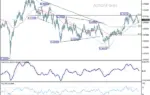
From the three dominant trading themes that have shaped the financial landscape since early last week, one is actively trying to turn the narrative. Equity sentiment experienced a welcome boost yesterday as major European benchmarks rebounded by over 1%. Yet, from a technical perspective, the EuroStoxx50 index for now remains trapped within a narrow downward trend channel, caught in a persistent sell-on-upticks pattern. Market analysts note that a decisive move above the 6250 to 6300 range—moving up from yesterday’s close at 6207—is desperately needed to fend off further downside alerts and allow the index to morph into a more stable sideways trading pattern.
Across the Atlantic, key US indices managed to post gains ranging between 0.5% and 1%, with the technology-heavy Nasdaq outperforming for the first time since serious questions began to emerge regarding the financing mechanisms behind the rapid build-out of artificial intelligence infrastructure. However, despite better-than-expected corporate earnings reports from Meta and Tesla delivered after the market close, equity futures failed to inspire meaningful follow-up action, with initial gains gradually wiped out during subsequent trading hours.
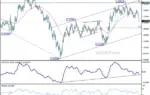
The first important technical support level for the Nasdaq, set around the 26,000 mark, was thoroughly tested last week. While it successfully stood its ground, that critical threshold remains uncomfortably close, given yesterday’s close at 26,702. Meanwhile, Asian markets acting as direct proxies for the AI sector felt the brunt of shifting sentiment, suffering heavy losses this morning with benchmarks dropping between 3% in Hong Kong and 4% in South Korea.
Simultaneously, the energy price narrative remains fundamentally unchanged, with both Brent crude and European natural gas prices hovering uncomfortably close to their multi-month highs. Brent crude has maintained positions above the $110 per barrel threshold since May, while European gas continues to trade around the €90 per megawatt-hour area, a level not routinely seen since 2022. Upward price pressure received a fresh jolt this morning following a report by the New York Times detailing specific plans drafted by US and Israeli militaries for renewed military strikes against Iran following the upcoming US midterm elections.
The same newspaper report also highlighted a mandatory departure order issued for non-government employees and their families residing in Saudi Arabia as Houthi-related attacks within the country continue to escalate. Market strategists warn that these higher-than-assumed energy prices will make next week’s anticipated, unchanged policy decisions by both the Federal Reserve and the European Central Bank an exceptionally tough sell to an audience that expects monetary authorities to acknowledge that there is still significant work to be done on inflation. Consequently, the recent money market corrections—which had gravitated toward discounting a slower tightening cycle with a lower overall cycle peak—might soon find themselves heavily challenged by economic reality.
Adding to the macroeconomic friction is the European Monetary Union sovereign spread storyline, where bond markets are keeping intense pressure on European governments to present credible fiscal consolidation plans during current budget rounds. Yesterday, the 10-year French OAT-swap and Belgian 10-year OLO-swap spreads both widened by 6 basis points, moving to 148 basis points and 90 basis points respectively. In doing so, both underperformed Italy, where spreads widened by a milder 4 basis points to 104 basis points.

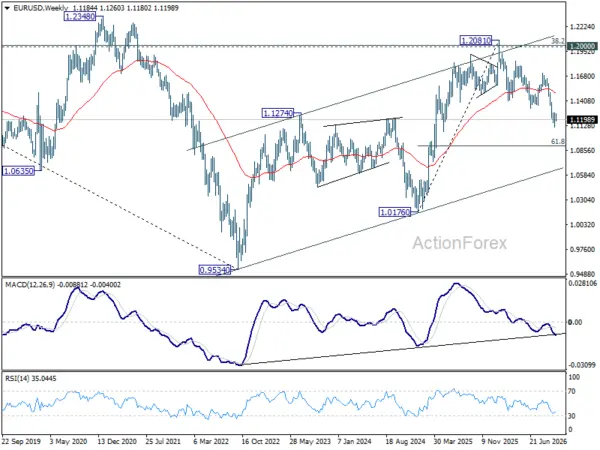
Specifically in Belgium, Prime Minister Bart De Wever failed to reach this morning’s hoped-for political deadline as one of the five coalition partners, the centre-left Vooruit party, remains fundamentally at odds with the government’s proposed multi-annual consolidation effort amounting to €10 billion. Given the ongoing parliamentary recess, securing a comprehensive fiscal deal by the end of the month currently stands as the best-case scenario. In the meantime, bond markets refuse to let up their pressure, a dynamic that inevitably weighs down on most euro crosses. Remarkably, the stabilization of the EUR/USD exchange rate around the 1.12 level remains a notable outlier in the face of these domestic European headwinds.
News & Views
Away from the broader trading floors, the new EU passenger car market displayed remarkable resilience in September, defying a deeply challenging macroeconomic environment. According to the European Automobile Manufacturers’ Association, total vehicle registrations rose by 5.7% year-to-date and registered a 9.3% increase on a 12-month trend basis. Up until September 2026, battery-electric vehicles successfully secured a 22.7% share of the broader EU market, marking a significant climb from the 16.1% recorded during the same period a year earlier.
Three of the four largest European Union markets, which collectively accounted for 64% of all battery-electric vehicle registrations, recorded staggering growth rates. France led the charge with a 79.1% surge, closely followed by Germany with a 58.1% increase, and Denmark posting a 40.3% gain. Belgium similarly punched above its weight, recording a robust 15.7% increase in battery-electric vehicle registrations.
Meanwhile, hybrid-electric cars captured 36.3% of the overall market, retaining their position as the preferred powertrain choice among European consumers. Countries like Italy and Spain posted strong hybrid growth rates of 20.8% and 20.5% respectively, while hybrid registrations in Belgium stagnated with a modest 0.8% uptick. Conversely, the combined market share of traditional petrol and diesel cars experienced a sharp contraction, falling to 28.2% compared with 36.9% a year earlier. In Belgium alone, petrol car registrations dropped by 5.6% and diesel registrations plummeted by 21.3% year-to-date compared to the previous year.
In monetary policy developments across Asia, the Bank of Korea opted to keep its benchmark policy rate steady at 3% this morning, taking a well-deserved breather after executing two consecutive 25 basis point hikes. Central bank watchers generally view this status quo as a temporary pause rather than a complete halt to the tightening cycle. The central bank’s internal forecasts indicate that economic growth is running significantly ahead of its August projections—which had previously pegged growth at 3.3% for 2026 and 2.9% for 2027—while inflation is expected to run higher next year.
Driven by these domestic economic dynamics, the central bank maintained its guidance for future rate increases. The decision itself was unanimous, reflecting a broad-based desire among policymakers to properly assess the cumulative impact of previous tightening moves, especially against a backdrop of mounting artificial intelligence-related financial risks. The Bank of Korea explicitly cited growing concerns regarding potential slowdowns in artificial intelligence spending, heavy issuance of sector-related corporate debt, and heightened stock market volatility.
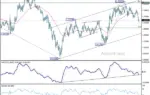
During the subsequent press conference, Bank of Korea Governor Shin adopted a notably composed tone, sounding less worried about downside shocks and explicitly prioritizing upside risks to economic growth and inflation over potential downside pressures. Following the announcement, the South Korean won steadied comfortably near its recent two-year highs against the dollar, trading around the USD/KRW 1234.1 mark as markets digested the central bank’s forward-looking stance.