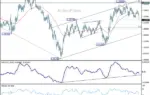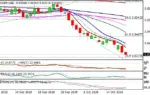


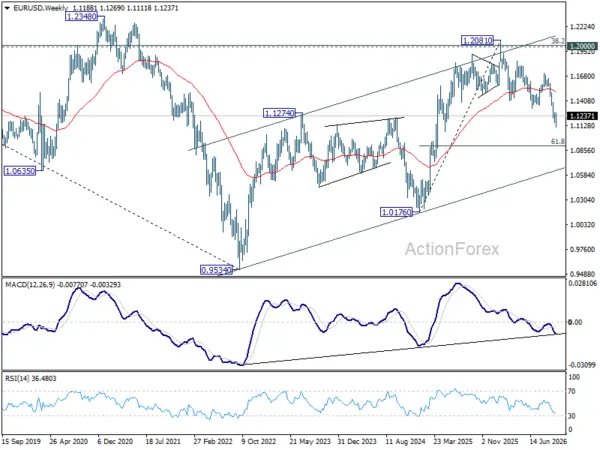
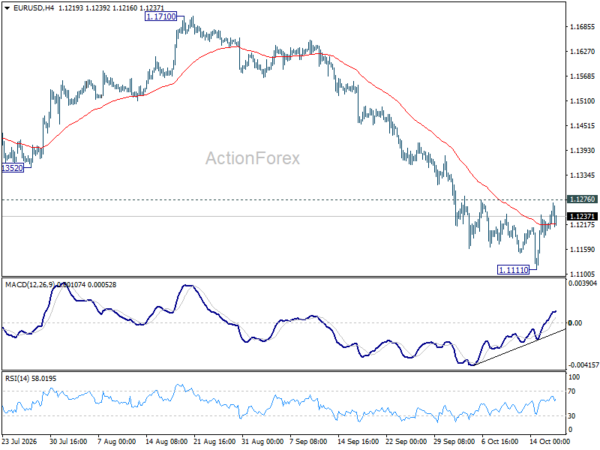
The EUR/USD currency pair has recently attempted a recovery after slipping toward the 1.1111 mark, but overall upside momentum remains restricted beneath a firm technical resistance ceiling at 1.1276. As the foreign exchange markets navigate the current trading week, the initial bias for the pair remains predominantly neutral to soft, with technical indicators pointing toward the likelihood of further downward movement. Market participants are closely monitoring whether the exchange rate will breach critical support thresholds, which could dictate the trajectory for the broader medium-term trend.
Looking at the immediate price action, a definitive drop beneath the 1.1111 low would signal an extension of the larger downward impulsive wave that originated from the medium-term peak of 1.2081. Such a break would clear the path for the pair to slide further toward the 1.0904 level, which aligns with a significant Fibonacci retracement milestone. However, currency strategists are maintaining a cautious stance regarding an aggressive short position due to underlying technical signals. Specifically, a bullish divergence observed on the 4-hour Moving Average Convergence Divergence (MACD) indicator suggests that downside momentum may be vulnerable to exhaustion.
If buyers manage to mount a surprise defense and drive a firm break above the 1.1276 resistance barrier, it would serve as an early technical indication that a short-term market bottoming process is underway. Such a breakout would likely trigger a stronger corrective rebound, pushing the currency pair upward to test the 55-day Exponential Moving Average (EMA), which is currently situated near the 1.1410 region.
Examining the broader macroeconomic and structural picture, recent developments indicate that the persistent decline from the 1.2081 medium-term top may be actively reversing the preceding upward trajectory that began from the 2025 low of 1.0176, and potentially even tracing all the way back to the 2022 cyclical low of 0.9534. As long as key overhead resistance levels remain intact, the overall market risk will continue to lean heavily toward the downside. In the event of interim technical rebounds, upside participation is expected to be severely limited as long as the critical resistance threshold at 1.1710 holds firm against buying pressure.
On the long-term charts, market focus has shifted decisively toward the 55-month Exponential Moving Average, which is currently hovering around the 1.2246 mark. A sustained and decisive break beneath this crucial monthly moving average would provide strong technical validation that the extensive recovery rally from the 2022 low of 0.9534 has fully completed. Under this scenario, the preceding rise would be classified structurally as a three-wave corrective move that topped out at 1.2081, following a clear rejection near the 38.2% retracement of the massive historical decline from the 2008 high of 1.6039 down to the 0.9534 low, a zone that converged closely with the major 1.2019 retracement level and the psychologically significant 1.2000 parity threshold.
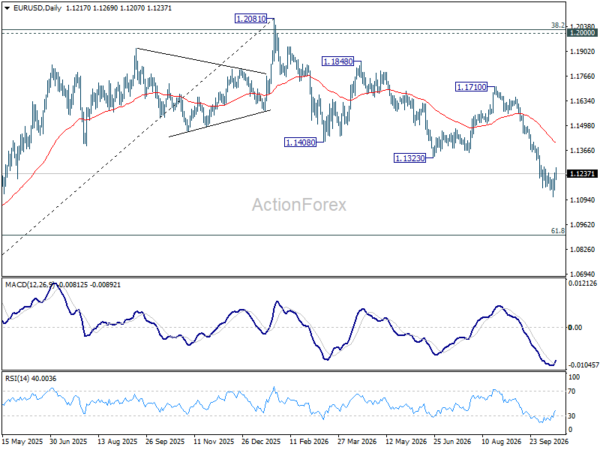
A confirmed breakdown through these long-term moving average parameters would ensure that the broader, multi-year macro downtrend originating from the historic 2008 peak remains firmly intact, keeping longer-term bearish strategies active for institutional and retail market participants alike as the foreign exchange landscape continues to evolve through the final quarters of the trading year.