


Global financial markets opened the week navigating a complex web of shifting geopolitical tensions, volatile commodity prices, and a fresh round of macroeconomic data spanning North America, Europe, and Scandinavia. While equity markets finished last week on a resilient note—hovering near all-time highs in both the United States and Europe—investors are closely monitoring a flurry of new developments, ranging from renewed Middle East security concerns to monumental shifts in trade policy between the European Union and China.
Economic and Market News
What Happened Overnight
In the commodities complex, Brent crude oil retreated toward USD 103 per barrel early in the session, pulling back from overnight levels just above USD 105 per barrel. The downward correction effectively reversed recent gains, as growing prospects for renewed Russian diesel supplies helped to alleviate persistent market anxiety regarding global fuel shortages. Further downward pressure on prices stemmed from emerging reports of a potential Russia-Ukraine "energy ceasefire," which market participants hope could stabilize vital supply routes.
However, the downside for oil prices remained strictly contained due to a sharp escalation in geopolitical risk. Renewed Houthi drone and missile attacks targeting Saudi Arabia’s main international airport have dramatically raised the prospect of retaliatory military action in the region. These immediate security threats are occurring concurrently with delicate diplomatic overtures, as ongoing contact between Iran and Saudi Arabia offers a glimmer of hope for eventual regional de-escalation.
What Happened Over the Weekend
Trade policy took center stage in Europe over the weekend as the European Union and China reached a significant preliminary agreement regarding hybrid vehicles. The pact could precipitate a drastic contraction in Chinese automotive exports to the 27-member bloc. EU Trade Commissioner Maroš Šefčovič characterized the breakthrough as marking the formal conclusion of the "first phase" of intensive negotiations. Under the terms of the emerging framework, exports of Chinese electric and plug-in hybrid vehicles to the European Union are set to be reduced by up to 50 percent.
The agreement underscores Brussels’ broader, aggressive push for a fundamental rebalancing of trade relations with Beijing, addressing long-standing concerns over industrial subsidies and market access. Further details regarding the precise mechanics of the agreement, alongside the timeline for implementation and next steps, are anticipated to be released as EU leaders convene in Brussels later this week.
Simultaneously, the security situation in the Middle East deteriorated sharply over the weekend. The Houthi movement claimed formal responsibility for a series of coordinated strikes targeting Riyadh’s international airport, with local authorities in Saudi Arabia confirming further injuries following a fresh wave of attacks on Sunday. The vital transport hub remains closed to commercial traffic, starkly underlining the acute disruption risks facing regional infrastructure.
Houthi leadership has issued stern warnings cautioning against the use of airports across Saudi Arabia, suggesting that the current security crisis will likely persist in the near term. Although high-profile energy conferences in Riyadh are continuing as scheduled, the escalating violence has injected a fresh layer of risk premium into global markets, intensifying anxieties over regional stability and the security of critical energy infrastructure.
Across the Atlantic, macroeconomic indicators in the United States pointed toward deepening pessimism among consumers. US consumer confidence dropped precipitously in October, sliding further from an already weak sentiment reading in September. With the sole exception of a temporary reprieve recorded in May of this year, consumer sentiment now sits at its weakest level on record in data series dating back to the 1950s. A closer examination of the underlying survey components reveals a stark dichotomy: the sub-index assessing current economic conditions dropped by a remarkably large margin, heavily defying market consensus expectations which had pointed toward an unchanged assessment. Conversely, the sub-index measuring future economic expectations ticked upward, defying widespread market forecasts for a weaker outlook.
In Scandinavia, inflation and growth data painted divergent pictures of economic health. In Norway, core inflation held steady at 3.0 percent in September, marginally missing the consensus forecast of 3.1 percent. This outcome confirms that the recent downward trend in core inflation has successfully extended through the third quarter. While the reported figure sits just a fraction above Norges Bank’s latest Monetary Policy Report estimate of 2.9 percent, analysts agree the deviation is far too minor to alter the central bank’s overarching monetary policy stance.
Meanwhile, across the border in Sweden, the flash GDP indicator for August surprised markets significantly to the upside. The monthly figure surged by 1.1 percent, translating to a robust 3.5 percent increase on an annualized year-on-year basis. This strong economic momentum was strongly reinforced by the production value index (PVI) for September, which showed private sector production expanding by 0.5 percent month-on-month and 3.8 percent year-on-year, propelled primarily by solid growth in industrial manufacturing. While economists emphasize that monthly GDP figures are inherently volatile and must be interpreted with caution, the latest prints, when combined with the PVI data, point toward surprisingly solid economic momentum anchored predominantly by the manufacturing sector.
Equity markets ended the week on a firm footing, with major indices in both Europe and the US closing higher and continuing to hover near all-time highs. More importantly, the character of last week’s market action offered encouraging signals for portfolio managers: equities demonstrated that bond yields and oil prices do not necessarily need to decline simultaneously for stock prices to advance. Despite experiencing considerable intraday volatility across fixed income rates, oil benchmarks, and broader energy headlines, the broadly sideways trajectory of these asset classes proved more than sufficient to support underlying equity valuations, while implied bond volatility gradually drifted lower.
Market leadership proved equally instructive for analysts dissecting the current market cycle, revealing that the recent advance was far from a classic cyclical rally. Instead, stabilizing oil prices provided critical relief to consumer staples and consumer discretionary sectors—two areas of the market that have borne the brunt of investor selling pressure since the outbreak of conflict involving Iran. Meanwhile, speculative enthusiasm surrounding artificial intelligence and capital expenditure themes took a more subdued backseat. While a meaningful, sustained decline in oil prices would undoubtedly provide an additional catalyst for equities, market strategists caution investors against automatically reverting to traditional cyclical leadership models. Consumer-facing sectors, having absorbed much of the pain from elevated energy costs, stand out as primary potential beneficiaries if current macroeconomic trends hold.
In Asian trading hours, equities presented a mixed picture, characterized by renewed hesitation and profit-taking in artificial intelligence and technology shares, even as US and European equity futures pointed moderately higher ahead of the opening bell.
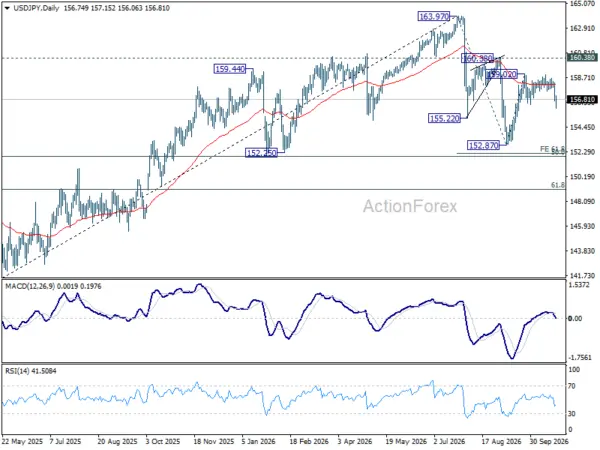
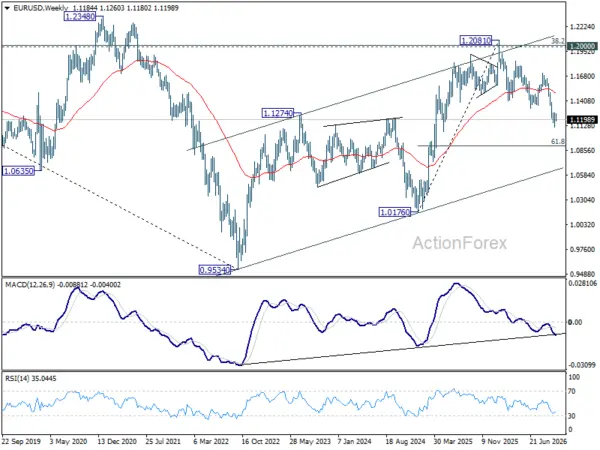
In fixed income and foreign exchange markets, European sovereign and corporate rates ended the week broadly unchanged. Market attention remained heavily fixated on France and the impending domestic budget debate, while expectations for aggressive further monetary tightening by the European Central Bank have been noticeably scaled back. In the currency markets, the EUR/USD exchange rate continues to trade just below the 1.12 threshold, with fluctuations in global energy prices and upcoming US Consumer Price Index data standing out as the primary risk factors for the pair.
The Norwegian Krone (NOK) has firmed notably, supported by sticky core inflation readings, resilient oil prices, and market expectations that Norges Bank will maintain a persistently tight policy stance. Meanwhile, the Swedish Krona (SEK) has mounted a modest recovery in recent sessions, though market strategists maintain that the currency remains structurally vulnerable as long as the wide interest rate differential relative to the European Central Bank persists.