




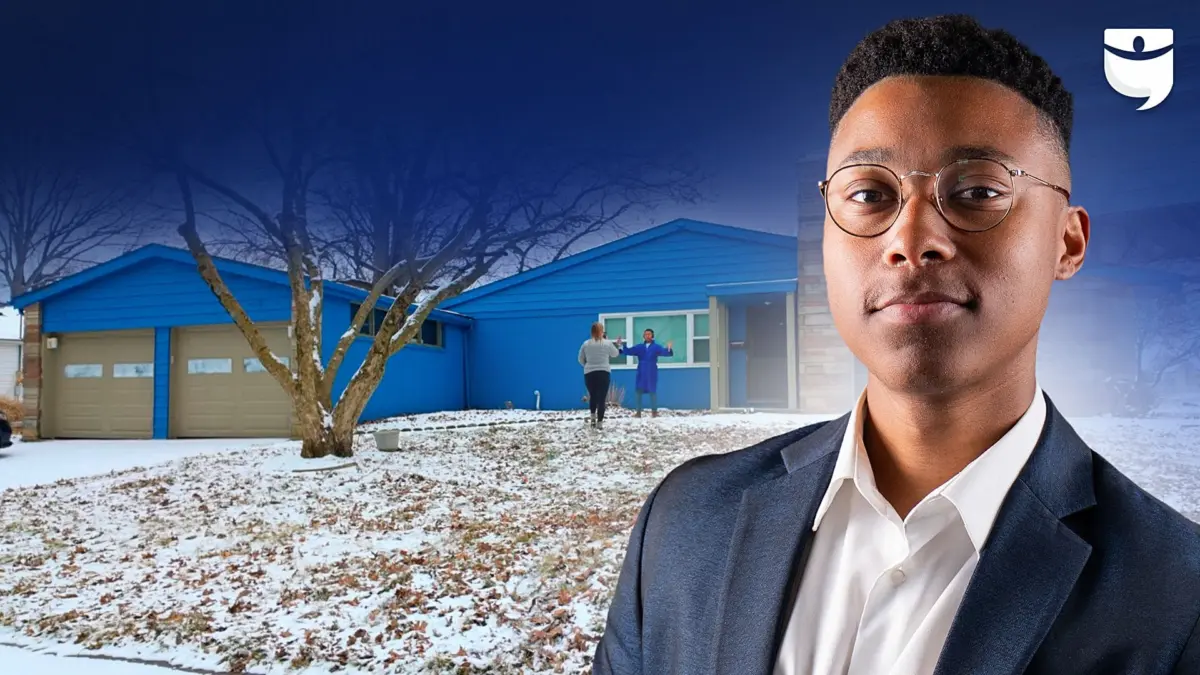
When Obi Johns was a teenager growing up in Columbus, Ohio, he witnessed a masterclass in missed opportunity. His parents decided to sell their family home—a property they had purchased for roughly $80,000 in the late 1990s—as a fixer-upper for about $230,000. To the young Johns, walking away with $150,000 in pure market appreciation seemed like an extraordinary windfall for simply living in a house for two decades.
That excitement, however, quickly turned into a stinging lesson in real estate potential. Just months after the sale, the investor who bought the childhood home put it back on the market after minor updates and sold it for nearly $400,000 more, fetching close to $600,000. Staring at the massive margin left on the table, Johns formed a defining thought that would steer his professional trajectory: "That should have been us."
Years later, after graduating from Ohio State University with a degree in political science that he quickly realized he had little passion for, Johns faced a crossroads. Graduating right into the economic landscape of the COVID-19 pandemic amid booming property values and rock-bottom 3% interest rates, he decided to pivot entirely. Immersing himself in educational podcasts and financial freedom resources like BiggerPockets, the 21-year-old made the bold decision to jump headfirst into the real estate industry.
Rather than immediately chasing capital he didn’t yet possess, Johns first earned his real estate license. He spent his initial years working as an agent handling both retail and investor transactions in the competitive Columbus market. Gaining hands-on familiarity with underwriting, contract negotiations, and client expectations laid a critical foundation for his future endeavors.
Eager to test every facet of the industry he had studied, Johns soon executed his first personal real estate transaction: a house hack on a century-old Columbus duplex. Sourcing the deal off-market through a connection made at local real estate meetups—an established investor who flipped dozens of homes annually—Johns secured the property with a modest 5% conventional down payment.
Although the century-old duplex came with its inevitable hurdles, including a collapsed sewer line that cost $7,000 to excavate just months after closing, the house hacking strategy proved successful. While rental apartments in the bustling Ohio State University area commanded between $2,000 and $2,200 monthly, Johns’ mortgage sat at around $3,400. By renting out one side of the duplex for $1,800, he and his wife significantly slashed their personal living expenses while building equity through long-term market appreciation paid largely by rental income.
Having successfully navigated his first residential investment, Johns set his sights on a new challenge: house flipping. Eager to understand the exact stressors, contractor dynamics, and financial tightropes his investor clients experienced daily, he decided to acquire a neglected property in need of cosmetic revival.
Purchased off-market for $153,000 roughly ten minutes from his home, the project required about $40,000 in renovations, including basement finishing, painting, and roof repairs. Crucially, Johns decided to chronicled the entire undertaking day-by-day on Instagram. Starting from day one—when he encountered unexpected left-behind clutter and hidden structural surprises—his vulnerable, unpolished documentation struck a massive chord with the public.
The resulting social media series went viral overnight, racking up over seven million views and rapidly swelling his follower count by 100,000 in just a few days. The intense digital exposure directly translated into hyper-local demand. When the property hit the market, it shattered local records by drawing 26 showings in a single day—the most for any single-day showing in that specific Columbus zip code for 2024. Generating 10 competitive offers on day one, the property ultimately sold for $25,000 over asking price, yielding a net profit exceeding $44,000.
Despite the impressive financial return, the intense operational strain of traditional flipping left Johns reevaluating his priorities. Recognizing that the immense stress of managing extensive construction projects did not bring him the same personal fulfillment as helping clients secure their first homes or assisting families through retail transactions, he chose to step back from continuous flipping. Instead, he forged a hybrid approach he coined "vibe flipping."
Applying lessons learned from his viral social media experiment, Johns began letting his online audience dictate the aesthetic and design choices for subsequent renovation projects through interactive polls. By crowdsourcing design preferences—such as unique color palettes tailored to mid-century modern architecture rather than relying on the standard gray walls and generic finishes popularized by mass-market flippers—his projects stood out in a crowded inventory.
This audience-tested design model not only eliminated the guesswork of interior styling but dramatically accelerated sales velocity. Across his subsequent flips, Johns averaged just five days on the market in a city where the typical average hovered between 30 and 40 days. His most recent vibe flip netted a profit of $57,000, funded entirely through 100% outside financing without using his own liquid capital.
Now sitting at 28 years old, Johns operates as a top-producing agent ranking in the top 5% of his brokerage, channeling roughly 80% of his business through the organic reach of his social media presence. While he plans to limit physical flips to perhaps one project a year to stay attuned to shifting market trends, his primary focus remains on scaling his agent business in Central Ohio, guiding clients through their own transformative real estate journeys, and continuing to document the realities of the industry he chose to conquer.