



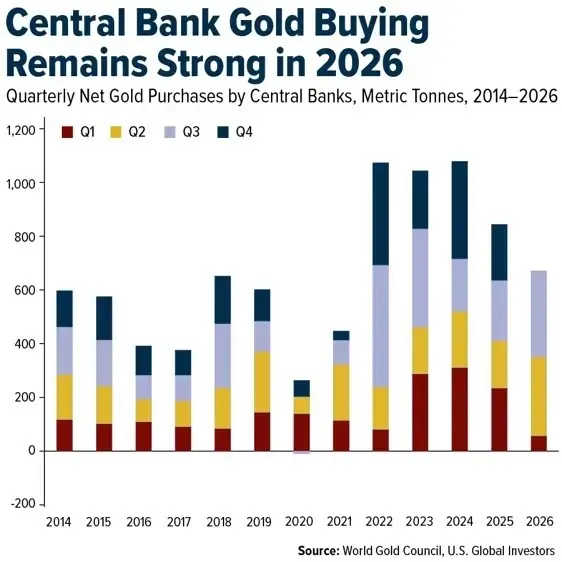
In the ever-evolving landscape of global finance, precious metals continue to command significant attention from institutional investors, sovereign monetary authorities, and market analysts alike. Recent market assessments underscore a persistent and dominant trend in the international bullion market: the sustained, robust appetite for gold among central banks worldwide. As macroeconomic pressures, shifting geopolitical alignments, and ongoing currency fluctuations redefine the parameters of reserve management, sovereign institutions are increasingly turning to the world’s oldest safe-haven asset to fortify their national balance sheets.
This enduring trend forms the cornerstone of the latest comprehensive market evaluation provided by prominent financial strategist Frank Holmes, Chief Executive Officer and Chief Investment Officer of U.S. Global Investors. Known for his deep insights into the natural resource and mining sectors, Holmes has continually monitored the intricate dynamics driving the gold market, highlighting how sustained central bank acquisition provides a formidable structural floor for bullion prices even during periods of broader macroeconomic turbulence.
To fully understand the weight of these developments, market participants frequently rely on structured analytical frameworks to dissect the current state and future trajectory of the precious metal. Within this analytical context, experts evaluate the gold market through four distinct lenses: inherent strengths, persistent weaknesses, emerging opportunities, and potential threats. While raw data and short-term price fluctuations often dominate daily financial headlines, a comprehensive SWOT assessment provides a clearer picture of gold’s enduring role in both sovereign portfolios and individual investment strategies.
Strengths
The foundational strengths of gold remain deeply rooted in its historical role as the ultimate store of value and an unyielding hedge against systemic risk, inflation, and currency devaluation. Unlike fiat currencies, which are subject to the fiscal and monetary whims of governing authorities, physical gold carries no counterparty risk. This characteristic has become increasingly attractive to central banks seeking to diversify their foreign exchange reserves away from traditional dominant currencies, most notably the U.S. dollar, amidst a backdrop of rising global debt levels and persistent geopolitical fragmentation.
Furthermore, the persistent demand from official sector buyers—ranging from emerging market economies aiming to de-dollarize their holdings to traditional monetary authorities reinforcing their domestic financial stability—serves as a primary pillar of market strength. When central banks buy gold on a consistent, multi-year basis, it fundamentally alters the supply and demand equilibrium, absorbing significant quantities of newly mined and recycled bullion. This institutional backing creates a resilient price baseline that distinguishes gold from other asset classes, which may experience sharp drawdowns during periods of heightened market stress or liquidity crunches.
Weaknesses
Despite its formidable attributes, the gold market is not without its inherent vulnerabilities and short-term weaknesses. One of the most frequently cited drawbacks for investors is that gold is a non-yielding asset. Unlike equities, which can generate dividends, or fixed-income securities that pay regular interest coupons, holding physical gold produces no regular cash flow. Consequently, during periods of rising real interest rates and high opportunity costs, capital may flow away from non-yielding bullion toward interest-bearing instruments, creating downward pressure on gold prices.
Additionally, the gold market can be susceptible to sentiment-driven volatility over shorter horizons. Fluctuations are frequently catalyzed by changing expectations surrounding monetary policy decisions by major central banks, such as the Federal Reserve, or by shifting macroeconomic data releases regarding inflation and employment. Because gold is priced globally in U.S. dollars, movements in the foreign exchange value of the greenback can introduce temporary headwinds or tailwinds for international buyers, sometimes causing short-term disconnects between physical supply-demand fundamentals and spot market pricing.
Opportunities
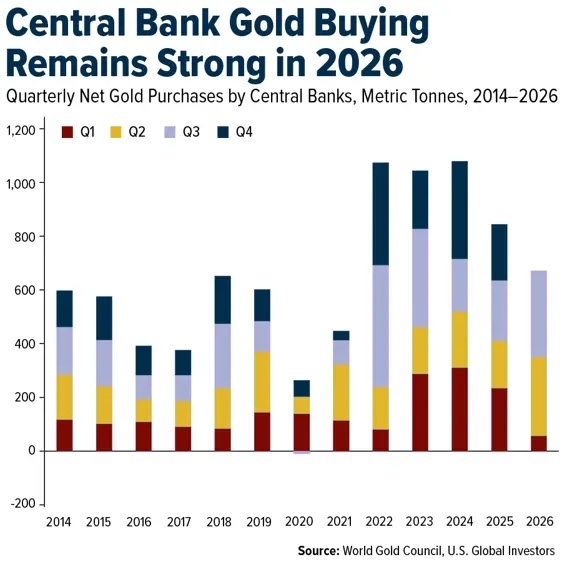
Looking toward the horizon, the gold market presents several compelling opportunities for both institutional and private market participants. The ongoing structural shift toward a multipolar global economy has accelerated the trend of de-dollarization among various developing nations and geopolitical blocs. As these sovereign entities actively seek to reduce their vulnerability to foreign financial sanctions and currency volatility, their continued accumulation of gold reserves opens up new avenues for sovereign demand growth.
Beyond official sector buying, opportunities exist within the evolving landscape of technological innovation and green energy transitions. Gold possesses unique chemical and physical properties—such as exceptional electrical conductivity and resistance to corrosion—that make it indispensable in various high-tech manufacturing processes, electronics, and emerging green technologies. While industrial demand represents a smaller percentage of overall gold consumption compared to jewelry and investment, technological advancements continue to carve out steady niche applications that support long-term consumption trends. Furthermore, evolving wealth demographics and the growing accessibility of digital precious metal investment platforms present new pathways for retail and institutional capital to enter the market efficiently.
Threats
At the same time, market participants must remain vigilant regarding external threats and potential headwinds that could disrupt the positive trajectory of gold. Regulatory and legislative changes represent a perennial area of scrutiny. Any sudden shifts in government policies concerning precious metal ownership, taxation, or cross-border bullion movements could introduce friction into the global supply chain and alter investor behavior.
Macroeconomic risks also loom large. If central banks globally manage to successfully engineer a prolonged period of economic stability characterized by robust growth, subdued inflation, and predictable monetary policy tightening without triggering recessions, the immediate urgency for safe-haven assets could temporarily subside. Moreover, rapid advancements in alternative digital assets and cryptocurrencies continue to be monitored by market analysts as potential competitors for capital that might otherwise be allocated to traditional safe-haven stores of value. Monitoring these evolving dynamics requires constant vigilance from industry leaders and portfolio managers who navigate the complex intersections of monetary policy, geopolitical strategy, and commodities trading.
The broader implications of these market dynamics are closely watched by industry veterans who have spent decades analyzing the interplay between macroeconomic policy and natural resource valuation. Among the most prominent voices in this field is Frank Holmes, whose extensive career in investment management has spanned multiple economic cycles. Holmes acquired a controlling interest in U.S. Global Investors in 1989 and assumed the role of chief investment officer in 1999, steering the firm through periods of profound transformation in global financial markets.
Under his leadership and strategic guidance, the investment funds managed by U.S. Global Investors have garnered widespread industry recognition, earning more than two dozen Lipper Fund Awards and various other prestigious honors. His deep expertise in the mining and natural resource sectors was further acknowledged in 2006 when he was named Mining Fund Manager of the Year by the Mining Journal. Beyond his portfolio management responsibilities, Holmes has contributed extensively to investor education as the co-author of "The Goldwatcher: Demystifying Gold Investing," a work designed to help market participants understand the complex forces driving precious metal valuations.
In addition to his corporate and analytical endeavors, Holmes is actively involved in international philanthropy and global affairs. He serves as a member of the President’s Circle and sits on the investment committee of the International Crisis Group, an organization dedicated to preventing and resolving deadly conflicts around the globe. His advisory work also extends to the William J. Clinton Foundation, where he has lent his expertise to sustainable development initiatives in countries whose economies rely heavily on natural resources.
A native of Toronto and a graduate of the University of Western Ontario with a bachelor’s degree in economics, Holmes is a former president and chairman of the Toronto Society of the Investment Dealers Association. His extensive professional background makes him a frequently requested keynote speaker at prominent national and international investment conferences. He is also a regular and recognizable commentator across leading financial television networks, including CNBC, Bloomberg, and Fox Business, while his insights have been profiled in major financial publications such as Fortune, Barron’s, and The Financial Times.