


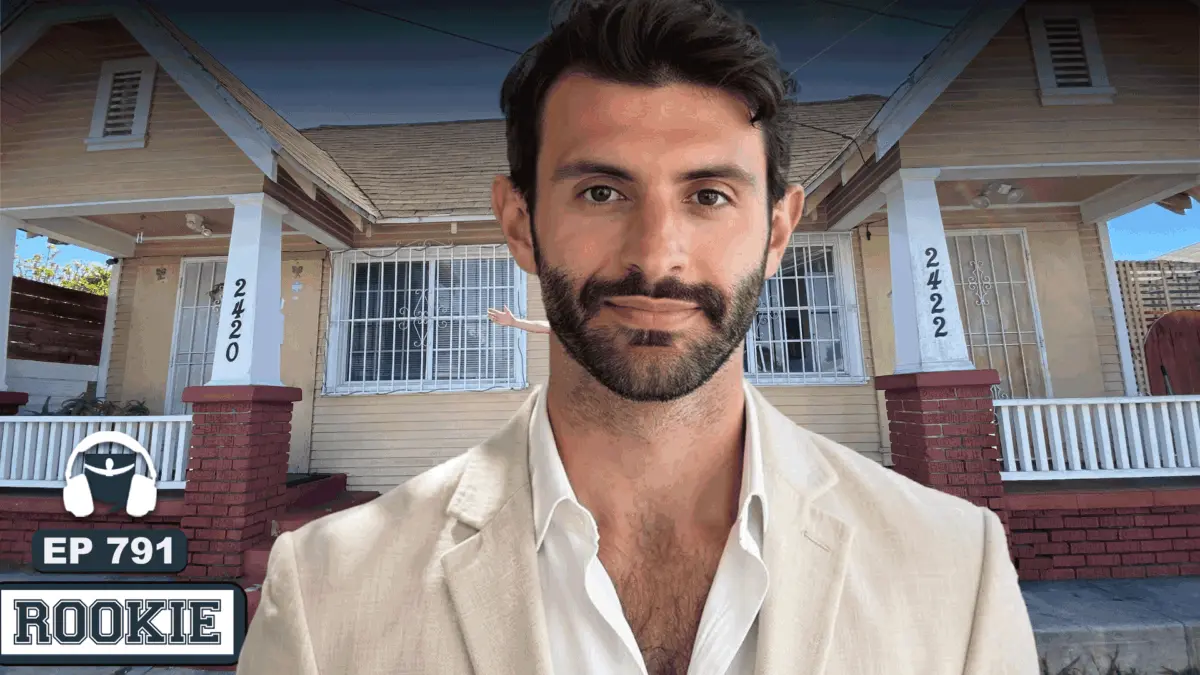
While many real estate investors set their sights on accumulating massive portfolios of ten or twenty properties, Erik Caci is taking a fundamentally different approach. The medical device sales professional believes that just two carefully selected duplexes—totaling four rental units—will be more than enough to secure his long-term financial freedom.
Appearing recently on the Real Estate Rookie podcast hosted by Ashley Kher, Caci detailed his journey from buying a New Jersey condo to navigating the notoriously competitive and expensive housing market of Los Angeles, California. His strategy challenges conventional real estate wisdom by prioritizing property quality, long-term appreciation, and disciplined W-2 income over immediate massive cash flow.
Transitioning to the West Coast and Discovering Real Estate
Caci’s path to real estate investing began well before his move to the West Coast. Originally working in luxury retail while in college—including a stint with Louis Vuitton—he developed a strong foundation in client development and interpersonal communication. After college, he transitioned into medical device sales, a career path that eventually relocated him from the East Coast to Los Angeles.
Once settled in Los Angeles with a stable W-2 income, Caci began exploring personal finance podcasts, which ultimately introduced him to the concept of real estate investing through BiggerPockets in 2021. Prior to his move, he had purchased a condo in New Jersey near the New York City market. Although he briefly considered renting it out after relocating, he ultimately decided to sell it after about six months. Thanks to local market appreciation, he managed to break even, giving him his first real-world exposure to running numbers and analyzing property transactions.
Faced with the high home prices and rental rates of Los Angeles, Caci recognized that his initial investment strategy would have to rely heavily on house hacking. To make the math work and cover a steep mortgage, he knew he would need to live in one unit while renting out the other.
The Jefferson Park Duplex: Spotting Opportunity in a Century-Old Property
Caci’s first major Los Angeles acquisition was a 100-year-old duplex located in the up-and-coming Jefferson Park neighborhood. Built in 1924, the property had sat on the market for over 90 days, enduring multiple price drops before Caci noticed it lingering on his Zillow feed.
While many prospective buyers were likely deterred by the home’s age and condition—which included mold, termites, and a failing roof—Caci saw potential. Furthermore, the property was situated within a Historic Preservation Overlay Zone (HPOZ). This designation meant that any exterior modifications, including the roof, siding, paint color, and windows, had to be cleared by a local committee to preserve the 1920s bungalow architecture.
While such restrictions typically frighten away real estate investors, Caci viewed the historical zoning as a protective measure. He noted that the neighboring West Adams district had experienced some of the highest property value growth in all of Los Angeles between 2016 and 2024, signaling steady neighborhood gentrification. Believing the surrounding area would continue to improve, he moved forward with the purchase.
Navigating Renovations and Vacant Unit Delivery
To successfully house hack the property, Caci needed at least one unit delivered vacant upon closing. Though finding a vacant multi-family property in Los Angeles is rare, Caci included vacant delivery as part of his initial offer. Recognizing they needed to offload the long-standing listing, the sellers agreed and utilized a "cash for keys" arrangement, paying the existing tenant roughly $20,000 to $25,000 to vacate the property within 45 days.
Rather than making a standard 20% down payment, Caci opted for an FHA loan requiring just 3.5% down, translating to slightly over $23,000. Combined with closing costs and inspection credits, he entered the deal with approximately $30,000 in upfront capital, preserving his remaining cash for necessary renovations.
Upon taking possession, the true condition of the unit became apparent. Stripped of furniture, the interior required a near-complete cosmetic overhaul, including mold remediation in a bedroom ceiling and wall, which cost around $6,000. Working with a general contractor recommended by a local designer, Caci completed a $26,000 scope of work that updated the kitchen and bathroom just in time to move in before his previous rental lease expired.
The Financial Reality of House Hacking in Los Angeles
With the renovation complete, Caci moved into one unit while the second unit remained occupied by a long-term tenant paying below-market rent of around $1,550 to $1,600, compared to a market rate of roughly $2,500. Because he utilized an FHA loan with a minimal down payment, his monthly mortgage hovered around $5,000.
Rather than achieving immediate positive cash flow, Caci viewed the property as a long-term buy-and-hold wealth-building vehicle. The rental income covered a substantial portion of his housing costs, while the mortgage paydown and steady market appreciation built long-term equity.
Expanding to Hollywood and Scaling for the Future
After living in the Jefferson Park duplex for nearly two years and completing ongoing exterior and interior improvements, Caci decided to replicate his success. Following a strong performance at his W-2 job, he purchased a second duplex in Hollywood.
Unlike his first purchase, Caci put down 12% on the Hollywood property to bring his monthly numbers closer to break-even. The property also featured a valuable driveway and a two-car tandem garage equipped with air conditioning and recessed lighting, offering additional potential for future use or rental income. Across both properties, his combined monthly mortgages total roughly $9,600, while existing rents generate about $5,800. Though he covers a monthly deficit of around $3,800 while occupying a unit, upcoming renovations on the remaining vacant space are expected to push total rental income higher, significantly reducing his personal housing expenses.
Looking ahead, Caci plans to maintain his steady W-2 career while leveraging his portfolio’s equity. Rather than acquiring dozens of properties across the Midwest right away, he has begun exploring remote single-family BRRRR strategies in markets like Memphis and Detroit with the guidance of experienced mentors. By combining disciplined personal finance with a deliberate, quality-focused real estate strategy, Caci is building a retirement plan designed to sustain him for decades to come.