




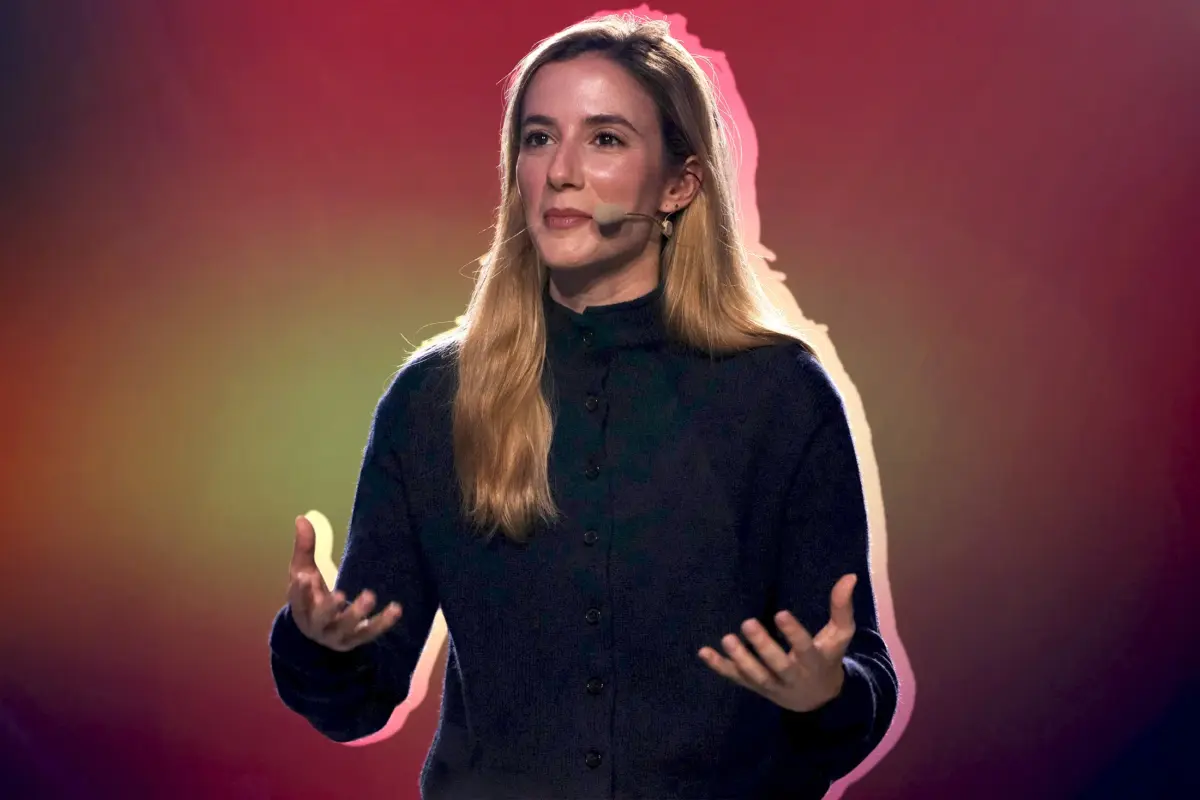
Long before she was crowned the world’s youngest self-made female billionaire, Luana Lopes Lara was walking a daily tightrope in the cutthroat corridors of the Bolshoi Theater School in Brazil. As a teenager, her schedule was a masterclass in relentless endurance. She would attend technical school through the morning hours before transitioning directly into an intense, punishing regimen of ballet training that stretched from the afternoon well into the night.
The environment was not merely demanding; it was aggressively competitive. In an atmosphere so fiercely contested that fellow students occasionally resorted to psychological warfare—such as hiding sharp glass fragments inside each other’s dance shoes—Lopes Lara learned resilience the hard way. It was an unorthodox testing ground for a future tech titan, but it forged a mental fortitude that would eventually prove invaluable in the ruthless world of Silicon Valley startups and Wall Street finance.
Reflecting on her early ambitions during a recent appearance on the podcast Confession with Ali Partovi, Lopes Lara noted a lifelong drive to achieve at the highest possible level. That foundational discipline ultimately propelled her to extraordinary heights. At 30 years old, the entrepreneur officially secured her place in global financial history, unseating major cultural and tech heavyweights like pop superstar Taylor Swift and tech entrepreneur Lucy Guo to become the world’s youngest self-made female billionaire. According to assessments by Forbes, her surging net worth stands at an impressive $2.6 billion.
Her immense fortune stems from co-founding Kalshi, an innovative prediction market exchange that allows everyday users and institutional traders alike to buy and sell yes-or-no contracts tied to the outcomes of real-world future events. Whether participants want to wager on upcoming political elections, shifting economic data releases, complex weather patterns, or major sporting events, Kalshi provides a centralized platform for forecasting tomorrow. Lopes Lara’s overarching vision for the company is ambitious and straightforward: she is working toward a future where people can essentially place a prediction on any conceivable event.
Operating within a highly regulated financial landscape, Kalshi distinguishes itself as the first federally regulated exchange in the United States dedicated exclusively to trading on the outcomes of future occurrences. This regulatory compliance has allowed the platform to capture significant market share, transforming what was once an informal parlor game of speculation into a legitimate, accessible asset class for the modern financial ecosystem.
The Common Trap of Over-Analyzing Probabilities
Despite her background in hard mathematics and computer science, Lopes Lara has frequently warned against the psychological pitfalls that routinely ensnare brilliant minds in the startup ecosystem. During her podcast appearance, she highlighted a specific trap that many intelligent founders fall into when trying to get a new venture off the ground: they become detrimentally obsessed with calculating probabilities.
In her view, an over-reliance on statistical probability can completely paralyze leadership teams. When founders spend all their time calculating every single risk and failure metric, they can easily psych themselves out of executing any bold ideas at all. Taking the plunge, stepping into the unknown, accepting the inherent risk of entrepreneurship, and maintaining a steadfast belief that things will eventually work out are essential components of building something meaningful.
Lopes Lara elaborated on how this mindset directly impacts workplace culture within a growing company. If the employees of a startup are constantly trapped in a loop of analyzing the raw math of whether the business is destined to succeed or fail, the corporate environment quickly toxicifies. It morphs into a hyper-negative culture where the team overreacts to every single piece of new incoming information, losing sight of the broader mission.
To combat this vulnerability, Lopes Lara emphasizes the necessity of surrounding oneself with inherently optimistic individuals who possess a genuine drive to build things. Optimism, in her estimation, serves as a vital corporate counterweight to the inevitable uncertainties and turbulence of early-stage business development.
The Genesis of Kalshi
The journey toward Kalshi began taking shape in 2018, the year Lopes Lara graduated alongside her co-founder, Tarek Mansour. Both studied at the same institution, where Lopes Lara pursued a rigorous academic path majoring in computer science and mathematics, while Mansour focused on electrical engineering, computer science, and mathematics. Their paths naturally crossed in shared classes. Demonstrating the intellectual curiosity and academic dedication that would later define her career, Lopes Lara consistently claimed a seat at the very front of the lecture hall. Intrigued by her focus and wanting to learn from her example, Mansour deliberately began sitting next to her, sparking a partnership that would eventually reshape the financial technology landscape.
The spark for Kalshi itself came during a college summer internship when Lopes Lara was working at Five Rings, a prominent New York-based trading firm. Around that time, widespread chatter dominated social media platforms regarding persistent public speculation about whether celebrity entrepreneur and reality television star Kylie Jenner was pregnant.
Faced with the chatter, Lopes Lara found herself wanting to formalize the debate. In a recent interview with Bloomberg, she recalled thinking that she wanted to make a bet with people on the reality of the situation. However, she quickly ran into a glaring structural obstacle: there was simply nowhere in the established financial or consumer marketplace to place such a wager.
In that precise moment of frustration, Lopes Lara identified a massive, untapped market opportunity that transcended mere celebrity gossip. She realized that millions of people around the globe held firm, passionate views about the future trajectory of cultural, political, and economic events, yet they lacked a legitimate, structured outlet to express and monetize those beliefs.
That realization transformed into Kalshi, a platform that has scaled at an astonishing pace. What began as an epiphany rooted in internet gossip has blossomed into a corporate behemoth. The company has commanded reported valuations soaring into the tens of billions of dollars, with ongoing funding rounds continuing to scale its market presence to historic levels as it prepares for future milestones like an initial public offering. Through a combination of ballet-bred discipline, mathematical precision, and an eye for untapped consumer desires, Luana Lopes Lara has successfully turned predictions into a multi-billion-reality.