




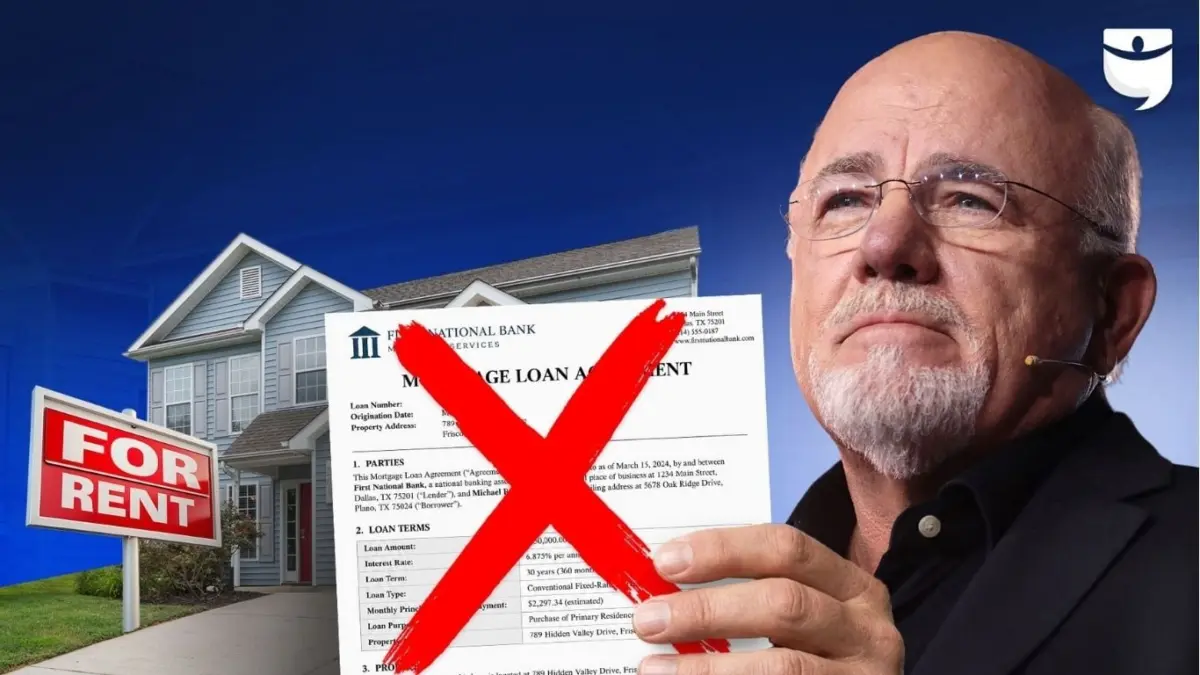
The debate over real estate leverage remains one of the most polarizing topics in the property-investing community. When prospective buyers enter the market, the conventional path typically involves saving a 20% down payment and securing a mortgage for the remaining balance. This approach allows investors to control an appreciating, cash-flowing asset with a fraction of the total purchase price. However, alternative philosophies—most notably popularized by financial personality Dave Ramsey—advocate for minimizing or entirely eliminating debt, raising questions about whether cash purchases or shorter loan terms are practical for the average investor building a portfolio.
These competing strategies took center stage during a recent episode of the BiggerPockets Podcast, hosted by Henry Washington alongside guest co-host Deandra McDonald, a commercial real estate investor known for her transition from a modest budget to financial freedom through rental properties and commercial conversions. Washington and McDonald addressed a series of pressing inquiries from the BiggerPockets Forums, dissecting the true cost of leverage, the realities of self-managing property turnovers, the nuances of risky tenant applications, the challenges faced by young and undercapitalized investors, and the complexities of commercial hotel-to-housing conversions.
Examining the Role of Leverage Versus the Dave Ramsey Philosophy
The discussion opened with a fundamental question from a community member in Phoenix regarding Dave Ramsey’s debt-free real estate strategy. Ramsey famously advises purchasing real estate entirely in cash or, as a last resort, utilizing a strict 15-year mortgage. For beginners, accumulating hundreds of thousands of dollars in cash to buy properties outright presents a massive, often insurmountable barrier.
Washington argued that while debt can be hazardous if mismanaged, it serves as an essential tool for scaling a business. Without leverage, most everyday investors would struggle to build a meaningful portfolio. He emphasized that smart investors generally avoid paying off low-to-medium-interest debt prematurely if their capital can generate a higher return through a real estate asset. According to Washington, liquidating all personal debt to buy a property in cash leaves an investor debt-free but without liquid assets or portfolio growth.
McDonald offered a nuanced perspective, suggesting that Ramsey’s uncompromising stance on debt is often tailored for individuals struggling with financial discipline or severe debt addiction. She noted that people burdened by massive consumer credit card balances or extravagant personal mortgages need strict behavioral boundaries before taking on investment risk. However, for disciplined individuals with structured financial plans—such as public service loan forgiveness paths or controlled low-interest liabilities—utilizing debt to acquire income-producing properties is entirely reasonable. Both hosts agreed that high-interest consumer debt, such as credit cards exceeding 20% interest, must be cleared before entering the rental property market, but reasonable leverage remains a vital mechanism for portfolio expansion.
Navigating the Hidden Delays of Rental Property Turnovers
Shifting from high-level financial theory to operational execution, the discussion turned to the logistical bottlenecks of self-managing rental property turnovers. A forum member from Washington, D.C., asked what part of the turnover process typically creates the longest delays, pointing to access, inspections, estimates, or contractor scheduling.
McDonald explained that turnovers diverge significantly depending on whether they are expected or unexpected. Anticipated vacancies, where tenants give proper notice, allow landlords to schedule cleaning, painting, and maintenance well in advance. Conversely, abandoned properties, evictions, or uncooperative departures introduce severe friction. The primary bottleneck in unexpected scenarios involves securing legal access to the unit to change locks, shut off utilities, and assess property damage. Until the legal process clears the property, landlords cannot accurately scope repairs or schedule contractors.
Washington added that the final five percent of any renovation or turnover frequently causes the most severe timeline extensions. Punch-list items, minor touch-ups, and the difficulty of getting contractors back to a completed site to fix minor oversights often stretch vacancy periods longer than the initial renovation phase. To combat contractor disappearance, Washington advised withholding a final monetary portion—such as a thousand dollars—until all inspection checkpoints are officially cleared and verified. McDonald noted operational pivots like switching laminate flooring to tile in high-wear properties to minimize future surface damage and reduce recurring repair cycles.
Handling Questionable Tenant Applications and Pre-Paid Rent
Tenant screening and selection prompted a debate over an unusual scenario submitted by a community member whose prospective tenant offered to pay a full year of rent upfront despite having a checkered credit history and a past domestic charge.
Washington acknowledged the immediate financial appeal of receiving an entire year’s rent on day one. However, he emphasized that tenant selection remains the single most critical responsibility for a landlord. While poor credit scores can frequently stem from common life events like medical debt or messy divorces rather than financial irresponsibility, criminal records require careful evaluation. Washington noted that he does not automatically disqualify applicants with criminal backgrounds, citing positive experiences with rehabilitated felons, but stressed the importance of context.
McDonald echoed these sentiments, noting that while financial pre-payment is attractive, landlords must exercise caution regarding background checks, particularly in multi-family properties where other tenants reside. She warned that accepting a full year of rent requires financial restraint; landlords must ensure those funds are properly managed in high-yield accounts rather than immediately spent, in the event that legal complications or lease terminations require partial refunds. Both hosts emphasized that criminal history demands careful scrutiny, separating non-violent or distant infractions from severe offenses like hate crimes, which warrant immediate rejection regardless of an applicant’s ability to pay upfront.
Realities of Starting Real Estate Investing with Limited Capital
Addressing the challenges faced by young and undercapitalized beginners, the hosts evaluated a question from an 18-year-old investor in Dayton who lacked substantial credit history and capital, questioning whether to pursue private capital raising or simply focus on hard work and long hours.
McDonald cautioned against relying heavily on 100% other people’s money (OPM) as an introductory strategy. While OPM is a powerful scaling tool for experienced investors, beginners lack the operational cushion required to navigate unexpected expenses. Losing a commercial lender’s money involves a structured foreclosure process, whereas losing capital borrowed from friends or family members can permanently fracture personal relationships.
Washington reinforced the necessity of personal financial reserves, noting that owning real estate requires liquidity for unforeseen capital expenditures, such as emergency HVAC replacements shortly after acquisition. Rather than rushing into complex capital-raising efforts without a track record, Washington advised young investors to maximize their time and youth by maintaining strict savings habits, eliminating lifestyle inflation, and working multiple jobs to build initial capital independently. McDonald suggested that house-hacking or living in and fixing up a primary residential property over a couple of years offers a tax-advantaged method to accumulate initial capital and hands-on construction experience safely.
Converting Distressed Hospitality Assets into Workforce Housing
The discussion concluded with an examination of commercial real estate strategies, specifically addressing an inquiry from a Columbus, Ohio, real estate agent regarding the viability of converting distressed hotels and motels into workforce housing or senior living facilities.
As an active investor who specializes in motel conversions, McDonald confirmed that repurposing underperforming hospitality assets into residential housing remains a viable strategy, though finding deeply distressed properties has become more competitive. She highlighted zoning regulations as the most significant hurdle. Municipalities frequently enforce strict geographical or temporal limitations on long-term stays to align with municipal master plans, and attempting to force a city to alter its zoning vision is often an unsuccessful battle.
Regarding capital expenditures, McDonald noted that motel conversions are frequently more cost-effective if the properties feature existing suite-style layouts with basic plumbing infrastructure rather than solid concrete-slab structures that require extensive trenching for utility installations. However, she offered a cautionary perspective on senior living conversions, noting that specialized senior housing requires specific architectural, medical, and accessibility standards—such as specialized sprinkler systems, compliant stairwells, and caregiver infrastructure—that standard residential conversions do not accommodate without deep commercial expertise and collaboration with licensed care providers.
Washington emphasized the importance of aligning investment plans with municipal goals rather than fighting local planning boards. By understanding local community development objectives, investors can position themselves as municipal allies rather than adversaries, streamlining the regulatory approval process for complex commercial conversions.