


The global conversation surrounding artificial intelligence has long been dominated by a sobering narrative: widespread workforce disruption, corporate downsizing, and the looming specter of mass unemployment. Prominent voices across the technology sector, including the co-founders of artificial intelligence startup Anthropic, have repeatedly cautioned that advanced automation could rapidly displace human workers, leaving millions without a viable path forward in a changing economy.
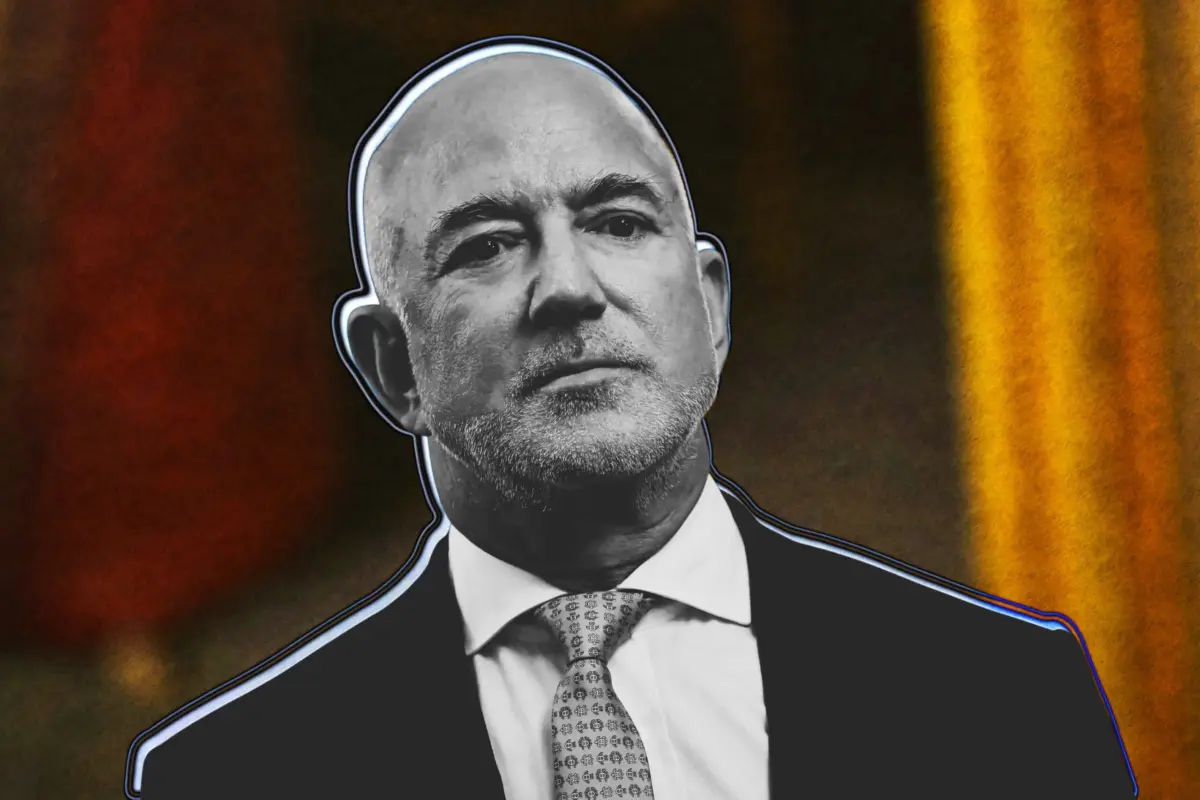
Yet, as industry executives and policymakers grapple with the disruptive potential of machine intelligence, Amazon founder Jeff Bezos is painting a radically different picture of tomorrow. Rather than forecasting a bleak landscape defined by a surplus of jobless citizens competing for dwindling opportunities, Bezos envisions a future characterized by a very different economic dilemma: human labor shortages.
In an interview with Fox News anchor Bret Baier, Bezos shared his perspective on America’s next technological frontier. He predicted that the unprecedented productivity gains driven by artificial intelligence will eventually reshape the foundational economics of modern family life and the traditional workplace. According to the billionaire entrepreneur, the sheer efficiency unlocked by advanced systems could fundamentally alter how households sustain themselves financially.
"You’re not going to need to have a two-earner income household," Bezos said during the broadcast. He outlined a future in which the exponential boost in economic productivity allows a single salary to comfortably support an entire family, reversing decades of socio-economic shifts that have made dual-income households a necessity for millions of working people.
Choosing a Three-Day Workweek
Bezos’s forward-looking assessment extends far beyond household economics, touching upon the very amount of time individuals must dedicate to earning a living. If artificial intelligence delivers the massive productivity multipliers that optimists anticipate, workers could generate enough economic value in significantly less time, rendering the traditional five-day workweek obsolete for many.
Under this scenario, the standard routine of commuting five days a week and spending forty-plus hours at a desk could become optional rather than mandatory.
"Some people will also decide, you know what, I can support my family working three days a week," Bezos noted, emphasizing that the primary function of technological advancement is to increase efficiency. "That’s what productivity in the economy means."
Furthermore, Bezos suggested that these profound productivity gains would ultimately empower a larger portion of the population to opt out of the traditional workforce altogether or scale back their professional commitments. This mass shift in availability would, in turn, flip traditional labor dynamics on their head, leaving corporations with a much smaller pool of eager job candidates to recruit from.
"It’s going to actually be difficult to hire people because the productivity in the economy is going to make it so that if people don’t want to work two jobs, they won’t have to," he explained.
Bezos is hardly alone among prominent corporate leaders in envisioning a streamlined, less demanding work life enabled by advanced automation. JPMorgan Chase Chief Executive Officer Jamie Dimon has similarly predicted that subsequent generations will enjoy substantially more time away from their professional duties. During an interview with Bloomberg TV, Dimon suggested that today’s children would likely find themselves working a three-and-a-half-day workweek as technology absorbs routine operational burdens.
Tesla and SpaceX chief Elon Musk has offered an even more ambitious, technology-centric outlook on the evolution of labor and commerce. Speaking at the U.S.-Saudi Investment Forum, Musk declared that artificial intelligence would eventually render traditional concepts of money "irrelevant." He suggested that as machine intelligence matures and automates nearly all physical and cognitive labor, working will become entirely optional—transforming into an activity pursued for personal fulfillment, much like playing sports or video games.
Yet Other Leaders Offer a More Pessimistic View
Despite the visionary optimism shared by Bezos, Dimon, and Musk, a substantial faction of technology pioneers and corporate executives remains deeply concerned about the immediate social and economic fallout of rapid automation. As artificial intelligence systems take over administrative duties, data processing, and entry-level office work, skeptics warn that corporations may prioritize short-term profit margins and headcount reductions over shortening workweeks, potentially pushing millions of workers into economic precarity.
Dario Amodei, the chief executive officer of Anthropic, offered one of the starkest and most widely discussed forecasts regarding white-collar labor displacement. In an interview with Axios, Amodei warned that artificial intelligence could eliminate roughly half of all entry-level white-collar jobs within a span of one to five years. He cautioned that such rapid displacement could drive national unemployment rates to unprecedented heights, pushing jobless figures between 10% and 20% if preventative social and economic policies are not implemented.
Similar warnings have been echoed by Geoffrey Hinton, the pioneering computer scientist widely celebrated as the "Godfather of Artificial Intelligence." Hinton has repeatedly voiced deep ethical concerns regarding how the financial rewards of the artificial intelligence boom will be distributed across society. In an interview with the Financial Times, Hinton argued that the immense wealth generated by automation is poised to benefit corporate leaders and wealthy stakeholders at the direct expense of the working class.
"What’s actually going to happen is rich people are going to use AI to replace workers," Hinton said, predicting a troubling combination of massive corporate profits and widespread structural unemployment.
Ford Motor Company Chief Executive Officer Jim Farley expressed a parallel sentiment during his appearance at the Aspen Ideas Festival. Highlighting the vulnerability of the service and corporate sectors, Farley warned an audience of industry leaders that artificial intelligence is on a trajectory to replace literally half of all white-collar professionals across the United States.
As the technology continues to evolve at a breakneck pace, the debate among global leaders highlights a profound uncertainty. While optimists like Jeff Bezos foresee a liberated society where heightened productivity leads to shorter workweeks and financial breathing room, pessimists warn that the transition period could trigger severe economic upheaval unless society fundamentally rethinks the relationship between labor, technology, and human livelihood.