



Looking back at the late 2000s, the digital landscape was a remarkably different place. RSS feeds were constantly breaking, Blogger was the undisputed king of independent publishing, and many aspiring writers held onto the lingering, naive hope that cleverness alone might accidentally lead to unexpected wealth. Fast-forward to 2025, and the reality of the internet has shifted dramatically. RSS feeds have effectively become digital fossils, relegated to niche enthusiasts and tech historians, while online government services—to the genuine shock of many cynical users—mostly function with seamless efficiency. Amidst these sweeping technological changes, a more personal realization has taken root regarding the financial world: the vast majority of mainstream "investing advice" is little more than unearned confidence wrapped up in a professional typeface.
Since launching a new digital platform, a steady stream of curious readers has reached out with the same fundamental question: where should they invest their hard-earned money? The answer to that question is as blunt as it is definitive: there is absolutely no idea, and the author of these reflections should undoubtedly be ranked among the absolute last people on earth qualified to dispense financial counsel. While the site features links to genuinely intelligent individuals whose research serves as a valuable resource for navigating the markets, the self-assessed financial track record resembles the Luis Pujols of investing—a historical footnote for extraordinarily low batting averages. While occasional opinions on financial matters may surface, readers are strongly cautioned against basing their investment decisions solely on these musings, lest they face profound disappointment.
Online Government
A reassuring reminder of changing public infrastructure came up over the recent Christmas holidays when a family realization highlighted the surprising competence of modern provincial bureaucracy. It turns out that renewing a car registration can now be completed smoothly online through the Ontario Government portal, with the physical renewal sticker arriving conveniently by mail. Having tested this particular digital government service firsthand, the verdict is an enthusiastic thumbs-up. The entire process operated with impressive smoothness, moving from start to finish without a single administrative hiccup or cause for worry. The only minor critique to be leveled against the system involves a household logistics issue: owning two vehicles meant completing two entirely separate transactions. It would undeniably represent a welcome user-experience upgrade if citizens were able to group multiple vehicle renewals into a single shopping cart during one unified checkout session.
RESP Status
When it comes to long-term savings vehicles like Registered Education Savings Plans, the underlying philosophy remains straightforward and deliberately conservative. These accounts continue to post steady, reliable growth, a milestone achieved almost entirely by sticking exclusively to exchange-traded funds and steering well clear of unnecessary market risks. For families navigating the complexities of post-secondary education funding, RESPs remain one of the closest things to guaranteed financial momentum available—often described simply as free money for those who utilize them correctly.
Personal Finance for Me
Tracking day-to-day work expenses offers a modest exercise in corporate restraint, yielding metrics that reflect a quiet week at the office. The number of days recorded without spending a single cent at work stands firmly at three, bringing the total amount spent at the workplace over the course of the week to an exact total of $0.00.
Navigating the technical migration away from the legacy world of Blogger has not been entirely without its friction, however. A recent administrative misstep left the site’s RSS feed configured incorrectly, meaning subscribers were inadvertently subjected to full-feed delivery rather than the intended format. This alteration was entirely unintentional, and a sincere apology is extended to every valued reader who experienced the disruption. A full technical explanation detailing the exact adjustments made to resolve the feed error has been documented separately for those curious about the mechanics of the fix.
The Honest Truth About My Investing Skills (Redux)
To ensure absolute clarity—repetition being a necessary virtue whenever significant sums of money are involved—it bears repeating that true investing expertise is entirely absent here. If such expertise were genuinely possessed, sharing it freely with the public would hardly be the default course of action, as human nature rarely leans toward such altruism. At the very best, the author describes himself as a grizzled veteran shaped by a long series of poor assumptions and thoroughly mediocre market timing. Countless hours of reading, numerous practical trials, and a sufficient volume of personal financial errors have qualified this background as "experienced," though experience must never be mistaken for intelligence. Truly intelligent people do exist, of course, and the primary strategy remains attempting to stay in their company for as long as their patience holds out.
If you are searching for guaranteed get-rich-quick schemes, proprietary trading algorithms, or insider market intelligence, you have undoubtedly arrived at the wrong destination. If, on the other hand, you appreciate grounded, home-spun rhetoric, honest self-assessment, and realistic commentary on the emotional traps of personal finance, continuing to follow these dispatches will prove far more rewarding.
Overconfidence: The Real Financial Killer
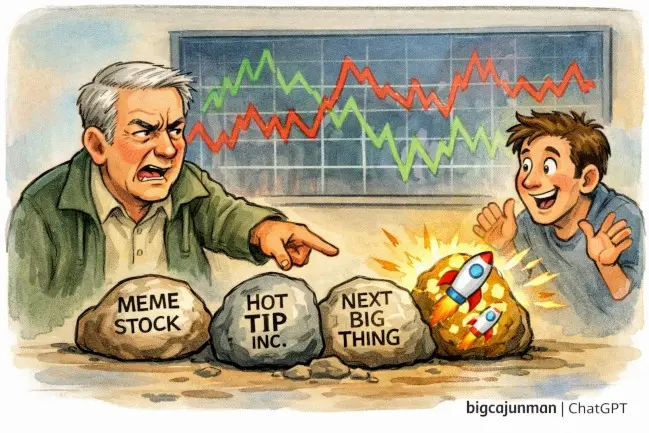
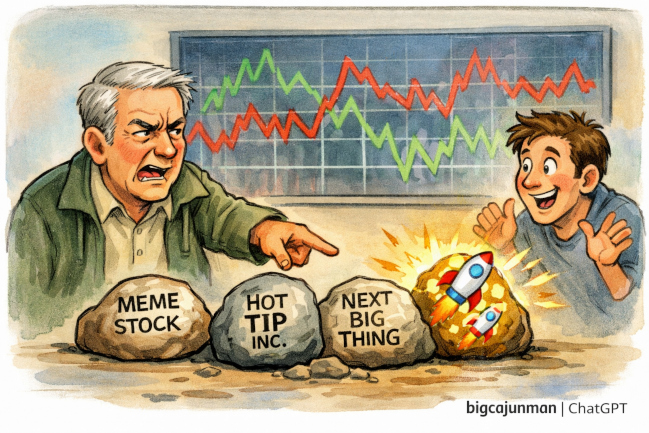
The most piercing observation on market behavior encountered over the years comes from an unlikely and snarky desk calendar, which offered a stark warning: "Before you attempt to beat the odds, be sure you could survive the odds beating you." That particular brand of stoic, cautionary perspective used to define how people approached the stock market, yet that mindset appears to have largely evaporated in the modern era. The harsh reality of modern finance is that the vast majority of people who lose their capital do not do so simply because they suffered from bad luck. Instead, they sustain heavy losses because they labor under the dangerous delusion that they possess superior intellect and insight compared to the rest of the market.
Overconfidence serves as the primary engine driving individuals into high-risk behaviors, blinding them to the structural realities of market volatility and macroeconomic pressures.
If anything has fundamentally shifted since these financial reflections were first published years ago, it is that the act of investing has become aggressively, almost dangerously, accessible. The proliferation of mobile applications, zero-commission trading platforms, and relentless social media hype has made it easier than ever for everyday individuals to execute a financial trade in seconds and regret it immediately afterward. While the foundational economic principles governing wealth creation and preservation have not changed, the technological velocity with which a person can commit a catastrophic financial mistake has accelerated dramatically. Today, the high-speed destruction of personal wealth is simpler, faster, and more frictionless than at any point in history—a concerning development that leaves little room for amateur hubris, to say nothing of the parallel normalization of the modern betting industry.