




Financial markets opened the new week grappling with a volatile mix of escalating domestic civil unrest in Europe, renewed energy supply pressures, shifting central bank expectations, and encouraging yet uneven macroeconomic data out of China. Investors are forced to carefully balance regional political crises with broader cross-asset shifts as equity corrections, bond market adjustments, and currency fluctuations dictate early trading conditions.
Markets
French street protests violently escalated over the weekend, creating a tense backdrop for European financial assets. What initially began roughly a month ago as localized student and educational unease has rapidly morphed into a much broader, highly visible protest movement. Citizens are voicing intense frustration over the rising cost of living, deteriorating public services, and overall dissatisfaction with the administration of French President Emmanuel Macron.
As a result, French politicians find themselves caught between a rock and a hard place. Lawmakers must urgently bridge the gap between these domestic civil disturbances and mounting international bond market pressures as they attempt to navigate next year’s national budget safely through parliament. Market participants are keeping a close watch on OAT-credit spreads this morning, which face a clear and present risk of re-widening. The single currency has shown a strong, notable correlation with OAT spreads recently, leading to a sudden air pocket during Asian trading hours. The EUR/USD exchange rate experienced a choppy yoyo movement, swinging from 1.1240 down to 1.1180 before recovering, while the EUR/GBP cross briefly touched 0.84 for the first time since June of last year.
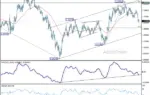
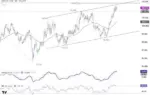
Beyond European political friction, escalating energy prices and persistent inflation risks represent another major market concern for traders. Brent crude oil prices aggressively tested the $110 per barrel resistance level late last week. Technical analysts note that the market is currently entering the final phase of a bullish triangle pattern, which significantly raises the risk of an upside breakout. Should such a break occur, it would propel oil prices to their highest levels recorded since May. Simultaneously, European gas prices, as measured by the benchmark Dutch TTF contracts, are rapidly closing in on €90 per MWh for the first time since December 2022.
Several distinct geopolitical and fundamental factors are keeping global energy prices stubbornly elevated. These include an increase in Iranian-backed attacks against maritime vessels in the Strait of Hormuz, sharp accusations from Ukrainian officials alleging that U.S. President Donald Trump is actively trying to pressure Kyiv into surrendering to Russia, and a growing congressional backlash in the United States against a controversial diesel trading deal between the U.S. and Russia. Furthermore, prominent energy agencies have issued renewed warnings that the global market will remain in a supply deficit for a prolonged period.
Apart from the direct upside inflation risks that this prolonged supply shock poses, financial markets are also digesting a trifecta of higher-than-expected U.S. inflation releases from the previous week. Data covering the Consumer Price Index (CPI), Producer Price Index (PPI), and import and export prices all pointed upward, suggesting significant upside risks for the Federal Reserve’s preferred personal consumption expenditures (PCE) inflation gauges. While the U.S. central bank is widely expected to forfeit on implementing back-to-back interest rate hikes at its upcoming October meeting, the hotter data keeps the pressure to take more aggressive action at subsequent meetings exceptionally high.
The final overarching market theme shaping today’s trading action, set against an extremely thin economic calendar, is broader risk sentiment. Key U.S. stock indices tumbled last week, with major indices falling by up to 2.15%, led heavily by the tech-heavy Nasdaq as the ongoing correction in the artificial intelligence trade continued to unfold. Neocloud company CoreWeave has emerged as a central antagonist in this narrative, with the firm’s heavy debt binge—undertaken to finance the massive infrastructure build-out required for AI technology—facing intense scrutiny from investors.

Aside from widespread equity weakness, last week also witnessed a notable comeback, or potential short squeeze, in core government bonds. Particularly at the longer end of the yield curve, sovereign bonds successfully reclaimed their traditional role as safe-haven instruments. However, Asian trading this morning suggested a somewhat calmer start to the new week. South Korean markets, which frequently serve as a reliable proxy for the global AI trade, managed to successfully reverse steep opening losses of 3% to post a net gain of 1% by the close. Attention will now shift toward upcoming corporate earnings, with Meta’s third-quarter financial results scheduled for release on Wednesday acting as the next critical benchmark to test the ongoing valuation and investment case for artificial intelligence.
News & Views
Turning to macroeconomic updates from Asia, Chinese economic growth expanded at a faster-than-expected pace of 1.2% quarter-on-quarter in the third quarter of this year. This performance marks an acceleration from the 0.9% growth recorded in the previous quarter and comfortably surpasses the consensus forecast of 1.0%. On an annual basis, China’s economic growth printed at 4.5%, slightly topping market estimates and improving upon the 4.3% pace registered in the second quarter. Measured year-to-date, economic growth stood at 4.6%, remaining neatly in line with Beijing’s official full-year growth target range of 4.5% to 5%.
A closer examination of the accompanying September data batch reveals a nuanced picture of the world’s second-largest economy. Industrial production rose by 5.5% year-on-year, marking the fastest expansion rate since March and finding strong support from a booming export sector. However, the structural gap between industrial output and domestic consumption remains stubbornly wide. Retail sales, while coming in slightly better than feared, remained subdued at a meager 1.1% increase year-on-year.
Meanwhile, capital spending continued to struggle, falling by 7.2% year-to-date and matching August’s multiyear low. At the same time, China’s critical housing market metrics continue to reflect severe underlying weakness. Property investment tanked by 20.6% on a year-to-date basis, deepening further from the 19.9% decline recorded the previous month, while residential sales dropped by 13.7%, worsening from a 13.1% decline. On the labor front, the urban surveyed unemployment rate fell marginally to 5.2% from 5.3%. Bolstered by these data points, the Chinese yuan strengthened against the U.S. dollar, hitting its strongest level since mid-2023, with the USD/CNY currency pair trading comfortably around the 6.68 mark.
Back in Europe, political gridlock continues to plague Belgium. Budget negotiations held over the weekend once again delivered little to no tangible progress. A strategic proposal put forward by Prime Minister Bart De Wever—which suggested drafting an emergency budget for 2027 first while agreeing on the broader €10 billion fiscal consolidation effort in a subsequent, second stage—was firmly pushed aside by coalition partners who insisted on tackling the entire fiscal exercise in one comprehensive package.
A newly revised proposal presented by the Prime Minister late yesterday evening was subsequently shot down by coalition parties Vooruit, CD&V, and Les Engagés, who labeled the terms unbalanced and fundamentally unacceptable. In response to the impasse, the Prime Minister is scheduled to hold a series of bilateral talks later today with individual party leaders in a renewed bid to smooth over political differences and rescue the stalled negotiations.