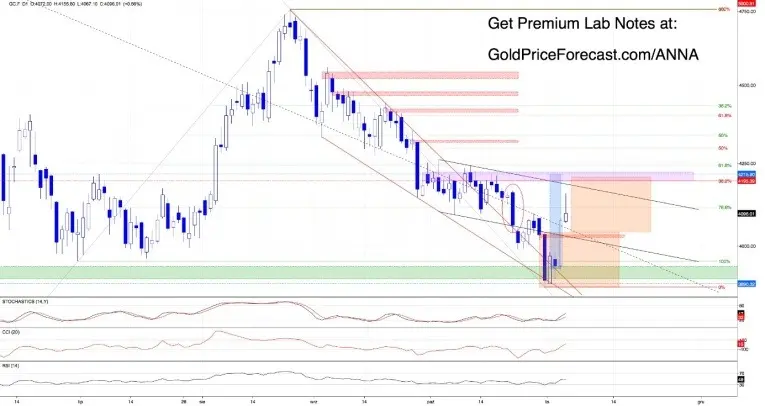



This dramatic shift in the legislative branch immediately raises critical questions for investors across the financial sector, particularly regarding how the new balance of power might impact the precious metals markets. In the immediate wake of the election results, both gold and silver experienced a notable upward surge. Gold rallied strongly to successfully recover the psychologically significant $4,000 per ounce milestone, while silver prices climbed past the $53 threshold.
However, market veterans know that post-election bounces and sudden selloffs tend to be short-lived, driven more by initial emotional reactions than sustained fundamental shifts. As investors look ahead, the central question remains: how will things shake out in the months ahead as the new Congress squares off against the executive branch?
Historically, domestic demand for physical precious metals such as gold bars and coins tends to rise modestly under Democratic administrations. Even so, elections have not historically had a significant, lasting impact on gold’s global performance over the long haul. According to insights from the World Gold Council, given the vast geographic diversity of demand worldwide, what truly matters is whether resulting policy changes are sufficiently consequential for the global gold market, and whether they possess the strength to offset other powerful global forces that drive metal prices.
The core question, therefore, is how domestic policy might shift now that Democrats hold the legislative levers of power in Congress. Right out of the gate, the new congressional majority will remain heavily constrained by President Donald Trump’s veto pen. Lawmakers will find themselves unable to advance or impose the most extreme elements of the Democratic party’s legislative agenda regarding economic and social programs. Nevertheless, an active, opposition-controlled Congress will possess the tools and the motivation to significantly restrain the president’s domestic ambitions.
Industry observers at StoneX have outlined several key areas where a Democrat-controlled Congress will attempt to exert its newfound authority to challenge the administration’s agenda. Yet, the president will simultaneously retain a formidable arsenal of tools to fight back, having consistently demonstrated a willingness to utilize executive powers and push them to their legal and political limits.
How this ongoing tug-of-war for federal power will ultimately play out remains highly uncertain, introducing a fresh layer of complexity to the broader economic outlook. As analysts at Metals Focus framed the situation, the U.S. mid-term election results introduce a fresh layer of unpredictability for the outlook for precious metals, forcing investors to continuously reassess macroeconomic fundamentals.
On the domestic front, President Trump will likely find it virtually impossible to advance any additional tax cuts or easily finance his preferred spending priorities through traditional legislative channels. At the same time, however, the Democratic party has traditionally favored robust federal spending. Additional spending proposals could still emerge from Capitol Park, and the ultimate trajectory of federal outlays will depend heavily on the aggressiveness and frequency with which the president utilizes his veto pen.
Analysts at Metals Focus believe that widespread gridlock in Congress significantly minimizes the likelihood of major additional fiscal stimulus packages passing into law. However, they caution that this legislative paralysis will not automatically translate into meaningful deficit reduction for the federal government.
As Metals Focus noted in a recent assessment, meaningful deficit reduction remains unlikely, given existing mandatory spending commitments, rapidly rising interest costs on the national debt, and the persistent political difficulty of agreeing on broad tax increases or deep expenditure cuts. Furthermore, upcoming budget battles and debt-ceiling negotiations could easily become even more contentious, thereby increasing overall uncertainty regarding the management of U.S. fiscal policy.
Despite these hurdles, Metals Focus suggests that this evolving political landscape is modestly bullish for both gold and silver. For precious metals, these developments offer a welcome degree of relief from the heavy macroeconomic headwinds that have recently dominated trading sessions. Constraints on additional fiscal stimulus could moderate broader U.S. economic growth and cool expectations for further aggressive interest rate hikes from the Federal Reserve, thereby easing downward pressure on real yields and the U.S. dollar.
The initial decline in the dollar following the election has already provided fundamental support for gold prices, although continued heavy government borrowing by the Treasury could ultimately limit how far longer-term yields are able to fall. For silver and platinum group metals, the potential benefits of easier financial conditions must also be carefully weighed against the ongoing risk of weaker industrial demand.
StoneX analyst Rhona O’Connell expressed a closely aligned perspective on the macroeconomic intersections, noting that less fiscal stimulus naturally argues for lower long-term yields and a softer U.S. dollar, though these factors will likely be partially offset by debt-limit risk premia in short-term bills and a Federal Reserve that continues to lean toward further monetary tightening.
Beyond domestic political friction, the ongoing military conflict with Iran has exerted an outsized, disruptive impact on the gold and silver markets ever since U.S. forces initiated attacks earlier this year in February. The ensuing international oil shock immediately reignited widespread inflation concerns across global markets, driving up expectations for a prolonged "higher for higher" interest rate environment set by central bankers. This persistent monetary backdrop has created significant, enduring headwinds for non-yielding assets like gold and silver.
In theory, Congress possesses the constitutional authority to defund ongoing military engagements or attempt to utilize the War Powers Act to forcefully rein in the executive branch. However, neither strategy would realistically bypass President Trump’s veto pen. Furthermore, Democratic lawmakers must navigate severe political constraints when addressing an active military conflict. Attempting to actively cut off funding for troops deployed in the middle of an active shooting war is rarely a viable strategy in American politics.
At best, a determined Congress may eventually manage to pressure the administration into diplomatic negotiations. Conversely, congressional interference could inadvertently incentivize the president to escalate the military conflict further before lawmakers have the opportunity to block executive actions. Once a military conflict gathers operational momentum, experience shows it is exceptionally difficult to slow down, much less bring to a complete halt.
Ultimately, the ongoing conflict with Iran will continue to generate persistent headwinds for precious metals until the United States and Iran can achieve a permanent diplomatic settlement. At present, a lasting resolution does not appear imminent, though foreign policy dynamics can shift rapidly.
Metals Focus noted that a durable settlement with Iran would materially ease the energy price-driven inflation pressures that are currently weighing heavily on precious metals, while simultaneously creating greater scope for global monetary easing. Such a development would logically lower real yields, while a weaker dollar would significantly improve the broader investment backdrop. Industrial metals like silver and platinum group metals could also benefit substantially from lower domestic energy costs and a subsequent revival in global industrial activity.
However, any positive market impact from a foreign policy breakthrough would not be immediate. Analysts point out that it would take months of concerted effort to reestablish broken supply chains and restore damaged refining capacity following an energy shock. On the flip side, any sudden escalation of the war would instantly intensify broader inflation worries and ratchet up renewed interest rate pressure.
In the realm of international trade and tariffs, the president will also retain sweeping executive authority. Congress previously delegated significant decision-making power to the executive branch when drafting modern trade legislation. Much like the situation surrounding foreign wars, Congress will retain some nominal oversight to check the president’s authority on trade, but Trump will almost certainly make aggressive use of executive orders and retain the veto power necessary to block legislative attempts to restrain him.
Meanwhile, the Federal Reserve will continue to play an outsized, independent role in determining the ultimate trajectory of the precious metals markets. Neither Congress nor the executive branch holds direct control over the central bank’s independent rate-setting policies.
The current outlook for the Fed remains mildly hawkish, with market participants widely penciling in another interest rate hike before the end of the year and potentially another in early 2027. Even so, that predicted monetary path is far from certain.
The central bank finds itself forced to carefully navigate what economists have dubbed the "Debt Black Hole." While persuasive arguments can be made that further rate hikes remain strictly necessary to permanently subdue stubborn inflation, equally compelling cases are frequently made for aggressive rate cuts to support a debt-riddled, bubble-prone economy. Massive sovereign debt levels and an economic system deeply addicted to easy money simply do not mesh well in a sustained higher-interest-rate environment.
The fundamental bottom line for investors is that the coming weeks and months will bring heightened policy uncertainty to Washington. While the legislative and executive branches are guaranteed to engage in relentless bickering and partisan posturing, the extent to which substantive legislation will actually be accomplished remains highly questionable.
If past is prologue, the answer is likely very little.