




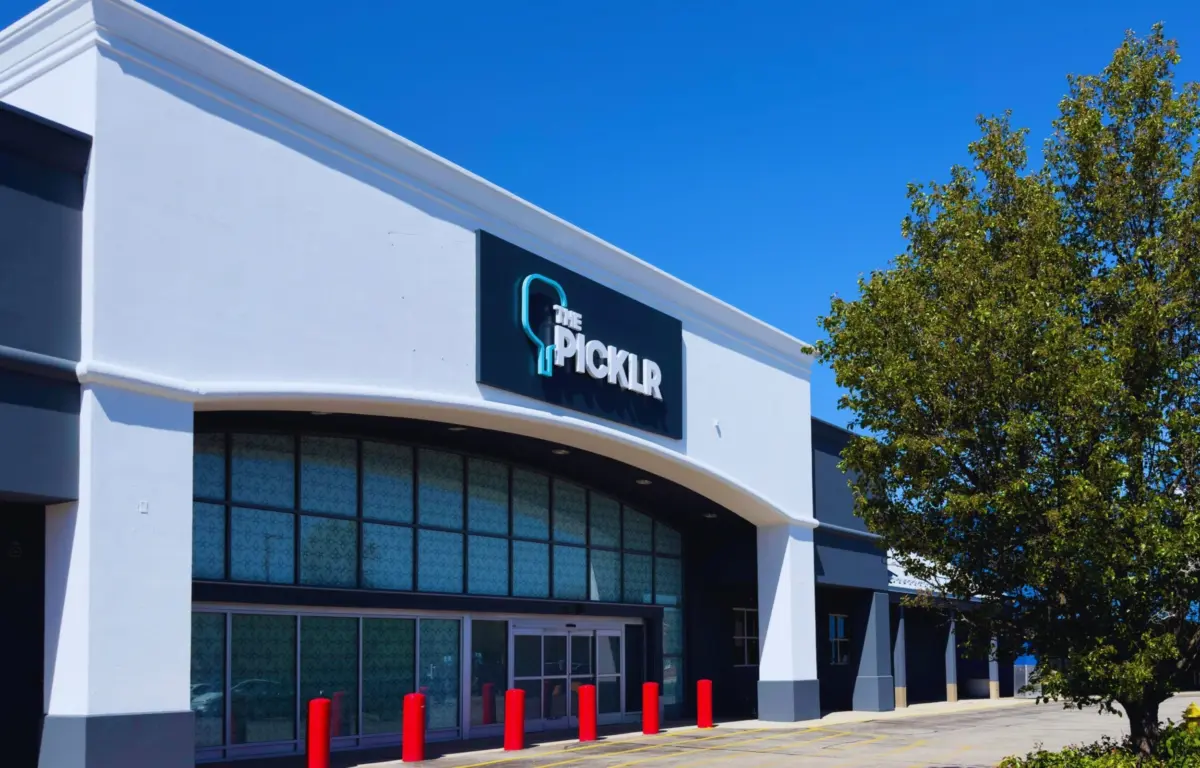
Pickleball may be experiencing an unprecedented nationwide and global boom, but one of the sport’s fastest-growing franchisors has just hit a major financial hurdle. The Picklr, a prominent name in the indoor pickleball club franchise sector, has officially filed for Chapter 11 bankruptcy protection in the U.S. Bankruptcy Court for the Northern District of Texas, according to reports from the Sports Business Journal. The filing highlights the hidden financial pressures and high-stakes risks that can accompany hyper-growth within the competitive commercial recreation and sports franchising industries.
Jorge Barragan, the founder and chief executive officer of the company, is taking full responsibility for the financial downturn that led to the bankruptcy filing. In statements reported by the Sports Business Journal, Barragan pointed directly to a strategic decision made during the early stages of the company’s expansion, specifically regarding how the corporate entity backed its franchise partners. The company agreed to guarantee lease payments for approximately 40 early franchise locations to help secure prime real estate and attract initial franchise investors.
"We signed, unfortunately, too many corporate guarantees that landed on the holding company, and that’s on us," Barragan told the Sports Business Journal, taking an accountable stance on the leadership team’s past maneuvers. "I own it."
The burden of these corporate lease guarantees proved to be a heavy weight for the holding company to bear as market conditions shifted and operating costs evolved. Founded in 2021, The Picklr quickly captured the enthusiasm of sports enthusiasts and investors alike. The enterprise transitioned into franchising just two years after its inception, embarking on an aggressive growth trajectory that saw it scale rapidly. Today, the brand boasts a footprint of more than 70 operating U.S. locations, alongside international clubs established in Australia, Canada, and Japan.
However, rapid geographic expansion and international scaling often require significant upfront capital and meticulous financial engineering. According to figures cited by the Sports Business Journal, the financial strain became evident as the company navigated its fiscal obligations. The Picklr posted a net loss of $4.4 million on $10.3 million in revenue for the year 2025. Furthermore, court documents and industry reports indicated that the company carried approximately $19 million in total liabilities as of March of that year, illustrating a widening gap between operating revenues and long-term financial commitments exacerbated by the heavy lease liabilities.
Despite the serious nature of a Chapter 11 bankruptcy filing, corporate leadership and incoming financial stakeholders have emphasized that day-to-day operations at the club level are intended to remain stable. An investor group led by Tom Neale, a franchise partner within the system, has stepped forward with a commitment to provide fresh capital. According to details shared by the company, this investor-led rescue group has committed $4.5 million in debtor-in-possession or restructuring financing to help stabilize the business, while the Sports Business Journal’s reporting places the committed figure slightly higher at $4.8 million. This injection of capital remains subject to formal approval by the U.S. Bankruptcy Court.
For members, players, and franchise operators currently running individual clubs, the immediate impact of the legal proceedings is expected to be managed carefully. Barragan noted that the bankruptcy filing itself will not directly force the immediate closure of any existing club locations. While some internal corporate downsizing and restructuring of corporate overhead are anticipated as part of the legal reorganization process, the vast network of clubs across the United States and international markets is slated to remain open, allowing communities of pickleball players to continue booking courts, participating in leagues, and enjoying the facilities while the business restructures its debts and liabilities under court supervision.