




When the Walt Disney Company invokes the word “magic” to describe its sprawling global operations, it can easily sound like a marketing gloss—a casual wave of the hand implying that running one of the world’s largest and most complex entertainment conglomerates requires little more than an application of pixie dust.
In reality, the engine driving Disney’s immense enterprise is far more grounded. It relies on rigorous training, a deeply ingrained corporate culture, and an operational framework that deliberately builds in room for failure, iteration, and continuous improvement.
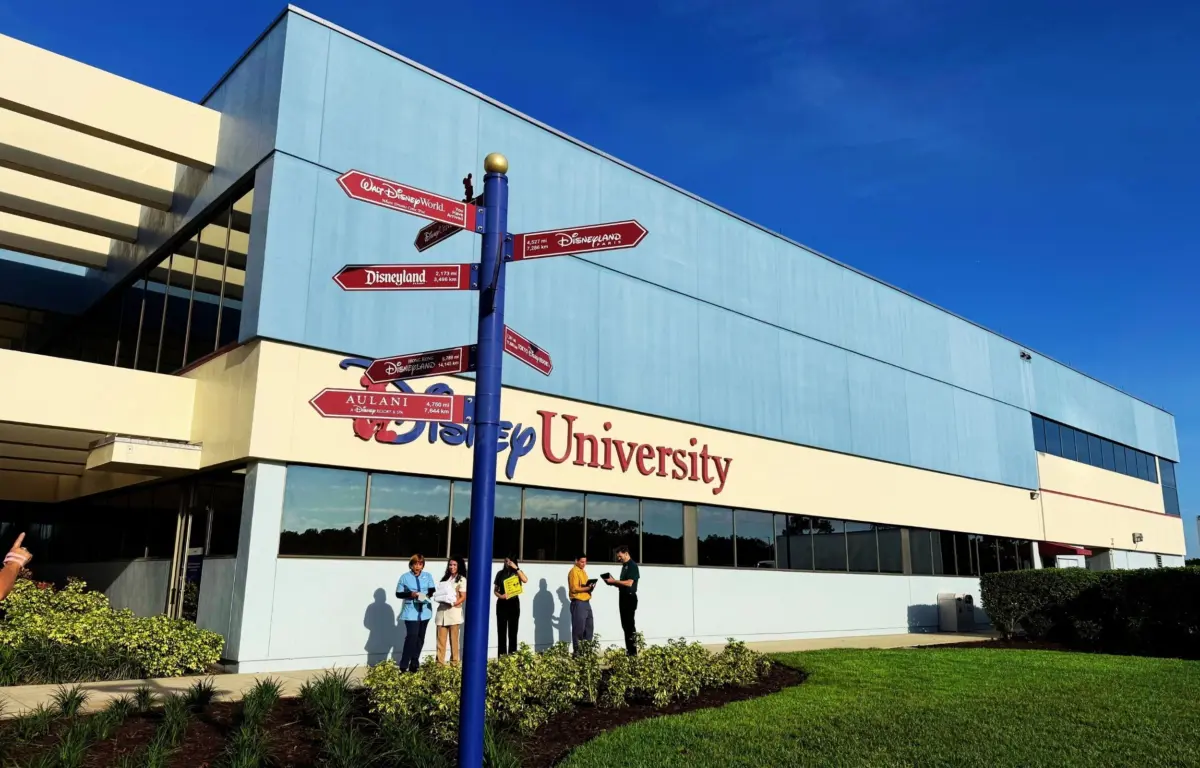
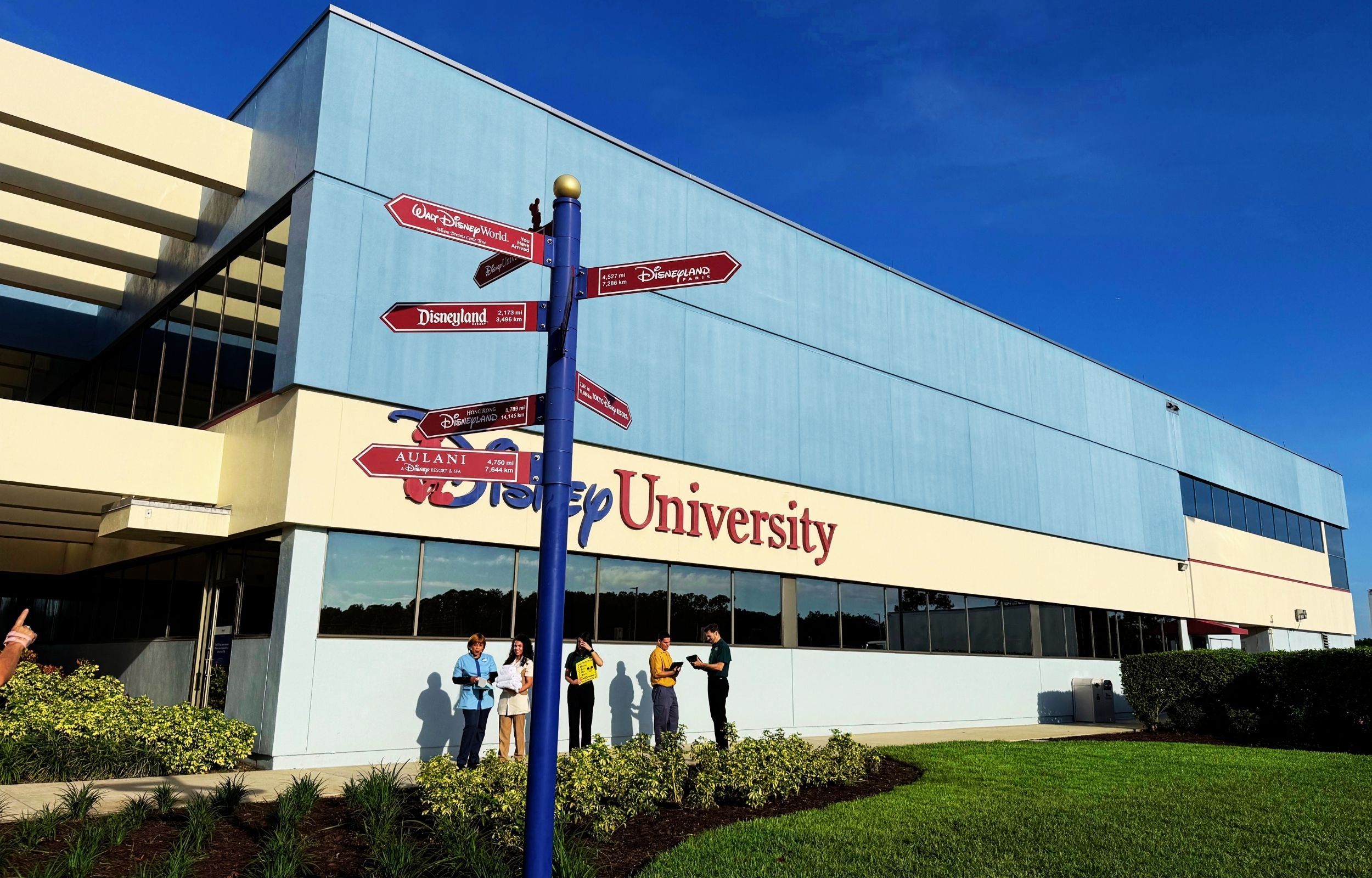
A recent look inside Disney University in Florida, the primary facility where the company prepares its workforce—known universally as "cast members"—for everything from housekeeping to massive logistical operations, reveals a business model operating at a scale few companies can ever hope to match. Yet, beneath the corporate scale and iconic branding, many of the foundational ideas behind Disney’s training methods are surprisingly simple, pragmatic, and remarkably useful for entrepreneurs running businesses of any size.
Lesson 1: Go Full Nathan Fielder
One of the more unusual corners of Disney University bears a striking resemblance to a conceptual exercise straight out of a Nathan Fielder television production. Tucked away within the facility are meticulously constructed mock environments, including fake hotel rooms and simulated lobbies, designed so that housekeepers can practice the precise mechanics of resetting rooms and cleaning bathrooms, while front-desk employees can run through role-play scenarios for check-ins and concierge duties.
For anyone familiar with HBO’s The Rehearsal, the underlying philosophy is immediately clear. Repeatedly rehearsing a task in a realistic, low-stakes environment allows workers to iron out logistical bugs, awkward interactions, and technical errors long before showtime.
In the real world, human error is inevitable. These simulated environments ensure that cast members make their initial mistakes somewhere a paying customer will never see them.
For smaller companies, the operational lesson is straightforward: businesses should avoid letting a promising employee flame out simply because their very first real attempt at a critical task happens directly in front of a client. While certain individuals undeniably thrive in high-pressure, sink-or-swim situations, a vast pool of talented employees is better served by having a safe space to practice, make mistakes, and steadily improve before stepping onto the front lines. Everyone improves through trial and error; the key is creating a controlled venue where those inevitable missteps do not come at the direct expense of a customer.
Lesson 2: Don’t Confuse the Task With the Job
The centerpiece of the Disney University curriculum is "Traditions," an immersive orientation seminar that introduces new hires to the company’s storied history and the core principles it expects every employee to carry into their respective roles.
While it would be easy to dismiss such seminars as mere corporate culture-building exercises, Traditions serves a much more practical, mechanical function: figuring out how to guide an enormous workforce performing wildly divergent jobs toward making reasonably consistent decisions on a daily basis.
One of the primary objectives established during Traditions is the alignment of a shared overarching goal. The purpose is not simply to give employees a hollow mission statement to memorize for an HR file, but rather to provide thousands of workers with a common answer to a much more critical question: What is everyone ultimately trying to accomplish here?
That shared clarity matters immensely because no formal job description can ever anticipate every unpredictable situation. It cannot account for a dropped ice cream bar, a crying child, an unexpected food allergy, a sudden ride closure, or a heartfelt Make-A-Wish dream. At some point during a shift, an employee will inevitably face a situation requiring an independent judgment call. A clearly understood, overarching goal gives them a reliable conceptual framework for making that call.
Time and again during the Traditions seminar, participants are reminded that every single cast member’s job is to personally "create happiness." While the phrasing is distinctly suited to the Disney brand, the underlying principle is universally applicable: the ultimate goal of an enterprise is almost always bigger than an individual job description.
A parking attendant, for example, is frequently one of the very first Disney employees a guest encounters upon arrival, meaning their demeanor immediately sets the tone for the entire visit. Similarly, custodial cast members maintain the cleanliness of the parks, but they effectively double as impromptu wayfarers, offering directions to ride entrances, restaurants, and restrooms whenever a guest looks lost.
Every specific role has a designated function, but that function ultimately serves a larger purpose. At Disney, this distinction is critical because guests often spend months planning their vacations and thousands of dollars executing them. A single negative interaction, or even an unhelpful shrug from a misinformed employee, can carry a surprising amount of weight and sour an entire experience.
The exact same principle applies to much smaller companies, where the greatest operational danger is often the vital tasks that slip through the cracks between rigid job descriptions. If an office employee notices a software bug, "I’m not an engineer" should never be the end of the conversation; they should know precisely where that information needs to go. If an engineer happens to pick up a phone call from a prospective client, "I’m not in sales" should not mean dumping the caller into a voicemail abyss. Nobody needs to perform everyone else’s job, but they should understand enough about the broader company goal to help route a problem toward the person equipped to solve it.
The objective is not to make every single employee personally responsible for every facet of the business. Rather, it is to ensure that critical matters do not simply wither away in the empty space between "my job" and "someone else’s job."
Lesson 3: Go Extreme With Your Dogfood
The sheer scale of Disney’s on-site costume operation is staggering when viewed strictly by the numbers. The department encompasses 46 costuming locations, 1,500 costuming cast members, more than 900 unique costume designs, 746 distinct styles of hats, and roughly 2.5 million individual garments in active circulation.
From parking attendants and behind-the-scenes technicians to iconic princesses and parade performers, nearly everything worn in the direct view of the paying public passes through this massive infrastructure.
The core challenge facing the department is universally relatable to growing enterprises: as an operation expands to serve an enormous variety of roles, how do you prevent basic functionality and quality of life from being sacrificed on the altar of scale?
For Disney’s costume teams, the answer largely stems from two fundamental concepts: actively using your own product, and intently listening to the people who use it most.
The concept of "dogfooding"—internally testing one’s own products or services—has long been a staple of startup culture. However, simply using a product casually under ideal conditions rarely reveals its true flaws. A more effective strategy involves deliberately testing the product under the exact environmental conditions where it is most likely to fail.
For Disney costume designers, this has meant spending hours out in the theme parks wearing their own newly minted garments amid Florida’s notoriously grueling heat and humidity. Those punishing environmental conditions have a way of immediately exposing design flaws, chafing points, and comfort issues that would never become apparent inside a climate-controlled design studio.
The parallel for other industries is direct. If a company manufactures luggage, the design team should drag those bags through a bustling airport when running late for a flight. If a firm builds enterprise software, the developers should try using it on an aging mobile phone with terrible cellular reception. If a business operates a subscription service, the team should actually attempt to navigate the cancellation process themselves.
Yet, designers can only experience so much firsthand. To bridge the gap, Disney creates frequent, structured opportunities for cast members to offer candid feedback on the costumes they wear during grueling shifts, proactively surfacing day-to-day annoyances and edge cases.
Bianca Cross, manager of costume design and development, points to the standard custodial uniform as a prime example of this feedback loop in action. The garment utilizes a four-way stretch fabric, is fully breathable, can be worn either tucked or untucked depending on personal preference, and features adjustable trouser cuffs designed specifically for wet cleaning environments.
Those user-centric features did not materialize by accident; they were the direct result of listening to the workers actually performing the job and iterating the design around the physical problems they encountered on the ground.
That process accomplishes much more than simply making a uniform more comfortable. It effectively transforms the people living with the product every day into active participants in the design and development process.
Plenty of companies routinely claim that they listen to their customers. A more useful question for any organization is whether they have actually made it easy for those customers to talk back. Proactively checking in with the people who rely on a product the most, and establishing an obvious, frictionless channel for them to voice complaints before minor annoyances turn into permanent churn, is essential. The people who live with a product every day are already testing it continuously; a business might as well make sure it is actually listening to the results.
Lesson 4: Look Sideways for Talent
Disney functions essentially as dozens of entirely different businesses operating under a single corporate umbrella, encompassing hotels, complex transportation networks, restaurants, costuming operations, engineering divisions, and logistics infrastructure.
This vast structural diversity creates unconventional career paths that would be nearly impossible to predict based on an employee’s initial entry-level role.
Ivan Diaz, who currently serves as the director of transportation services for the company, originally began his career in a much more technical role before receiving an unexpected phone call from management. According to Diaz, leadership simply asked him if he had ever considered running a large organization, ultimately placing him at the helm of one of the most complex transportation operations in the country.
The underlying lesson for smaller enterprises is clear: management should avoid assuming that an employee’s current job description strictly defines what they are capable of achieving. Often, the absolute best person for an internal opening already works for the company—they just happen to be sitting in a department leadership wasn’t previously looking at.