


A sharp and widespread sell-off in technology stocks has dramatically underscored just how heavily current Wall Street valuations depend on aggressive, uninterrupted expectations for the development and expansion of artificial intelligence. The sudden market downturn, triggered by emerging concerns over the future of large-scale data center investments, coincided with a wave of disappointing corporate updates that rattled investor confidence. Compounding these equity pressures, a surprisingly strong U.S. labor market report released shortly afterward further complicated the macroeconomic and monetary policy outlook. While improving consumer sentiment offered a brief glimmer of economic resilience, it ultimately failed to dispel persistent anxieties regarding the high cost of living and stubborn inflationary pressures.
Concerns over AI investment hit Wall Street
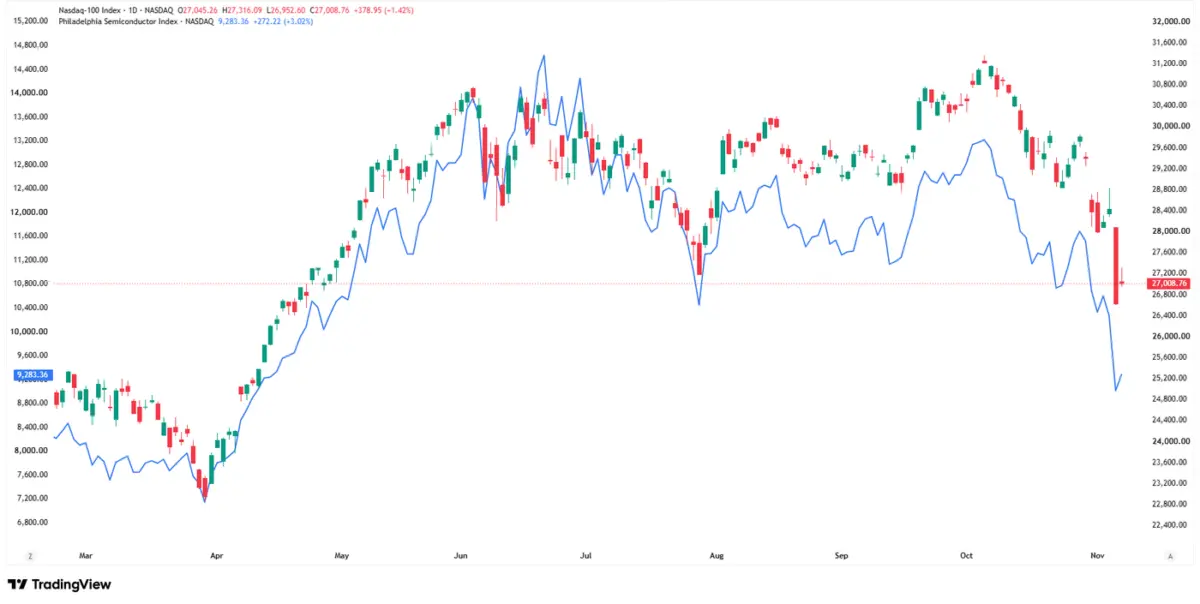
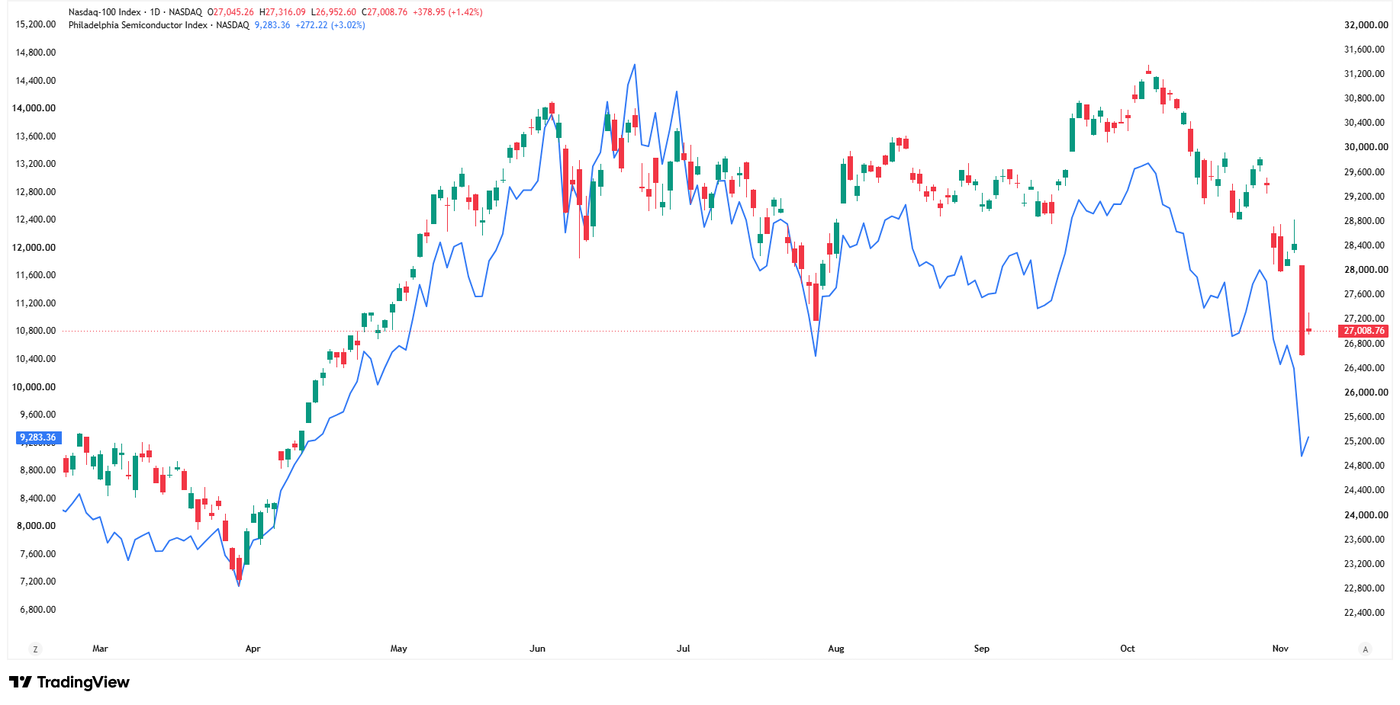
The trading session on November 5 brought steep, broad-based declines across major U.S. stock indexes, catching many market participants off guard. The benchmark S&P 500 tumbled 4.4%, while the blue-chip Dow Jones Industrial Average dropped 3.4%. The technology-heavy Nasdaq Composite suffered an even heavier blow, losing 5.5% of its value, and the specialized Nasdaq-100 index plunged an alarming 6.4%. Semiconductor manufacturers bore the brunt of the selling pressure, sending the Philadelphia Semiconductor Index tumbling by approximately 12.2%. Although technology giants and chipmakers sat firmly at the epicentre of the market rout, the losses quickly rippled outward, spreading across all 11 primary sectors of the S&P 500.
The primary catalyst behind the sudden rout was a sharp shift in market expectations regarding the future expansion of physical AI infrastructure in the wake of recent U.S. elections. Electoral victories by Democrats and political candidates who actively oppose large-scale data center expansion—most notably in critical technology hubs across states like Texas and Georgia—heightened immediate concerns over impending regulatory restrictions and project delays. Institutional investors were forced to react swiftly to the mounting risk of future policy decisions that could constrain infrastructure growth. Any significant slowdown in data center construction threatens to cascade downward, delaying vital orders for advanced semiconductors, specialized servers, and the heavy electrical energy infrastructure required to power them, thereby dampening the long-term revenue growth expected by major technology suppliers.

High valuations amplified the disappointment
The emerging prospect of slower capital expenditure and restrained infrastructure investment directly challenged the lofty valuation assumptions that have underpinned the soaring prices of AI-related equities for months. In financial markets, when investors simultaneously lower their future corporate earnings forecasts and the price-to-earnings multiples they are willing to pay for those future earnings, share prices can react with extreme volatility.
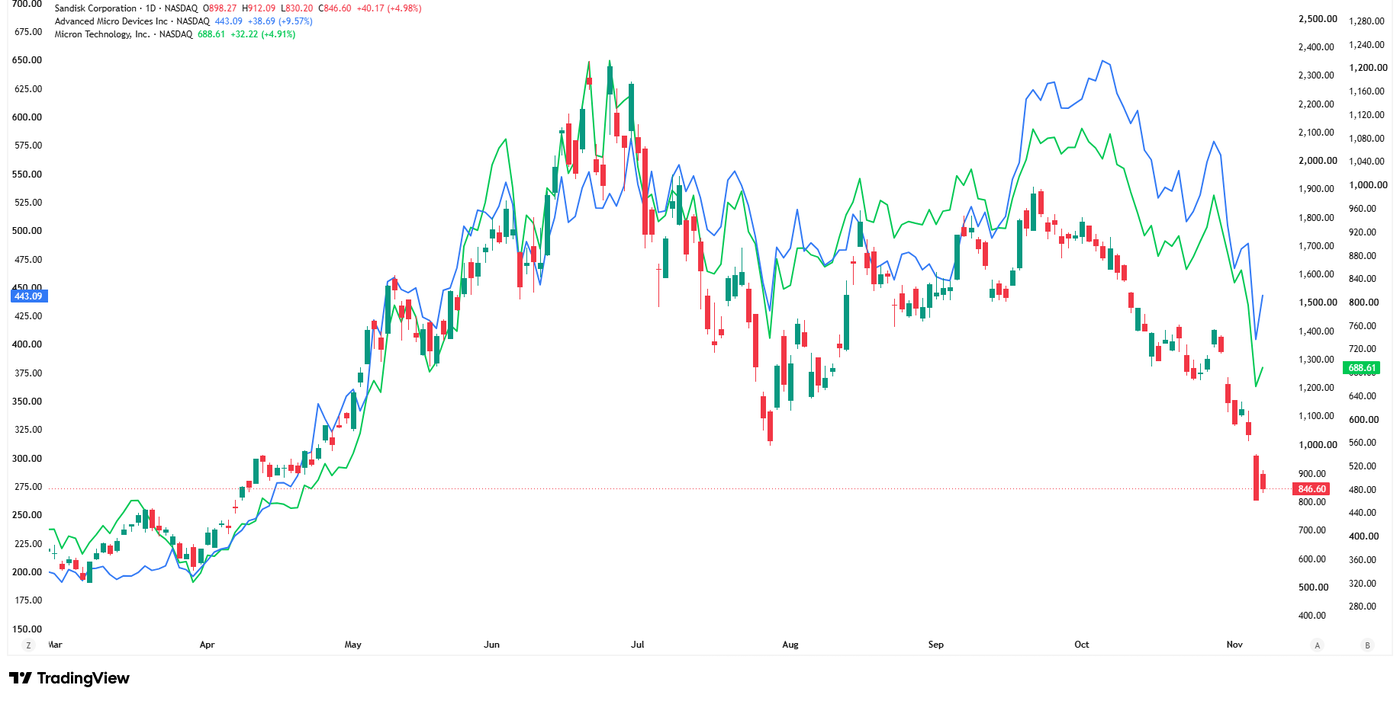
The true scale of the financial strain was acutely visible in the performance of core hardware and infrastructure suppliers. SanDisk shares plunged an astonishing 22%, while major semiconductor players including AMD, Micron, and Western Digital all suffered losses exceeding 17%. Industry bellwether Nvidia dropped by approximately 9% as the sell-off gathered systemic momentum.
Adding to the sector-wide jitters, recent corporate earnings and forward-looking outlook updates weighed heavily on market sentiment. Qualcomm disappointed investors with lower-than-expected smartphone chip sales, causing its shares to slide by approximately 9.5%. While weakness in the traditional smartphone segment does not necessarily reflect the state of ongoing demand for enterprise AI solutions, it injected an extra layer of caution across the broader semiconductor industry. Furthermore, institutional funds actively reducing their equity positions and cutting leverage likely accelerated the velocity of the sell-off.
A strong labor market changed the context for the Fed
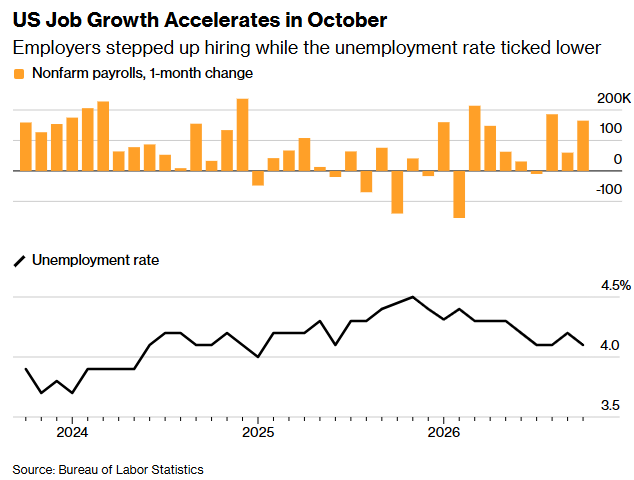
Amid the turmoil in equity markets, another significant development emerged from the macroeconomic sphere with the release of the October employment report. Nonfarm payrolls increased by a robust 165,000 jobs, comfortably exceeding the consensus expectations of economists, while the national unemployment rate ticked down to 4.1%. Additionally, substantial positive revisions to the previously reported figures for August and September added a combined 84,000 jobs to earlier estimates, painting a picture of an underlying economy that remains remarkably durable.
A sector-by-sector breakdown of the employment data revealed widespread hiring momentum. Professional and business services recorded the largest single gain, adding 70,000 jobs during the month. Meanwhile, employment rose by 42,000 in health care, 25,000 in transportation and warehousing, and 19,000 in manufacturing. Private-sector employment as a whole posted its strongest monthly increase since March.
These figures vividly highlight the growing divergence between the real economy’s current operating condition and the cautious forward-looking expectations of the stock market. While technology investment and enterprise demand continue to support overall economic activity and corporate hiring, equity markets have begun pricing in the distinct risk that future expansion will decelerate.
Job growth does not eliminate all signs of weakness
Despite the headline strength in job creation, the broader labor market picture remains nuanced and uneven upon closer inspection. The number of Americans working part-time for economic reasons increased by 339,000, bringing that total up to 4.8 million. Concurrently, the median duration of unemployment rose to 11.9 weeks, marking its highest level recorded since 2021. This indicates that robust overall employment coexists with genuine difficulties faced by specific segments of the workforce in securing suitable, full-time employment.
Wage data similarly delivered mixed signals to policymakers and analysts. Average hourly earnings rose by 0.4% on a month-over-month basis to reach $38, edging out market expectations. However, annual wage growth stood at 3.1%, remaining among the lowest rates recorded since the post-pandemic economic recovery began in 2021.
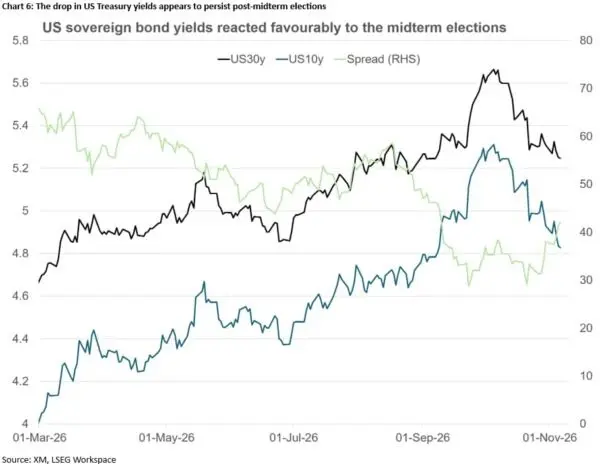
These stronger employment figures grant the Federal Reserve greater latitude to maintain a restrictive monetary policy stance. Market reactions across consecutive days reflected this delicate balancing act. During Thursday’s severe stock market sell-off, U.S. 10-year Treasury yields fell by approximately 6 basis points, a traditional safe-haven move consistent with a broader flight from risk. Conversely, yields on two-year Treasuries—which are acutely sensitive to shifts in expectations for Federal Reserve interest rates—rose only after the stronger-than-expected employment report was officially published.
Consumers feel an improvement, but prices still weigh
On the consumer front, the preliminary November reading of the University of Michigan consumer sentiment survey offered a contrasting narrative, showing an approximately 6% increase in its overall consumer sentiment index. Survey metrics tracking household financial outlooks and broader business conditions both showed notable improvement. However, this optimism was not universally shared; sentiment among respondents holding the largest stock portfolios actually deteriorated by 5%, a direct decline linked to the recent bouts of stock market volatility.
The high cost of living remains the primary psychological and financial burden for American households. As many as 57% of survey respondents spontaneously reported that elevated price levels had directly reduced their standard of living, up significantly from 46% recorded back in February. Despite the overall rebound in November, aggregate consumer sentiment remained roughly 10% lower than it was in February, prior to the onset of geopolitical conflicts involving Iran.
On a more encouraging note, the survey registered a decline in consumer inflation expectations. One-year inflation expectations dropped from 4.7% to 4.3%, while long-term expectations ticked down from 3.5% to 3.4%. Even with these downward revisions, both measures remained historically elevated compared to pre-crisis levels.
Markets between economic resilience and valuation uncertainty
Adding further complexity to the macroeconomic backdrop, energy markets felt the strain of ongoing geopolitical tensions. Brent crude prices rose by approximately 3.9% to settle at $98.29 a barrel, driven by persistent uncertainty surrounding the war with Iran. Sustained higher energy prices threaten to complicate ongoing efforts by central banks to curb domestic price pressures, even as consumer inflation expectations slowly trend downward.
Ultimately, the U.S. economy continues to demonstrate remarkable resilience, but robust macroeconomic data do not automatically translate into positive news for the equity market. Stable employment supports household incomes and consumer spending while simultaneously removing any immediate urgency for the Federal Reserve to ease monetary policy. Under these challenging conditions, sustaining elevated technology stock valuations requires definitive, tangible evidence that massive AI capital expenditures will successfully deliver the projected earnings growth. November’s sharp market correction demonstrated just how swiftly and severely financial markets can react when confidence in that foundational scenario begins to waver.