



Global financial markets faced a turbulent start to the week, driven by a dramatic political upset in Brazil, shifting geopolitical currents in the energy sector, and a wave of critical macroeconomic data spanning Asia and Europe. While emerging markets absorbed the immediate shock of a decisive left-wing presidential victory, advanced economies weighed the dual pressures of persistent inflationary forces and better-than-expected regional growth prints ahead of upcoming central bank policy decisions.
Markets
It is not an everyday occurrence for a morning financial briefing to kick off with developments in Brazil, though it is certainly not unprecedented. Incumbent president Lula da Silva’s surprise election victory over the weekend triggered massive, immediate market realignments. Lula’s primary challenger, Jair Bolsonaro—who had secured a lead in the initial round of voting—was widely viewed by financial markets as the business- and market-friendly option, backed by explicit pledges for aggressive fiscal discipline and orthodox economic management. Consequently, Brazilian asset prices, from equities to the foreign exchange and domestic debt markets, had spent weeks pricing in a victory for the incumbent’s rival.
The electoral outcome instantly invalidated those positioning strategies. Brazil’s main equity index, the Ibovespa, suffered a severe intraday rout, plunging more than 17% before clawing back some ground to close down roughly 14%. The country’s currency, the real, experienced an aggressive sell-off, crashing 12.5% straight toward key technical support around the USD/BRL 5.6 threshold, having previously hovered near the 5.0 level. Although subsequent intervention and market stabilization helped pare losses to around 10%, with the exchange rate settling near 5.4, the damage was profound.
Losses across Brazilian domestic bonds were nothing short of jaw-dropping. Yields surged between 230 and 250 basis points across the entire sovereign curve, with intraday spikes topping 300 basis points in specific segments. These extraordinary moves carry clear risk premia warnings, serving as a stark reminder to international investors of how rapidly political risk can re-price emerging market assets. For the Central Bank of Brazil, the market reaction means it is effectively back to the drawing board. Policymakers had previously been engaged in a cautious cycle of policy rate cuts, lowering borrowing costs from a 20-year high of 15% down to 13.75%.
Meanwhile, the most prominent price action within the advanced economies concentrated on French government bonds, known as OATs. French debt enjoyed a decisive knee-jerk rally after rating agency Moody’s refrained from cutting the nation’s sovereign credit rating, an outcome reinforced by a largely orderly weekend of domestic protests. Yields tumbled between 5 and 12 basis points across maturities, driving the benchmark 10-year swap spread down by 12 basis points from its recent record highs. Belgium’s swap spread fell by 6 basis points in sympathetic trading.
Conversely, German Bund yield gains proved more restrained, rising between 1.3 and 4.9 basis points and marginally underperforming US Treasuries, which ticked up 3.5 basis points at the front end while declining 2 basis points at the long end. This bear-flattening dynamic was largely underpinned by rising energy prices, particularly natural gas futures, which pushed back below the 97 euros per megawatt-hour mark.
Tensions in European energy markets eased somewhat on growing hopes that diplomatic channels might ultimately outweigh fears of a severe military escalation in the Middle East. According to reports from the Saudi Press Agency, officials from Saudi Arabia, Turkey, and Pakistan met with Iranian leaders to discuss de-escalation strategies.
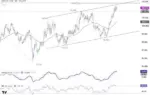
Stock markets adopted a broadly positive posture in response. In Europe, the EuroStoxx 50 index gained 0.8%, while Wall Street indices advanced between 0.3% and 0.8%. However, major US indices retreated from their intraday highs, failing to breach any significant technical barriers. Technology sector sentiment found further support during Asian trading hours, buoyed in part by the hyped initial public offering filing from artificial intelligence firm Anthropic. Nevertheless, the true litmus test for equity bulls looms later in the week, with major corporate earnings scheduled from heavyweights including Amazon, Microsoft, and Intel.

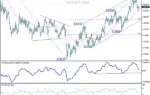
The macroeconomic calendar for the day featured key US indicators, including durable goods orders and the Conference Board’s consumer confidence index, alongside the European Central Bank’s Bank Lending Survey. The ECB survey serves as critical final input ahead of the central bank’s upcoming policy meeting, with analysts scanning the data for concrete evidence of tighter credit supply in the wake of recent European sovereign bond market volatility. Despite generally positive risk sentiment in equities, the euro remained under heavy downward pressure, unable to capitalize on broader market optimism. The EUR/USD exchange rate decisively broke below the 112 handle, with follow-through selling keeping the year-to-date low of 1.1113 firmly in market focus.
News & Views
Economic growth in South Korea surprised to the upside in the latest reporting period, accelerating from 0.6% to 1.0% on a quarter-on-quarter basis and comfortably outpacing the consensus forecast of 0.8%. Compared to the third quarter of the previous year, the South Korean economy expanded by 3.4%, moderating slightly from the 3.7% pace recorded in the second quarter but still outperforming the 3.1% market consensus.
A detailed supply-side breakdown revealed growth across all major economic sectors, though performance remained heavily lopsided. The manufacturing sector served as the primary engine of expansion, surging 2.0% quarter-on-quarter and 7.0% year-on-year, propelled primarily by robust global demand for computer, electronic, and optical products, alongside machinery and equipment. The construction sector also posted a 2.0% quarterly gain, despite contracting 1.4% year-on-year. In contrast, momentum in the services sector cooled significantly, registering a meager 0.2% quarterly expansion, though holding a 2.4% annual growth rate.
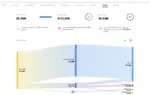
Expenditure-side data further illustrated the profound macroeconomic impact of the global artificial intelligence boom. Export growth accelerated to 2.4% quarter-on-quarter and 8.6% year-on-year. However, the net contribution of international trade to overall GDP growth remained modest, as imports simultaneously expanded by 2.4% quarterly and 7.0% annually. Domestic private consumption proved relatively weak, contracting 0.2% on the quarter, but a robust 1.9% increase in government spending offset this drag, lifting combined consumption to a 0.3% quarterly and 1.5% annual increase. Gross fixed capital formation re-emerged as a major growth driver, jumping 2.2% quarter-on-quarter and 4.3% year-on-year.
With the Bank of Korea having already raised its policy rate twice over the course of the year—taking the benchmark rate from 2.5% to 3.0%—the stronger-than-expected GDP print reinforces the case for further monetary tightening, particularly in the face of sticky, above-target inflation pressures. The South Korean won traded near its strongest levels against the US dollar since October 2024, hovering around the 1325 level.
Meanwhile, British consumer price pressures showed renewed signs of acceleration. The British Retail Consortium’s shop price monitor indicated that overall retail prices rose 0.4% month-on-month in October. On an annual basis, shop price inflation accelerated from 1.4% to 2.9%, marking the fastest pace of increase recorded since February 2024.
Granular data from the report revealed that food prices remained flat on the month but accelerated to a 2.9% annual rate, up from 2.5% previously. Non-food inflation proved even more pronounced, surging 0.7% on the month and pushing the annual rate to 1.7% from 0.8%, touching a nearly three-year high.
British Retail Consortium Chief Executive Helen Dickinson warned that the structural dam is finally beginning to break regarding the massive wave of operational costs that retailers have successfully absorbed over the past two years. Industry leaders pointed to persistent escalations in energy expenses, transportation outlays, employment compensation, and government packaging levies as the primary cost drivers forcing businesses to pass higher prices on to consumers. Today’s retail price data significantly strengthens the argument for an imminent interest rate hike by the Bank of England at its upcoming November policy meeting.