




Global financial markets absorbed a historic shock yesterday as a confluence of technical liquidations, political shifts, and mounting regulatory scrutiny sent major stock indices tumbling. The technology-heavy Nasdaq suffered its steepest single-day decline since the depths of the COVID-19 pandemic, closing down a staggering 5.52%.
The massive wave of selling quickly spread across the broader equities landscape. The benchmark S&P 500 lost 4.35%, while the blue-chip Dow Jones Industrial Average retreated 3.44%. The sheer speed and one-way nature of the traffic left market participants scrambling to assess the damage, with analysts warning that it is far too early to classify the drastic repricing as a simple exhaustion move. Instead, the sudden downturn has exposed deep vulnerabilities within heavily concentrated trades, most notably the multi-year artificial intelligence boom.
Markets
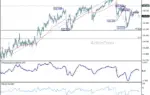
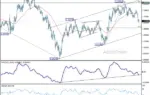
From a technical perspective, the Nasdaq’s brutal descent brought the index directly to a critical line of defense. The July market bottom, sitting at 24,425, currently serves as the formidable neckline of a massive double-top formation that is now undergoing a severe test. This crucial technical threshold also coincides with an ascending trend line connecting the major market lows of 2025 and 2026. Financial analysts note that if this vital support gives way, the final downside target stands near 21,125, bringing the index dangerously close to its year-to-date low of 20,690.
While the exact anatomy of yesterday’s dramatic washout remains a subject of intense debate among Wall Street strategists, a significant portion of the downward pressure was undeniably technical in nature. The swift market drop triggered widespread fund de-risking, automated stop-losses, and sudden margin calls, creating a cascade of forced selling where over-leveraged investors had virtually nowhere to hide.
However, the catalysts behind the sell-off extended far beyond routine technical adjustments. The dramatic downward spiral was heavily fueled by the simultaneous liquidation of concentrated bets on the artificial intelligence trade, colliding head-on with unexpected political developments. Rather than being driven purely by traditional macroeconomic fundamentals, the market rout coincided directly with the political fallout from a U.S. Democratic "Blue Sweep" election victory.
Immediately following their historic win, several progressive Democratic lawmakers flooded social media platforms with coordinated messaging regarding the new legislative agenda. Prominent voices declared that a top priority for day one must include an immediate regulatory pause on advanced artificial intelligence development, stringent oversight of what they characterized as an "out of control" industry, and ultimately, a legislative ban on artificial superintelligence.
The political pressure quickly expanded beyond Washington. In Texas, governor-elect Hinojosa proposed a sweeping regulatory moratorium on future data center approvals. These developments thrust the spotlight back onto the "Ban Artificial Superintelligence Act," a controversial bill originally introduced by lawmakers Bernie Sanders and Greg Casar back in September.
While financial market participants widely acknowledge that the regulatory pendulum is unlikely to swing quite that far back, a noticeable slowdown in the pace of the AI infrastructure build-up has suddenly become the base-case scenario under Democratic supervision. This leaves the massive AI trade uniquely exposed to an unprecedented level of political and regulatory uncertainty.
This sudden political headwind arrives on top of pre-existing questions regarding the exotic financing models fueling the global AI build-out. Industry observers have increasingly questioned whether the massive capital expenditures can generate sufficient returns, warning that potential project delays risk breaking core underwriting assumptions—such as tenants reliably paying high-end rents. Furthermore, any slowdown threatens to undermine the prevailing narrative of acute chip scarcity, potentially worsening the credit quality of AI infrastructure debt, tightening broader financial conditions, and ultimately forcing a contraction in capital expenditure. This creates a dangerous feedback loop that could easily validate ongoing regulatory concerns, pulling the entire sector into a vicious cycle.
In the fixed-income space, U.S. Treasuries predictably drew safe-haven demand, though the move manifested in an atypical bull-steepening fashion. The U.S. 10-year and 30-year yields fell by a relatively modest 5.2 basis points and 2.2 basis points, respectively—a subdued reaction given the sheer magnitude of the equity market crash. Conversely, the front end of the U.S. yield curve experienced a much sharper adjustment, shedding more than 10 basis points.
The prevailing market rationale suggests that a significant portion of the Federal Reserve’s recent hawkish stance has been predicated on an exceptionally bullish view of the broader economy, with aggressive AI-related spending contributing heavily to that optimistic outlook. Consequently, when investors begin to seriously question the sustainability of the AI trade, they are inherently questioning the future pace of economic growth. This reassessment reduces the theoretical amount of monetary tightening required by the Fed to stem persistent inflationary pressures.

Yesterday, panic levels in the broader financial ecosystem were sufficiently high for the U.S. dollar to temporarily overcome the loss of traditional interest rate support and its familiar positive correlation with the domestic AI trade. In foreign exchange markets, the EUR/USD exchange rate failed to decisively break through early October highs resting between 1.1277 and 1.1285. A sharp reversal pulled the currency pair cleanly back below the key 1.12 handle. At the same time, renewed upward pressure on global energy prices—with Brent crude oil returning to the $100 per barrel mark and Dutch TTF natural gas surging back above €90 per megawatt-hour—added additional fundamental weight to the euro side of the equation.
Looking ahead, market participants face another crucial data point with the release of the U.S. payrolls report, though overall trading sentiment will likely remain entirely dictated by the rapidly evolving narrative across global stock exchanges.
News & Views
Beyond the turmoil in U.S. markets, central banks and government leaders around the world continued to grapple with persistent economic pressures and policy adjustments.
In Central Europe, the Czech National Bank opted to raise its benchmark interest rate by 25 basis points to 4.0% yesterday, following a closely contested 4-3 board vote. Newly released macroeconomic forecasts from the central bank project that inflation will remain on an upward trajectory through the end of 2026 and early 2027 before finally drifting back down toward the official 2.0% target during the course of 2028.
According to the updated projections, annual inflation is expected to print at 2.1% for 2026, 3.2% for 2027, and 2.3% for 2028. Core inflation continues to run at elevated levels, prompting policymakers to reiterate warnings regarding the distinct risk of it becoming deeply persistent within the economy. Price increases remain stubbornly broad-based, most notably within the services sector. Furthermore, the domestic labor market remains exceptionally tight, with wages rising at a rapid pace that continues to aggressively support household consumption.
Corporate investments are also expanding and remaining elevated, while robust property price growth continues to pour additional fuel onto the inflationary fire. Explaining the policy shift, central bank officials emphasized that yesterday’s rate hike is designed to help securely anchor long-term inflation expectations and restrict the pass-through of lingering cost and energy shocks into consumer prices. Maintaining a relatively restrictive monetary policy stance is viewed as an absolute necessity to keep inflation hovering near the 2.0% target over a multi-year horizon.
Addressing the media following the decision, Czech National Bank Governor Michl characterized the rate increase strictly as a fine-tuning measure rather than the formal inauguration of a new monetary tightening cycle. He noted that broader financial conditions are already "very tight" across the economy due to the prior accumulation of increases in longer-term interest rates. Following the central bank’s announcement, Czech swap yields tumbled between 10 and 12 basis points across the entire maturity curve, while the Czech koruna softened, pushing the EUR/CZK exchange rate to 24.33.
Meanwhile, in Asia, Japanese Prime Minister Takaichi announced that the national government is actively planning to utilize financial proceeds generated from the central bank’s ongoing exchange-traded fund (ETF) sales to fund critical public spending initiatives, specifically targeting areas such as national economic security.
The Bank of Japan announced last week that it would significantly accelerate the pace of its balance sheet normalization, stepping up the unwinding of its massive ETF portfolio from JPY 330 billion annually to a much faster JPY 860 billion. A designated portion of the net profits realized from these sales is routinely paid directly into Japan’s national treasury.
"Additional proceeds from the ETF sales are the fruits of Japan’s economic growth, so it’s entirely appropriate to reinvest them for spending on crisis management and vital growth areas," Prime Minister Takaichi stated, highlighting the strategic pivot in fiscal management as the country navigates evolving global economic conditions.