




By Financial News Staff
It has been over eight years since Brandon, the creator behind the popular Financial Independence (FI) platform known as the Mad Fientist, officially left his traditional career behind. For a long time, his journey followed a familiar script for the early retirement community: aggressive saving, meticulous investing, and a relentless focus on building a robust portfolio to secure absolute freedom. However, after stepping away from his annual updates in 2021 under the assumption that he had financial independence completely figured out, he discovered that the post-FI life holds plenty of unexpected plot twists.
Breaking a self-imposed three-year hiatus from annual updates, the Mad Fientist recently returned to the Financial Independence Podcast to share what has changed since he decided to stop documenting his journey. What started as a belief that he was simply settling into a "normal life" has transformed into a profound personal evolution—one defined by learning how to actually spend money, embracing homeownership, re-evaluating long-term investments, and navigating the unpredictable psychological hurdles of wealth accumulation.
The Challenge of Transitioning From Saver to Spender
For the vast majority of his life, the Mad Fientist’s financial philosophy was rooted in accumulation. Saving money, investing it, and hoarding it for the future were second nature. Spending, by contrast, was treated as a last resort—a mistake that permanently removed capital from the compounding equation.
Reflecting on his eighth year of freedom, he noted that the single biggest shift in his mindset has been learning how to use money for the very first time. After spending decades focused entirely on growing his net worth, actively trying to spend money and finding genuine enjoyment in the process has proven to be a major psychological hurdle. It is a transition that many in the financial independence community eventually face, yet few talk about openly: the realization that accumulating wealth is only half the battle, and that knowing how to deploy it to enhance daily life requires an entirely different skill set.
This shift in perspective was heavily influenced by a recent podcast appearance featuring Bill Perkins, author of Die With Zero. The core philosophy—asking the critical question of "When’s the party?"—resonated deeply. The underlying realization is stark: if you do not actively spend or distribute your wealth during your lifetime, someone else will eventually do it for you, whether through heirs or charitable contributions. For the Mad Fientist, learning to integrate spending into his daily routine has meant shifting away from the fear of depleting assets and toward using capital to buy immediate joy, comfort, and experiences.
A Surprising Return to Homeownership
Perhaps the most startling development of his post-FI life is his recent embrace of homeownership. After selling his previous home in Vermont in 2014, he and his family spent years happily renting, moving frequently to experience new environments. However, welcoming a son into the family changed the calculus entirely.
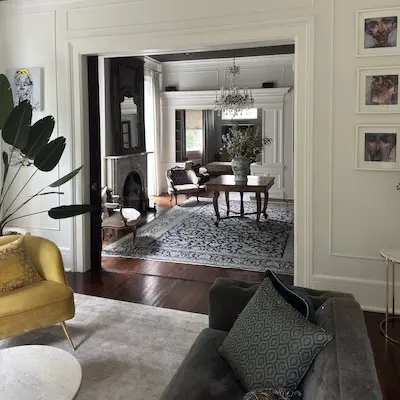
Desiring stability, a permanent place to store belongings, and an end to annual moves for the sake of novelty, the family decided to purchase a house. This marks the third home he has owned, following properties in Scotland and Vermont, but it is the first one he has genuinely enjoyed. Looking back, he acknowledges that buying a home during his aggressive accumulation phase would have been a source of constant stress, as unexpected home maintenance costs would have clashed with his hyper-focused savings goals. Today, with his financial foundation securely locked down, homeownership has shifted from a financial liability to a welcome luxury—complete with a custom-built home studio designed for podcasting and content creation.
This newfound appreciation extends beyond real estate to material possessions in general. Having lived out of furnished rentals with minimal belongings for years to avoid the friction of moving, he discovered that acquiring high-quality items—ranging from a premium coffee grinder and whole-home audio systems to carefully selected furnishings—has measurably increased his daily happiness.
The Real-World Payoff of Long-Term Investments
Reaching financial independence often feels like a theoretical milestone. Numbers on a screen indicate that work is optional, but the actual utility of the capital remains abstract until it is put into motion. Buying his recent home provided the Mad Fientist with his first tangible experience of utilizing his portfolio for a major life transaction, describing the process of liquidating a portion of his wealth to purchase a stone house in the countryside as an eye-opening financial milestone.
Beyond monetary investments, he emphasizes that the non-financial investments made over the past two decades are paying massive dividends. Maintaining a rigorous focus on health over the years has allowed him to enter his early forties with the energy and physical capability of a twenty-year-old, enabling him to actively chase after a toddler and plan for decades of future skiing and ice hockey. Similarly, long-term investments in friendships and his 22-year relationship with his partner, Jill, have yielded profound personal rewards, providing a rich support system that transcends financial metrics.
Lessons From Stock Picking and Index Funds
Amidst discussions of lifestyle and mindset shifts, the Mad Fientist also touched upon
the realities of individual stock picking. While many investors learn the hard way through losses, he highlighted the lesser-discussed complications of picking winning stocks.
Recalling early investments in Nvidia in 2012 and Apple around the same time, he illustrated the double-edged sword of individual equities. While both choices were fundamentally sound and yielded strong returns, holding them came with significant drawbacks. Selling Nvidia too early meant missing out on thousands of percent in subsequent growth, while holding Apple in a taxable account created a massive unrealized capital gains tax liability, making it difficult to rebalance his portfolio without triggering a substantial tax hit. These experiences reinforced his long-standing commitment to a passive index fund strategy—an approach that minimizes active management, eliminates emotional decision-making, and allows capital to compound smoothly in the background.
Looking Ahead
As he embarks on his ninth year of freedom, the Mad Fientist plans to continue sharing his evolving perspective through upcoming articles, including a deeper dive into the mechanics of learning how to spend and a revisited look at his long-term lifestyle goals. He is also exploring the possibility of expanding his audio podcast into video formats via YouTube, capturing the reality of his ongoing experiment with early retirement.
Reflecting on the community he has built over the years, he expressed deep gratitude for his audience, noting that the relationship fostered through the Mad Fientist platform remains one of the most rewarding investments of his career.