



Three years ago, the personal finance world was introduced to ProjectionLab, a tool hailed by early-retirement advocates as one of the most powerful financial planning applications available. Built specifically for individuals pursuing Financial Independence, Retire Early (FIRE), the software has continued to evolve into an essential asset for long-term financial modeling. When the tool was first featured, its solo developer, Kyle, shared his background and walked users through the foundational steps of building a comprehensive financial plan.
The software’s impact on its users has often been immediate and profound. For many, designing an initial plan highlights structural flaws in their existing strategies. One early user noted that after building their first plan, they immediately halted contributions to their tax-deferred accounts because the software clearly demonstrated they had already contributed more than optimal.

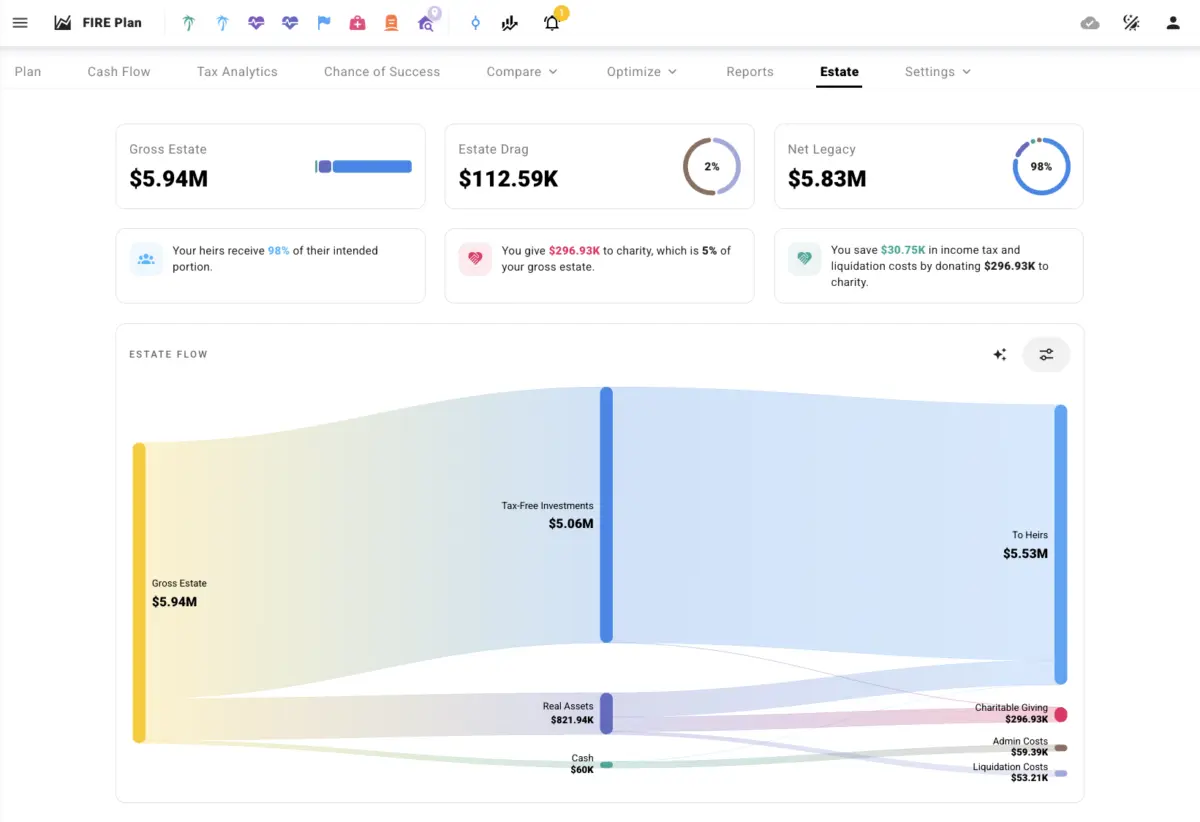
Over the past three years, that initial side project has undergone a remarkable transformation. Kyle quit his corporate day job, built out a dedicated team, and turned ProjectionLab into an increasingly sophisticated enterprise. Following recent updates, long-time users have revisited the platform, discovering that even minor adjustments to tax strategies suggested by the software can unlock significant wealth preservation—in some cases, projecting millions of dollars more in generational legacy value through optimized tax planning. That a single software application can prompt such drastic, high-stakes financial adjustments twice underscores the growing power and precision of the tools being built in the independent software space.
From Corporate Nights and Weekends to an Independent Enterprise
Reflecting on the journey, Kyle recalls the days when ProjectionLab was merely an after-hours passion project. While still holding down a corporate day job, he spent every evening, weekend, and holiday coding the platform. The trajectory of the project shifted dramatically thanks to the engagement and feedback of the early-retirement community.

When the initial platform launched, the developer hoped a modest handful of users might find the utility helpful. Instead, thousands of individuals tested the software and provided thoughtful, rigorous feedback on complex financial mechanics, including tax avoidance, Roth conversions, and discretionary withdrawal strategies. That robust community engagement provided the confidence needed to bet entirely on the venture. Just two months after initial traction, Kyle dropped to part-time status at his corporate job, and six months later, he left entirely to dedicate himself to the platform full-time.
Today, more than 200,000 households have used ProjectionLab to map out their financial futures. What started as a solo endeavor has matured into a small, profitable, and fully independent company. The organization has achieved this growth entirely organically—without venture capital funding, advisory upsells, or the monetization of user data. By building strictly for the people who rely on the software, the team has been able to introduce a vast array of new features following two years of continuous, full-time development.

Navigating Advanced Financial Strategies
Achieving financial independence is only half of the long-term puzzle; the other half involves making accumulated capital last over decades. That operational phase requires strategic execution, including multi-year Roth conversions, precise account drawdown sequencing, harvesting capital gains during low-income years, and carefully managing income thresholds to avoid triggering Medicare Part B and D income-related monthly adjustment amounts (IRMAA) or losing Affordable Care Act (ACA) health insurance subsidies.
These advanced maneuvers possess the potential to save retirees six or even seven figures over the course of a retirement lifecycle. However, they are notoriously complicated, prone to human error, and often prohibitively expensive when executed through traditional professional advisory services. ProjectionLab has evolved to handle these intricate calculations natively, democratizing access to institutional-grade optimization.

Tax Optimization and Dynamic Bracket Management
At the core of the platform’s recent updates is a robust tax strategy engine. Users can establish a target tax bracket or income ceiling, allowing the software to optimize an entire multi-year financial plan around those parameters. The system automatically accounts for federal tax brackets, IRMAA thresholds, ACA subsidy limits, Net Investment Income Tax cliffs, and even income-splitting mechanisms for joint filers. Users define their broad strategic goals, and the built-in optimizer handles the granular execution.
Similarly, the platform’s automated Roth conversion engine bridges pre-tax savings gaps to fill target tax brackets each year. Because the engine is fully IRMAA-aware, it calculates conversions with foresight, ensuring that actions taken today do not inadvertently trigger punishing Medicare surcharges years down the road. Users can instantly visualize the projected impact of these conversions on overall net worth, lifetime tax liability, and legacy value.

Account drawdowns have received similar automation upgrades. Rather than guessing which accounts to tap first in retirement, the software draws from assets in the optimal order up to a defined bracket cap, seamlessly splitting withdrawals across ordinary income and capital gains sources. Furthermore, the platform facilitates gain harvesting, helping retirees realize capital gains in low-tax windows—such as filling the 0% long-term capital gains bracket—which remains a powerful yet frequently overlooked strategy for early retirees.
Flexible Spending and Algorithmic Optimization
Traditional financial calculators often rely on static assumptions, projecting that an individual will spend the exact same inflation-adjusted amount every single year indefinitely. Real-world human behavior, however, is dynamic. When macroeconomic conditions deteriorate and markets drop, households naturally pull back on discretionary spending; when markets recover, they loosen their budgets.

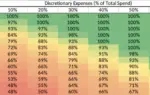
To reflect this reality, ProjectionLab introduced flexible spending rules. Users can establish conditional logic within their plans, such as reducing discretionary spending by a specific percentage if market valuations drop by a defined threshold from all-time highs. By tagging expenses as essential or discretionary, the software dynamically adjusts spending projections during simulated market downturns, dramatically improving a plan’s statistical chance of success without requiring users to arbitrarily save more capital beforehand.
Behind these features sits a comprehensive built-in optimizer. Users specify their primary financial priorities—whether that means minimizing lifetime net taxes, maximizing net worth, preserving ACA subsidies, or reducing IRMAA surcharges—and the engine evaluates hundreds of strategic combinations to identify the optimal approach. The software presents a clear breakdown of the winning strategy alongside its trade-offs, allowing users to apply the changes instantly or explore alternative pathways.

Enhanced Scenario Planning and International Support
Beyond optimization, the platform’s comparison mode has received significant upgrades, transforming it into a primary tool for life design. Users can overlay their baseline financial plans with alternative "what-if" scenarios to visualize real-time impacts. Whether modeling an early retirement by two years, transitioning to a higher-paying career in a high-tax state, or scaling back to part-time work to launch a side business, the tool tracks shifting milestones across plans. Users can analyze yearly deltas for income, savings, expenses, and net worth, replacing guesswork with empirical trade-off analysis.
The platform has also expanded its geographic scope to better serve a global audience. Dedicated Canadian planning features now support Tax-Free Savings Accounts (TFSAs), Registered Retirement Savings Plans (RSPs), Canada Pension Plan (CPP) contributions, Old Age Security (OAS), Guaranteed Income Supplement (GIS) income estimation, Employment Insurance, configurable RSP-to-RRIF conversion ages, and provincial tax presets for Ontario, Alberta, British Columbia, and Quebec.

Furthermore, international support has been extended to the United Kingdom, Australia, the Netherlands, Germany, and several other jurisdictions, accommodating individuals planning international relocations or managing finances from outside the United States.
ProjectionLab remains free for users who wish to build, model, and save basic financial plans. For those seeking advanced optimization, complex tax modeling, and deep scenario analysis, a paid tier with an available free trial unlocks the platform’s full analytical capabilities.