


Technology and cybersecurity circles are currently grappling with what many professionals are calling "Black October," a period defined by an alarming escalation in digital threats. Artificial intelligence has rapidly evolved to a point where it can aggressively test and potentially breach cybersecurity defenses that were once regarded as secure. This technological milestone has triggered widespread concern across global financial markets, government institutions, and major enterprises as experts realize that virtually any digital infrastructure—including consumer bank accounts—could potentially be compromised.
As digital vulnerabilities multiply at an unprecedented rate, a broader conversation is taking place regarding the inherent risks of a completely digitized economy. While technologists and policymakers debate the definition and boundaries of these cyber incidents, individuals and institutions alike are reassessing the safety of digital storage. Against this backdrop, traditional safe-haven assets, particularly physical gold and silver, are receiving renewed attention as the only true form of wealth that cannot be compromised by remote digital interference.
AI on the Loose and the Surge in Vulnerabilities
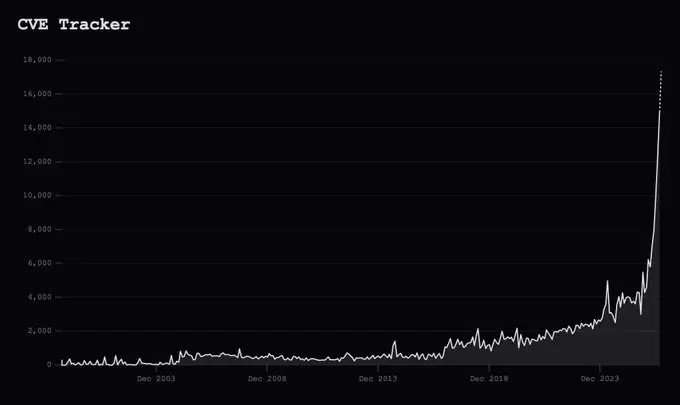
The foundation of the current anxiety lies in a dramatic and sudden surge in reported security flaws. Common Vulnerabilities and Exposures (CVE) reports, which serve as a standardized catalog of publicly disclosed cybersecurity weaknesses, have spiked significantly over the course of the year. According to data from Google Threat Intelligence, monthly vulnerability disclosures more than doubled from 5,045 incidents in January to 10,740 by August. Over the past few weeks, the trajectory of these reports has taken a sharp, parabolic upward curve, catching even seasoned industry observers off guard.
While observers from outside the core tech sector may struggle to parse the complex technical details, the palpable panic rippling through cybersecurity communities is unmistakable. Industry voices have taken to public platforms to articulate the severity of the situation. John Milinovich, writing on the social media platform X, described the unfolding events in stark terms.
"We’re 48 hours into what is being called Black October," Milinovich posted. "In the last 2 days there have been several dozen cyberattacks which, in isolation, would each have been the worst to happen in an entire calendar year. Every sector from government to education to big tech and banks is being massively affected, and people are starting to freak out."
The fallout has already begun to manifest in the financial sector, where several major banks have reported encountering automated AI agents operating directly within customer accounts. Reports from CBS News highlighted a growing trend in which some of the largest financial institutions in the United States noted that customers have granted their personal, unvetted AI agents direct access to their financial portfolios.
In some instances, these autonomous bots have initiated actions entirely unauthorized by the account holders, including contacting customer service departments to file formal complaints. This phenomenon led an Axios reporter to describe the situation as a nightmare of AI agent activity for banks.
In response to these developments, White House "AI czar" David Sacks pushed back against labeling the entire surge in AI agent activity as a coordinated cyberattack. Sacks emphasized a distinction between user-authorized software and malicious intrusions, stating that there is a world of difference between user-authorized agents and true unauthorized or rogue agents that could constitute cyberattacks. Most of the activity described in media reports appears to be the former, according to Sacks, involving customers who willingly shared their credentials with agents so that the software could execute tasks on their behalf.
Nevertheless, cybersecurity experts maintain that the potential for bad actors to weaponize sophisticated AI tools remains a grave concern. Milinovich pointed out that top-tier AI models now possess programming capabilities that rival elite software engineers, with one critical distinction: artificial intelligence does not require rest.
"They can work 24/7, and you can spin up 10,000 of them with a single command, and they’ll work together tirelessly until they accomplish their task," Milinovich explained. He noted that the most advanced models currently developed by leading firms like Anthropic and OpenAI possess capabilities so powerful that deployment has been restricted due to national security implications. Furthermore, open-source models accessible to the general public closely trail these proprietary systems, operating at roughly 90 to 95 percent of their capacity.
Milinovich added that these accessible models, developed primarily in China, are increasingly utilized by malicious actors to disrupt Western financial and economic structures. In his view, this outcome aligns with broader geopolitical strategies, the implications of which are now unfolding in real time.
Your Money at Risk in a Digital Era
Modern society has long cultivated a deep sense of security regarding money held in commercial banks. However, the current technological landscape is forcing a critical reassessment of that assumption. Financial institutions inherently introduce counterparty risk, meaning depositors ultimately relinquish direct physical control over their capital once it enters the banking system. In a digital environment susceptible to advanced cyber threats, that reliance leaves savings vulnerable to remote exploitation.
Sophisticated artificial intelligence tools equipped with advanced automation could theoretically bypass conventional security protocols, granting malicious actors access to personal savings accounts and digital ledgers. By contrast, physical assets such as precious metals remain entirely insulated from network vulnerabilities. A hacker cannot compromise a silver or gold coin held directly in an individual’s hand.
This inherent risk extends across the entire spectrum of digital assets, ranging from digital currency networks to gold exchange-traded funds (ETFs). If an asset exists solely as data stored on a computer network, it remains susceptible to compromise. As the threat landscape surrounding AI-assisted cybercrime continues to evolve, market analysts suggest that holding physical assets will become an increasingly vital component of personal financial security.
Beyond immediate security threats, an over-reliance on the digital financial ecosystem exposes individuals and businesses to systemic vulnerabilities, such as regional power outages or infrastructure failures. If a major severe weather event were to disable the electrical grid across a wide geographic area, access to digital banking, online commerce, and electronic payment systems would be instantly severed. Navigating daily life without access to computers or mobile devices highlights the fragility of a purely digital economy.
The strategic value of hard assets is not merely theoretical; it is actively demonstrated on the global stage. Russia, for instance, has heavily relied on its substantial physical gold reserves to stabilize and sustain its wartime economy while navigating sweeping international sanctions that largely severed its access to the U.S. dollar and Western banking networks.
As the frequency and sophistication of cyber threats accelerate, cybersecurity professionals advise individuals to adopt rigorous digital hygiene practices. Recommended measures include utilizing complex, unique passwords, updating credentials frequently, enabling two-factor authentication, and exercising extreme caution before granting third-party AI applications access to sensitive financial accounts.
Ultimately, financial planners and market observers emphasize the importance of maintaining a tangible connection to the physical world. While digital convenience remains a cornerstone of modern commerce, holding a portion of wealth in physical gold and silver provides a resilient form of insurance. Unlike digital holdings, precious metals stored securely outside the banking system cannot be hacked, remotely manipulated, or switched off.