



Gold and silver may face mounting downward pressure in the immediate future, but the broader structural bull market for precious metals is far from over, according to prominent market analyst Przemyslaw K. Radomski, CFA.
In a recent comprehensive interview on the Money Metals podcast with host Mike Maharrey, Radomski delved into a wide array of critical market dynamics. The discussion covered technical warning signs across the metals sector, rising global interest rates, the increasingly complicated policy dilemma facing the Federal Reserve, and the economic mechanisms that often cause gold and silver to decline simultaneously with equities during broader market selloffs.
At the time of the recording, gold was holding near the $4,000 per ounce mark after pulling back from levels above $4,100, while Brent crude oil had climbed sharply to roughly $111 a barrel. Maharrey opened the conversation by observing that gold had shown notable resilience, maintaining its position above $4,000 despite aggressive headwinds from climbing bond yields and a strengthening U.S. dollar, before prompting the analyst to evaluate whether this critical support level could withstand ongoing market pressures.
Gold Faces a Short-Term Test
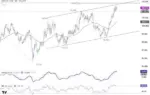
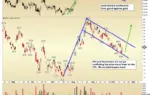
Responding to the market’s trajectory, Radomski stated that he does not anticipate gold will sustain its position above the $4,000 threshold over the near term. He highlighted several technical warning signs that point toward further consolidation or correction, including gold’s notable inability to mount a meaningful rally even during periods of U.S. dollar weakness. Furthermore, he pointed to bearish reversals forming among mining equities and a brief historical anomaly where silver momentarily outperformed gold as warning indicators.
According to Radomski’s rigorous technical analysis, this specific combination of market behaviors signals a high probability of further downward momentum. He suggested that prices could potentially retreat toward new yearly lows within a matter of days or weeks.
While characterizing the near-term outlook as explicitly bearish—spanning a timeframe of weeks to several months—Radomski emphasized that this expected correction does not signal the termination of the longer-term secular bull market for precious metals. Over a much broader investment horizon, he maintains that fundamental macroeconomic drivers, most notably persistent geopolitical tensions and large-scale global monetary expansion, will continue to provide solid underlying support for both gold and silver.
Why Gold and Silver Can Fall With Stocks
A central theme of the interview addressed an apparent market paradox: why gold and silver frequently decline concurrently with equities during periods of acute financial stress, despite their traditional reputation as safe-haven assets. Maharrey pressed the analyst on this dynamic, noting that investors typically seek out precious metals precisely when broader financial markets experience turmoil.
Radomski explained that these correlated declines are primarily driven by severe liquidity pressures within the broader financial system. When stock markets experience steep and rapid selloffs, institutional and retail investors alike are frequently forced to liquidate assets to raise immediate capital. This rush for cash is often necessary to meet mounting margin calls, cover leveraged trading losses, or rebalance damaged portfolios.
During these systemic liquidity events, market participants tend to sell whatever assets have delivered recent gains or possess high liquidity, which frequently includes gold and silver. Consequently, precious metals can be dragged lower alongside equities, even though the fundamental economic motivations for holding hard assets remain entirely intact.
To illustrate this market phenomenon, Radomski drew comparisons to the 2008 global financial crisis and the sudden pandemic-induced market shock of March 2020. During the 2008 crisis, he recalled, silver plummeted by approximately one-third of its value over a relatively compressed timeframe, despite the fact that the underlying industrial supply and demand fundamentals for the white metal had not deteriorated. He cautioned that even the strongest long-term fundamentals cannot insulate an asset from sharp, temporary price declines when the broader financial system experiences an acute shortage of liquidity.
Furthermore, Radomski noted that silver could prove particularly vulnerable during any future equity market downturn due to its dual nature as both a monetary metal and an essential industrial commodity heavily tied to the broader business cycle. Similarly, mining stocks—being equities themselves—face heightened exposure to broader stock market liquidations. During a systemic liquidity squeeze, both silver and mining shares are uniquely positioned to experience steep declines alongside general equity indexes.
Interest Rates and The Federal Reserve
The conversation subsequently shifted toward the complex macroeconomic landscape of interest rates, climbing bond yields, and persistent inflation concerns. Maharrey highlighted how surging energy prices, such as the spike in crude oil, can exacerbate inflation anxieties and prompt expectations that the Federal Reserve will maintain or even increase borrowing costs. He then questioned whether the staggering accumulation of government debt might ultimately constrain the central bank’s operational freedom.
Radomski asserted that the Federal Reserve is trapped in an exceptionally difficult policy dilemma. On one hand, cutting interest rates prematurely risks letting inflation spiral out of control. On the other hand, maintaining elevated interest rates places compounding financial stress on an economy that is already heavily burdened by historic levels of debt. He also pointed to ongoing geopolitical conflicts, protectionist tariffs, and strained global energy supplies as external factors that will continue to exert upward pressure on consumer and producer prices.
In Radomski’s assessment, the central bank is likely to keep interest rates higher for longer until a severe, undeniable decline in the stock market forces a dramatic pivot in monetary policy. Only when a major equity downturn materializes would the Fed be compelled to slash rates to rescue the financial system. Additionally, Radomski noted that political motivations invariably influence policy timing, as officials consistently attempt to deflect blame for economic crises and frame their emergency interventions as unavoidable responses to unpredictable external circumstances.
Drawing a historical parallel, Maharrey referenced the monetary tightening cycle of 2018 and 2019, when the Federal Reserve attempted to normalize interest rates following a decade of extraordinary near-zero policy rates, leading to pronounced market weakness. While the onset of the pandemic ultimately provided policymakers with a convenient justification to slash rates and deploy massive monetary stimulus, Maharrey argued that the underlying structural weaknesses within the economy and the monetary system had already been actively compounding for years.
The Dollar, Bonds, and the Search for a Safe Haven
With equities, bonds, and precious metals all experiencing distinct periods of pressure, Maharrey inquired about where investors are currently seeking refuge. Radomski pointed out that gold continues to trade at historically elevated price levels—hovering near $4,000 an ounce—even in the wake of its recent pullback. He interpreted this price resilience as clear evidence that institutional and retail investors have not abandoned the asset class on a mass scale.
Nevertheless, Radomski acknowledged that a high-rate environment fundamentally alters the incentive structure for capital allocation. Unlike fixed-income instruments, physical gold does not generate a yield or pay interest, whereas government bonds can offer attractive yields of around 5%. When gold prices are aggressively appreciating, investors readily accept the opportunity cost of holding a non-yielding asset. However, if gold prices stall or drift lower while bond yields remain elevated, certain segments of the investment community may opt to rotate capital out of precious metals and into sovereign debt.
Radomski reminded listeners that the multi-year era of near-zero interest rates represented an historical anomaly. Current borrowing costs, while feeling onerous after a prolonged period of monetary easing, are not historically unprecedented when viewed across a multi-decade timeframe. He warned that if economic conditions warrant, interest rates could potentially climb even higher, thereby intensifying the opportunity cost pressure on non-yielding safe-haven assets like gold.
What Silver and Mining Stocks May Signal
In evaluating market internals, Radomski detailed two specific intermarket relationships that he closely monitors: the relative performance of mining stocks compared to gold, and the performance of silver relative to gold. Historically, mining equities tend to outperform the underlying metal during the early and middle phases of a secular bull market rally. However, when this relative outperformance begins to fade and mining stocks start lagging behind physical gold, it often serves as an early technical warning sign that the broader market momentum is exhausting itself.
He explained that this divergence can foreshadow a market top, occasionally preceded by a brief, deceptive final burst of strength from the miners before a decisive downward turn. Radomski was careful to emphasize, however, that no single technical indicator or relationship functions with absolute certainty in every market cycle.
Silver exhibits a different behavioral pattern during market cycles, frequently playing catch-up with gold during major rallies and occasionally outperforming gold right near a potential price peak. Radomski cautioned market participants against interpreting a sudden, short-lived surge in silver as definitive proof that the broader sector is on the verge of a sustained upward breakout. In his view, the recent technical confluence of silver strength accompanied by weakening mining equities warrants close scrutiny, particularly because broader equity market trends heavily influence the near-term trajectory of both silver and mining shares.
According to Radomski, these relative performance patterns serve as valuable analytical tools for active traders attempting to gauge market momentum and sentiment shifts. Conversely, long-term investors typically approach these cyclical fluctuations by building positions gradually over time, relying on the structural macroeconomic fundamentals rather than short-term trading signals.
A Correction Does Not Settle the Long-Term Outlook
Summarizing his core thesis, Radomski reiterated that a near-term price correction and a long-term secular bull market are entirely compatible realities. While technical headwinds, shifting interest rate expectations, and liquidity dynamics could weigh heavily on both gold and silver in the coming weeks and months, the fundamental macroeconomic architecture supporting precious metals remains firmly intact.
The discussion between Maharrey and Radomski highlights the intricate ways in which market liquidity, investor psychology, Federal Reserve monetary policy, and technical indicators intersect to dictate the path of precious metals. Przemyslaw K. Radomski continues to publish his ongoing market analysis, daily trading alerts, and premium commentary for investors through his analytical platform.