



The Academy Award-winning film Everything Everywhere All at Once has captured the cultural zeitgeist with its bizarre blend of high-octane action, deep philosophical inquiry, science fiction, mundane tax forms, and juvenile humor. For many viewers, the chaotic narrative hits a specific nerve, but for others, the eccentric journey proves overwhelming. The movie opens in a deeply mundane and boring setting before descending into absolute madness, ultimately tying its sprawling elements together in a series of emotional and magical resolutions.
For those unfamiliar with the premise, the story centers on Evelyn and Waymond Wang, a married couple struggling to keep their laundromat afloat. Their business is failing, their marriage is fracturing, and their relationship with their daughter, Joy, is strained to a breaking point. During a tense meeting with an IRS auditor, Evelyn is suddenly intercepted by a version of her husband hailing from a parallel universe. He explains that the multiverse—comprising an infinite number of parallel realities—is under severe attack by an existential threat known as Jobu Tupaki, and Evelyn is uniquely positioned to save it.
The remainder of the film follows Evelyn as she overcomes her initial skepticism, taps into her latent potential, and discovers the extraordinary power held by both her and Waymond. The film is remarkably rich, detailed, and layered, engineered specifically for repeat viewings because its intricate framing ensures that many of its thematic touches cannot be fully appreciated on a first pass through the narrative.
For many people, the deep emotional resonance of the film stems from its alignment with contemporary philosophical reflections on meaning and existentialism. Navigating periods of intense personal loss and grief can lead individuals into a nihilistic nadir. Much like Jobu Tupaki, the movie’s primary antagonist, people frequently confront the uncomfortable realization that life is inherently meaningless. However, the film ultimately offers a counter-perspective embodied by Waymond: even if life lacks inherent meaning, individuals retain the agency—and the responsibility—to forge their own purpose, demonstrating that basic acts of kindness carry profound weight.
This thematic exploration of alternate realities and parallel lives also echoes through contemporary literature. Matt Haig’s bestselling novel The Midnight Library explores a strikingly similar premise, featuring a protagonist trapped in a liminal space between life and death where she evaluates the myriad alternate lives she might have lived. Both the film and the novel present a recurring motif to audiences: individuals are rarely permanently trapped by their current reality or a single timeline. If a person finds themselves dissatisfied with their present trajectory, the power rests entirely with them to forge a reality they find more fulfilling.
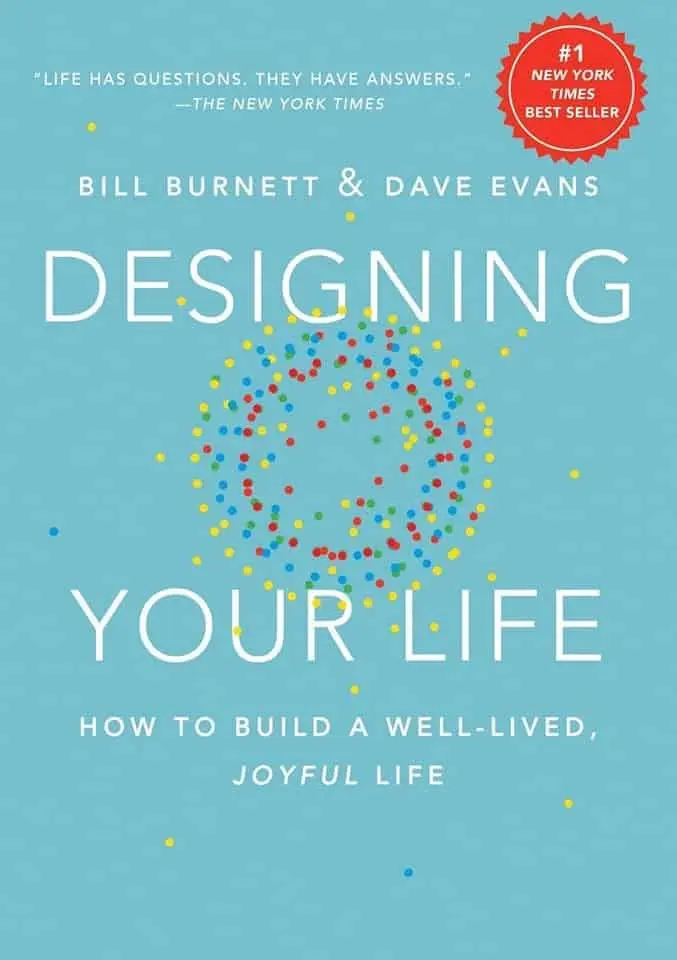
Designing Your Life
To transition these esoteric, science-fiction concepts into practical, everyday applications, many people turn to established frameworks for personal planning. One such resource is the book Designing Your Life by Bill Burnett and Dave Evans. While ostensibly marketed as a career guide for young adults navigating professional choices, the text functions primarily as a manual for examining the multiverse of personal choices and intentionally selecting which reality to inhabit.
The material in the book originates from a popular course taught at Stanford University’s Life Design Lab. Bill Burnett serves as the executive director of the Stanford Design Program and previously worked as a member of Apple’s early laptop design team, while Dave Evans acts as the co-director of the Life Design Lab and was an early employee at video game giant Electronic Arts.
Burnett and Evans encourage readers to apply professional design principles to the complex process of planning their personal futures. While the terminology occasionally feels academic, the approach yields substantial clarity. According to the authors, a well-designed life is one that makes logical and emotional sense—a state they define as "coherence," wherein an individual’s identity, core beliefs, and daily actions align seamlessly.
To achieve this alignment, the authors outline several foundational disciplines. Because the book stems from an actual university curriculum, it is heavily populated with reflective exercises. For instance, readers are asked to draft a 250-word "Workview," detailing their philosophy on the purpose and value of work, alongside a 250-word "Lifeview," describing what makes life fundamentally worth living. Readers then analyze how these two personal philosophies clash or complement one another.
The Many Versions of You
Among the exercises featured in Designing Your Life, the most striking is an exploration of alternate futures that directly mirrors the concept of the multiverse. The authors emphasize that individuals will inevitably live multiple distinct lives over the course of a single lifetime, meaning that if a current path feels misaligned, the framework provides ample opportunity for reinvention.
To demonstrate this, the book instructs readers to visualize three distinct versions of the future by drafting three separate five-year plans, known as Odyssey Plans. An Odyssey Plan functions as a roadmap to an alternate universe, detailing concrete visions of what a person’s life might look like half a decade into the future. By drafting three distinct plans, individuals can visualize the broad multitude of alternative realities available to them.
This methodology offers a practical framework for anyone attempting to align personal mission statements with tangible action. Consider, for example, how this exercise applies to a professional creator whose primary work revolves around personal finance and commentary.
The first future plan typically centers on an individual’s existing life and current trajectory. For a digital publisher, this means refining their core platform—focusing on clean, minimalist design, eliminating intrusive advertisements and tracking, and organizing content into comprehensive educational resources resembling online textbooks, alongside expanding video commentary channels. This path represents an intensification of ongoing work.
The second future plan requires individuals to conceptualize what they would pursue if their primary occupation were to vanish overnight. For someone with a background in writing and media, this path might pivot away from financial journalism and toward human-interest storytelling, such as working within hospice care to help individuals record and preserve their life stories and memories for their families.
The third future plan is a true pipe dream—an exploration of what an individual would pursue if financial constraints and societal judgment were completely removed from the equation. For a lifelong enthusiast of comics and writing, this alternative universe might involve attending art school to combine visual arts with financial commentary, producing creative narratives featuring fictionalized characters that symbolize various economic philosophies.
Exploring these three distinct futures provides profound mental clarity, demonstrating that the concept of the multiverse extends far beyond the realm of science fiction. By consciously evaluating personal values and drafting multiple structured plans that reflect those priorities, individuals can actively shape a more deliberate, fulfilling life. Despite minor criticisms regarding the density of the ideas and the occasional lack of a comprehensive index for quick reference, Designing Your Life remains a compelling resource for anyone seeking to navigate the infinite choices of their own personal timeline.