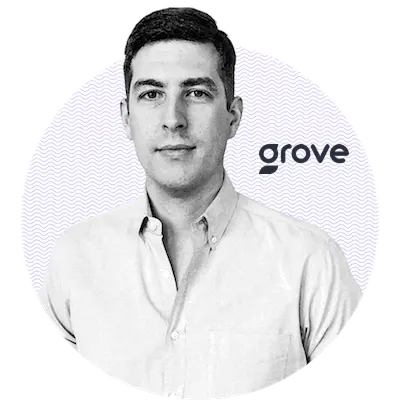





Marking a major personal milestone, the creator behind the popular Financial Independence Podcast has celebrated a full decade since leaving the traditional workforce. In a reflective episode looking back at ten years of post-FI (Financial Independence) life, the host shared deep insights into how his perspective on wealth, career security, lifestyle design, and personal fulfillment has evolved. While expressing profound contentment with his current financial security and family life, he also admitted to facing a unique psychological hurdle for the first time: stepping into the unknown without any long-term goals driving him forward.
Reflecting on the past ten years, the host emphasized that his sense of gratitude has only deepened with time. Beyond the daily appreciation of spending quality time with his children and witnessing their milestones firsthand, his views on financial security have shifted considerably, particularly regarding the modern job market. As a former software developer, he once operated under the assumption that he could easily re-enter the workforce as a fallback option if needed. However, after spending recent months exploring modern artificial intelligence tools such as Claude Code to build and satisfy his creative curiosity, his perspective has changed.
He noted that AI is poised to have a dramatic impact on the software development market, stating that if he were still relying on a developer salary to live and invest today, he would feel considerably more anxious. Consequently, he expressed immense relief that he no longer needs to rely on the traditional job market for survival. Furthermore, he reflected on how his financial trajectory surpassed his initial expectations. Having started with a lean FIRE mindset—intending to live on a bare-bones budget with software development as a fallback—he is ultimately grateful that his portfolio organically expanded into what he describes as accidental "fat FIRE."
This realization has led him to offer a nuanced piece of advice for those currently on the path to financial independence. For individuals, particularly software developers in high-paying jobs who are not entirely miserable, he suggests reconsidering a rush toward bare-bones lean FIRE. Given the uncertainties surrounding AI’s impact on various professions, he believes it is well worth extending one’s working years slightly to build a larger cushion. Embracing a more comfortable financial buffer not only provides vital insurance against macroeconomic shifts in the labor market, but it also opens the door to a much more enjoyable and sustainable lifestyle down the road.
Describing his current lifestyle, the host clarified that from an external observer’s point of view, his daily life does not resemble traditional images of extreme wealth or extravagance. Instead, the profound change has been entirely psychological. Operating with a portfolio capable of supporting an upper-middle-class lifestyle without restriction has freed up an extraordinary amount of mental energy. Rather than flying private or purchasing yachts, the true luxury lies in never having to check price tags on everyday items, whether that means buying premium morning coffee daily or treating the family to appetizers and desserts at a restaurant without hesitation.
Through years of experimentation, he realized that money is no longer the limiting factor in his life; rather, constraints are dictated by time, energy, and the practical realities of parenting young children. For instance, while dining out is financially unlimited, taking two small kids to a fine dining restaurant is often less enjoyable than grabbing a casual burger at a local pub. The same principle applies to travel and household purchases, where physical space and the logistical hassle of transit serve as the natural boundaries. This realization has drastically reduced stress, aligning closely with concepts discussed in past conversations with financial author Ramit Sethi, such as questioning why one should deliberately spend less when a secure portfolio allows for spending more on high-quality items that genuinely add value and last longer.
Another significant mental shift involved letting go of relentless efficiency and embracing the reality of sunk costs. Historically driven by optimization—a trait that famously built his audience through tax strategies on the Mad Fientist blog—he has learned to prioritize simplicity over complex financial maneuvering. Procedures like backdoor Roth contributions and individual stock picking have been entirely phased out in favor of straightforward, low-maintenance fund investing. By streamlining his financial tracking and eliminating unnecessary administrative tasks on his to-do list, he has successfully reduced mental baggage.
This drive for simplicity also extended to taking calculated risk off the table by reallocating a portion of his portfolio into 30-year Treasury Inflation-Protected Securities (TIPS). Yielding a historically high real return near 3%, these inflation-adjusted bonds are timed to mature right as he reaches standard retirement age, establishing a dependable financial floor just as required minimum distributions from retirement accounts begin. Meanwhile, lifestyle inflation has transformed into something sustainable, driven entirely by growing asset values rather than temporary job bonuses. Utilizing software he developed called Wealth Machines, he tracks steady portfolio growth, proving that incremental increases in annual spending can be just as enjoyable as windfall gains when backed by permanent, inflation-adjusted wealth.
Despite covering all daily expenses and enjoying complete freedom of movement, the host noted that his family’s spending still does not exhaust the full capacity of their portfolio. This has sparked ongoing discussions with his wife regarding the next major chapter: potentially relocating and investing in a dream home base designed for the upcoming peak spending years. With parents and grandparents still healthy and children growing up quickly, he views this stage of life as exceptionally precious. The goal behind finding an ideal, walkable location with great weather and ample space for visiting family is to build what he calls "gravity"—a welcoming environment that naturally entices children and friends to return and stay connected as the years progress.
As he looks toward the future, the host acknowledges a strange and unfamiliar sensation: having no long-term goals driving him forward for the first time in his adult life. While financial independence successfully removed every excuse and gave him the time to accomplish his personal ambitions, the absence of a future-focused milestone feels initially uncomfortable. Rather than planning endlessly for tomorrow, he is actively learning to shift his focus to the present moment, prioritizing everyday health and enjoyment—such as playing tennis instead of enduring disliked cardio routines—and accumulating meaningful memories with his loved ones. Celebrating a decade of post-FI life, he remains profoundly thankful for the journey, fully embracing uncharted territory as he looks ahead to the next ten years.