



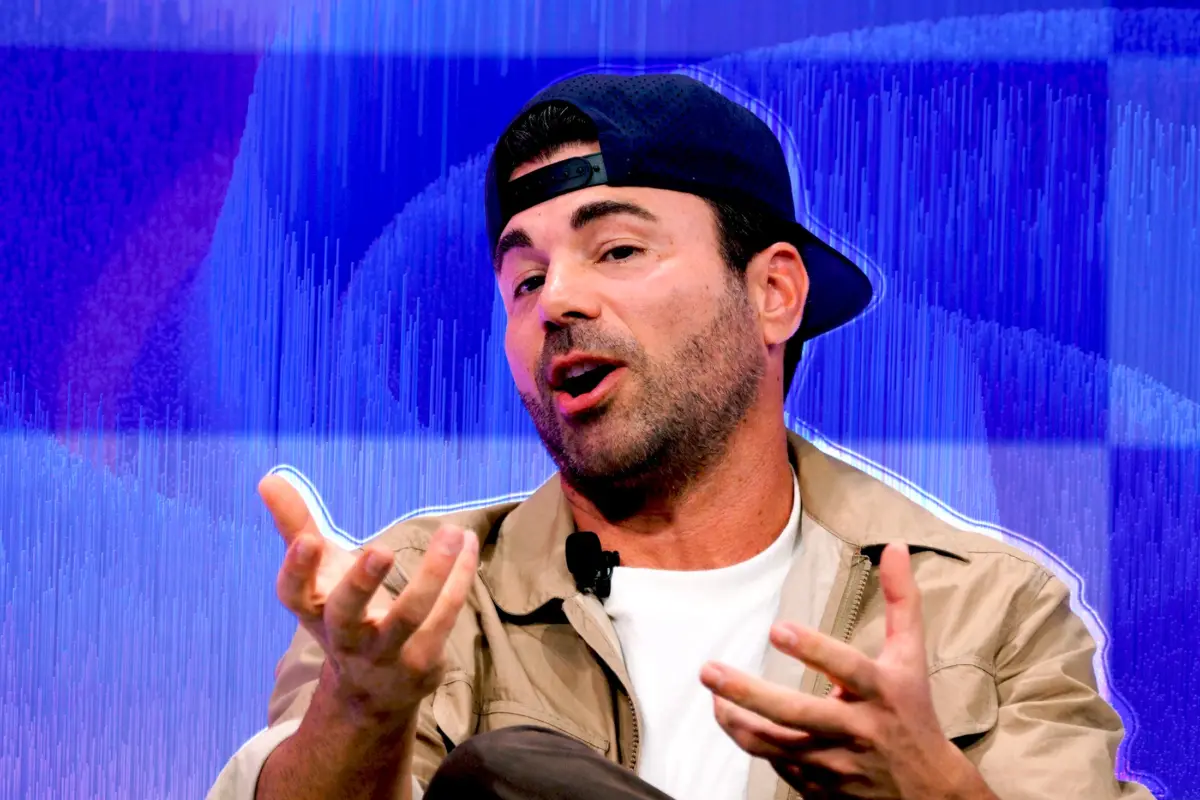
As artificial intelligence rapidly transforms the digital media landscape, content creators are facing an unprecedented challenge: standing out in an ocean of automated noise. For former NASA engineer and science communicator Mark Rober, who commands an audience of 85.7 million subscribers on YouTube, the solution to this modern dilemma is deceptively simple. Rather than attempting to out-tech the technology, creators must return to tangible reality, venture out into the physical world, and execute genuinely noteworthy feats that artificial intelligence simply cannot replicate.
Rober, whose blockbuster channel has built its reputation on high-production, real-world experiments—such as How to Survive a Grenade Blast, which boasts over 100 million views, and Can you swim in Jello?, which has drawn an astounding 224 million views—recently addressed the rise of low-quality automated posts in an interview with Business Insider. As automated tools flood social media feeds with simulated imagery and synthetic media, Rober argues that the true differentiator for human creators is authenticity and undeniable physical proof.
"Do you want to see a simulation of someone dunking a basketball with a sick trick, or do you want to see someone actually do it?" Rober remarked during the interview. "The fact that you know it’s real is what makes it crazy."
The Power of a Real-World Moat
In Rober’s view, the integration of physical experiments and a distinct, recognizable human personality creates a natural defensive barrier against the incoming tide of synthetic media. While automated tools can generate impressive visual simulations within seconds, they lack the visceral stakes and genuine discovery inherent in physical trial and error. Rober believes this dynamic gives his specific style of content creation a distinct advantage, at least for the foreseeable future.
"At least for a while, I think I have a moat on the YouTube channel," Rober noted.
This philosophy of grounding content in reality extends far beyond his digital broadcasting efforts. Rober’s digital enterprise has evolved into a substantial commercial operation. Last year, his YouTube videos generated approximately $17 million in revenue—roughly matching the high production costs required to bring his elaborate scientific experiments to life. Simultaneously, he has scaled his educational products company, CrunchLabs, which designs and distributes maker kits intended to introduce young people to the foundational principles of science, technology, engineering, and mathematics.
Today, CrunchLabs employs more than 200 people, driven by an overarching corporate mission to foster genuine curiosity and lifelong learning. In an era where answers can be instantly generated by automated systems, Rober emphasizes that the human desire to question and explore remains irreplaceable.
"Curiosity is so important in this new age of AI," Rober said. "It means you just have a lifetime of learning."
The Pros and Cons of AI for Content Creation
The rapid proliferation of artificial intelligence introduces a complex paradox for the digital content ecosystem. The very tools designed to streamline video production and simplify editing workflows are simultaneously making it increasingly difficult for individual, independent channels to capture audience attention. For some digital entrepreneurs, these technological advancements represent a powerful lever for accelerated growth and efficiency. For others, they spark legitimate concerns that meticulously crafted work will become entirely lost in a relentless sea of digital saturation.
Among the most prominent practical applications of AI in the creator economy is the ability to localize existing content for international audiences who speak different languages. Emerging businesses have capitalized on this demand by building and managing localized companion channels using advanced dubbing technologies. Startups like Linguana, for instance, utilize automated translation systems alongside localized thumbnails and descriptions to help established creators expand their global footprint without shouldering the massive logistical burden of manual translation and re-recording.
These services frequently operate on a revenue-sharing model rather than charging upfront fees, offering creators a pathway to generate supplementary income from previously published archives. By the spring of 2025, Linguana reported managing around 10,000 video translations every month for hundreds of participating YouTube creators, illustrating the lucrative potential of cross-lingual distribution in the modern media economy.
However, the democratization of high-end production capabilities invariably ushers in heightened competitive pressures. Rober pointed out that as barriers to entry fall and a larger volume of creators begin producing similar styles of content, technical execution alone will rapidly lose its unique market value. Consequently, digital channels that rely heavily on anonymous narration, stock footage, or synthetic animation may encounter severe headwinds as competitors leverage automated tools to generate material faster and at a fraction of the traditional cost.
Ultimately, Rober’s perspective suggests that the future of content creation will not belong to those who can produce the largest volume of media with the least amount of effort, but rather to those who anchor their work in undeniable human endeavor, authentic physical experiences, and an insatiable drive for genuine discovery.