



When Stanford design professors Bill Burnett and Evans published their bestselling framework for applying design thinking to personal development, Designing Your Life, it quickly became a cultural touchstone for individuals seeking clarity on their personal and professional paths. For many readers, the book offers a refreshing blueprint: rather than treating career and life planning as a rigid, linear ascent toward a single destination, it encourages iterative experimentation, self-assessment, and alignment with deeply held core values.
Recently, the principles outlined in Burnett and Evans’ work sparked a collaborative self-reflection journey among old peers and partners. Inspired by the book’s initial chapters, a small circle consisting of the author, his long-term partner Kim, and a college classmate named Craig decided to work through the core exercises together over the coming months. Rather than treating the process as an isolated exercise, the participants opted to share their milestones and insights transparently, offering a rare window into how structured philosophical and career introspection plays out in real life.
The first phase of the Designing Your Life curriculum emphasizes a foundational baseline: understanding precisely where one stands before mapping out future trajectories. Paralleling the practical advice often given in personal finance—where individuals must first confront their net worth and spending habits before attempting to turn their financial lives around—the life-design process begins with a comprehensive self-assessment.
This initial evaluation requires participants to honestly appraise four critical pillars of human existence: health, love, play, and work. By assigning ratings to each domain and pairing those scores with concise qualitative descriptions, individuals take a literal snapshot of their current life stage. Much like a balance sheet in finance, this baseline evaluation is not designed to be immediately actionable or to demand sweeping changes overnight. Instead, it serves as a fixed point on a map, establishing coordinates so that a traveler can eventually determine where they truly want to go. Once that snapshot is captured, the curriculum shifts toward building a metaphorical compass.
In the second chapter of the book, readers are tasked with drafting two distinct, highly thoughtful mini-essays: a Workview and a Lifeview. These brief reflections function as statements of purpose, closely mirroring the traditional personal mission statements frequently recommended by mentorship and self-development programs.
To explore these concepts deeply, Craig and the author connected via video call to discuss their respective visions of labor, livelihood, and existence. Despite years having passed since their shared undergraduate days, the conversation revealed a striking alignment in their core values and expectations. With Craig’s permission, these intimate reflections on work and life offer a compelling look at how two individuals independently arrive at remarkably similar conclusions about their place in the world.
Craig’s perspective on labor places a heavy emphasis on growth, fairness, and sustainability. In his written Workview, he notes that while he is willing to work for money temporarily if compensation feels equitable, long-term happiness fundamentally requires ongoing experience, learning, and personal evolution. He cautions that striving exclusively for status or monetary accumulation tends to cloud one’s efforts with petty concerns of competition and greed. Acknowledging the realities of operating within a capitalist framework, Craig emphasizes the importance of knowing that his labor does not inflict permanent harm on natural ecosystems. He points toward the aspirational Buddhist concept of "right livelihood," favoring tangible work that produces real products—such as growing food or building useful tools—with a belief that the most meaningful contemporary labor lies in the restoration of natural systems.
By comparison, the author’s Workview similarly balances economic necessity with a broader societal contribution. For the author, work serves as both a primary financial engine and a vehicle for personal fulfillment that improves not only his own life but the lives of others. Having found his professional sweet spot—often referred to by the Japanese concept of ikigai—the author emphasizes his current mission centered around managing and growing the financial platform Get Rich Slowly. His goal is to transform the site into an accessible, reliable, and uncluttered resource for individuals seeking financial literacy. While acknowledging that the platform should eventually generate income, he views financial return as a secondary objective that can naturally unfold over time as long as the primary mission of serving the reader remains paramount.
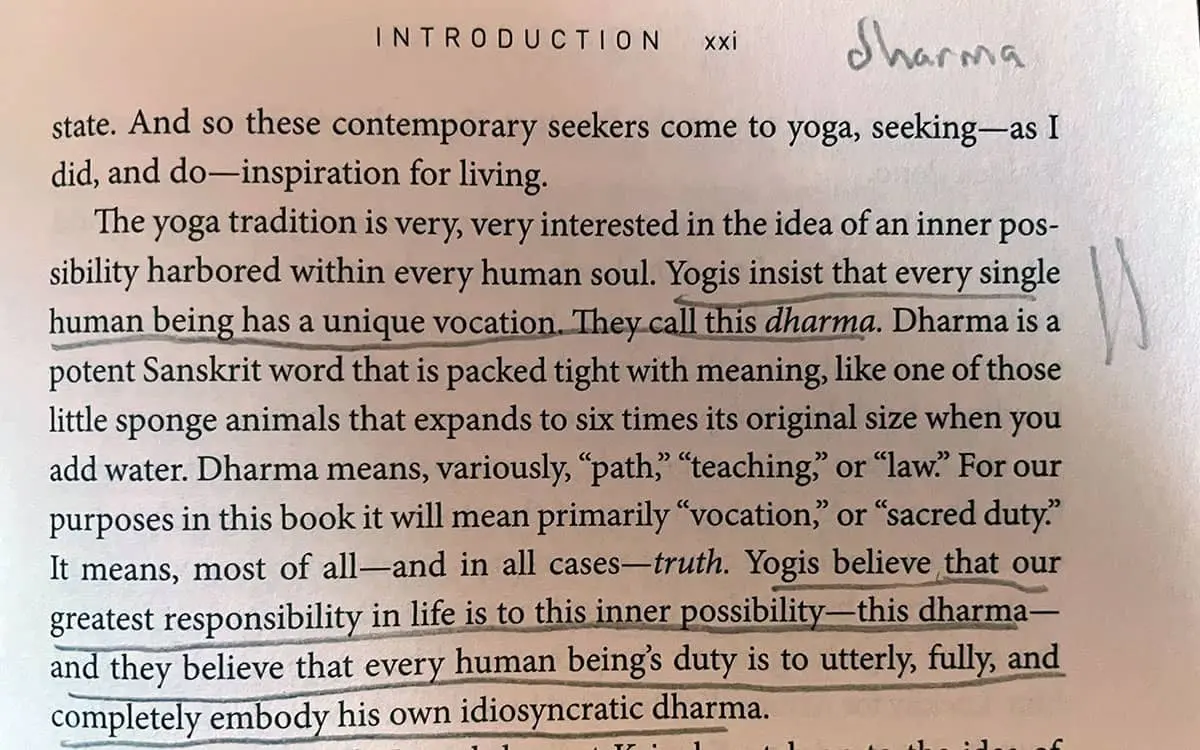
When comparing notes, both men discovered a shared philosophy: work must serve as more than a simple transaction for currency. It must be personally fulfilling and actively benefit the broader world. This synthesis of ideas bridges the Buddhist notion of right livelihood, the Japanese concept of ikigai, and Stephen Cope’s explorations of personal dharma, ultimately pointing toward a shared desire to foster abundance and achieve mutually beneficial outcomes for themselves and society.
Moving from labor to the broader human experience, the participants’ Lifeviews revealed an even more striking thematic overlap, despite having been written independently without prior coordination.
Craig’s Lifeview centers on a foundational medical and ethical rule: first, do no harm, and occasionally do some good. He reflects on the richness of an inner life balanced against the risks of isolation, concluding that sharing knowledge and providing comfort to others brings the deepest rewards. While noting an absence of traditional religious belief, he recognizes how humanity’s ancient search for meaning can imbue certain traditions with value. The vastness of space and time provides a comforting perspective on human insignificance, while the natural cycle of life, death, and ecological return offers a sense of ultimate peace. He views humor as an essential defense against the unpredictability of existence, quoting Jane Austen to highlight the shared absurdity and connection found in human community.
Similarly, the author’s Lifeview posits that life possesses no inherent meaning, a realization he interprets not as a source of despair or hedonism, but as an empowering blank slate to construct personal purpose. For the author, morality is entirely divorced from specific religious dogma, national identity, or political affiliation; instead, it is defined solely by how one treats other living beings—particularly those with whom one shares a power imbalance or a fundamental disagreement. Valuing curiosity, kindness, and mutual aid, he argues that deep personal growth stems from robust community connections and a willingness to engage constructively across ideological divides. By practicing rational self-centeredness—ensuring one’s own foundational needs are met before supporting partners, family, and the wider world—the ultimate aim remains leaving the surroundings better than they were found.
This convergence of thought naturally led the old college friends back to a concept they first encountered decades prior: social capital. Introduced to the author by Craig nearly twenty years ago through Robert Putnam’s seminal work Bowling Alone, the discussion touched upon the apparent fraying of community bonds and civic participation in modern society, a decline they suspect has been accelerated by the digital landscape. Both men share a strong desire for their personal lives and daily labor to actively rebuild and encourage the growth of social capital.
The striking similarity in worldviews between the author and Craig is not entirely accidental, pointing instead to a shared institutional foundation. Both attended Willamette University during the same period, a background shared by other independent writers and commentators in the personal finance space, such as Angela Rozmyn. The institution’s historic motto, non nobis solum nati sumus—translated from Latin as "not unto ourselves alone are we born"—appears to have deeply embedded itself in the ethos of its alumni, permanently shaping how they approach professional contribution and civic responsibility.
According to the authors of Designing Your Life, these detailed Workviews and Lifeviews are intended to serve as internal compasses. When individuals inevitably reach ideological or professional crossroads, consulting these foundational statements provides reliable direction, helping them choose the most authentic path forward. The exercise has proven so effective that the author is considering integrating these structured reflections into his own public presentations and workshops on finding purpose.
As the life-design experiment continues, the group’s focus shifts toward the next chapters of the book. Over the ensuing weeks, the participants will maintain a detailed "Good Time Journal," logging their daily activities and rating the levels of engagement and energy each task produces. Following that logging phase, they will apply mind-mapping techniques to analyze the data, searching for underlying patterns that can further guide their ongoing personal and professional evolution.