




Global financial markets kicked off the new week navigating a complex web of plunging energy prices, shifting geopolitical headlines, and key political developments from New Zealand to Europe. Energy markets saw dramatic downward pressure as crude oil tested critical technical supports, while equities opened on a largely solid footing despite idiosyncratic headwinds in technology heavyweights. Meanwhile, currency traders weighed the defensive stance of the US dollar against the outperformance of the Kiwi dollar following a tightly contested general election, and European policymakers braced for budgetary standoffs over long-term support for Ukraine.
Markets
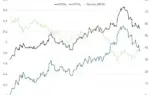
Energy prices continued to falter significantly at the start of the week, with Brent crude testing recent lows around $94 per barrel. This price level closely coincides with the asset’s 100-day and 200-day daily moving averages, making it a critical juncture for technical traders. Market analysts note that a definitive break lower would pave the way from a technical point of view toward the $80 to $90 region, with $70 acting as the definitive post-war low. Natural gas prices in Europe mirrored this downward trend, with the Dutch TTF contract hovering right at the edge of losing its 50-day moving average near €82 per megawatt-hour.
The broader downward correction in energy prices originally began in November and gained notable momentum after the Democratic Party swept control of Congress in the midterm elections, which fueled market speculation for a quicker and more diplomatic resolution to ongoing geopolitical conflicts. These hopes grew even stronger after comments from President Trump over the weekend indicated that renewed military strikes on Iran were considered highly unlikely by the administration.
Geopolitical sentiment experienced intraday whiplash following unconfirmed reports suggesting that Iran might drop its demand to collect transit fees in the strategic Hormuz Strait, alongside allegations that the US president had agreed to an Iraqi proposal to end the military conflict. However, market optimism cooled after the Qatari Prime Minister later denied the veracity of the headline.
Despite the fleeting nature of the geopolitical reports, the broader drop in energy prices effectively killed off a shy attempt by European bond yields to rise during the intraday session. The interest rate swap curve bull-flattered, with changes varying between flat for the 2-year tenor to minus 2 basis points for the 10-year tenor. US Treasuries still added 1 to 2 basis points at the front end of the curve in the immediate wake of a blow-out October payrolls report that kept central bank policy expectations under close scrutiny. Longer tenors in the US were down 1 to 2.5 basis points in what traders described as technically insignificant trading volumes. Market participants emphasized that the primary focus for rates traders this week will be squarely on the upcoming release of the clipped October Consumer Price Index (CPI) report.
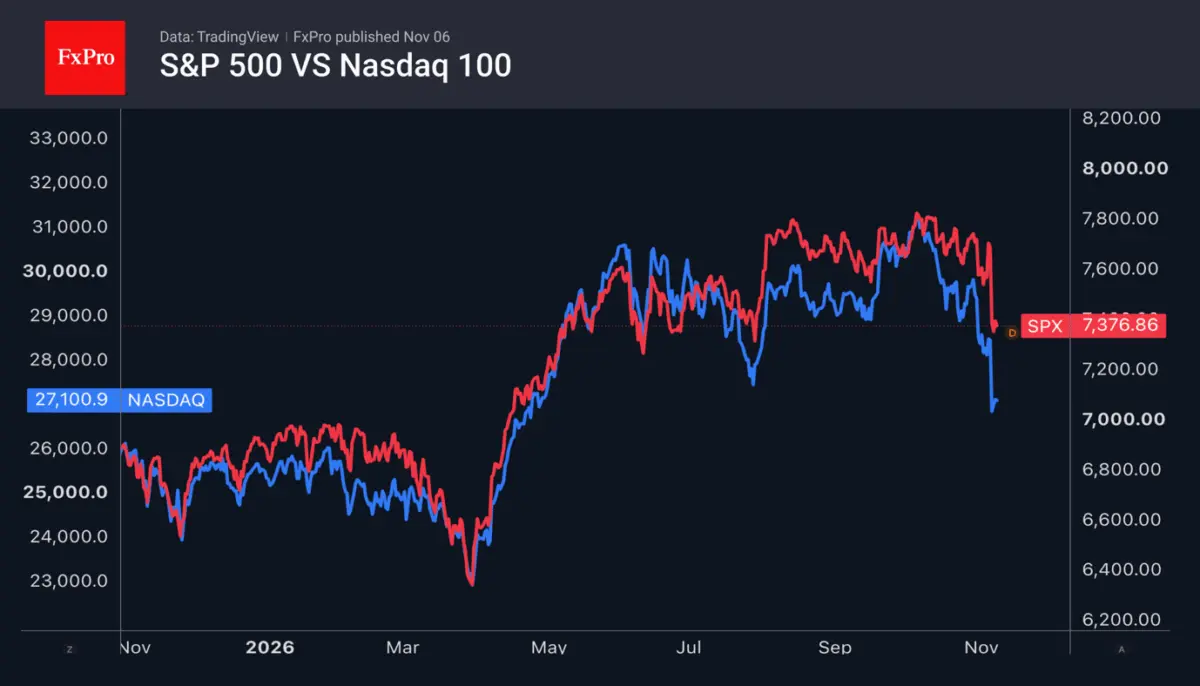
Stock markets, by contrast, kicked off the new week on a much more solid footing. In Europe, the EuroStoxx 50 climbed 1.5% in early trading. On Wall Street, major indices opened with gains ranging between 1.4% for the Dow Jones Industrial Average and 1.9% for the tech-heavy Nasdaq. These equity gains proved to be more broad-based than those observed during the previous Friday’s session, although the upside was slightly tempered by semiconductor heavyweight Nvidia, whose shares dropped 5% to 6% after its chief executive officer suddenly found himself playing the main character in a potential corporate spy scandal.
In the foreign exchange market, the US dollar traded firmly on the defensive, with falling energy prices heavily hurting the greenback’s overall appeal to international investors. The euro gradually appreciated against the dollar, moving from an intraday low of 1.114 back toward the 1.12 big figure. The broader DXY dollar index erased much of Friday’s gains to fill offers hovering around 101.8. Both the EUR/USD pair and the DXY index continued to hold tightly within a relatively narrow sideways trading range that has characterized recent sessions.

A similar consolidation pattern was visible in EUR/GBP, which has effectively gone nowhere throughout November, lingering persistently around the 0.833 level. Meanwhile, the New Zealand dollar outperformed on the global scoreboard, pulling the NZD/USD exchange rate back north of the 0.56 threshold. This movement followed general elections over the weekend that are projected to result in the center-right coalition remaining in power, even as the leading National Party’s parliamentary position was notably weakened. Market commentators pointed out that the alternative risk of a Labour-led government coming to power could have led to policies such as reinstating maximum employment mandates into monetary policy, alongside the introduction of a capital gains tax and potentially more expansive fiscal spending.
News & Views
The New Zealand dollar rallied strongly across currency markets following the weekend’s general election results. The NZD/USD pair managed to move decisively away from year-to-date lows that had dipped below 0.5550 at the end of the previous week, currently changing hands comfortably above the 0.56 mark. In a remarkably close political contest, Prime Minister Christopher Luxon’s National Party-led right-wing bloc is expected to secure a workable majority of 67 seats within the 135-seat parliament.
Conversely, the left-wing opposition bloc centered around the Labour Party is projected to capture 56 seats, while the centrist Opportunity Party is positioned to hold seven seats. Final, official election results are scheduled to be confirmed by election authorities before the end of the month.
A closer analysis of the vote distribution reveals significant internal shifts within the ruling right-wing bloc itself. Luxon’s National Party actually lost six seats, dropping from 48 down to 42, while its coalition partners—the ACT party, which rose from 11 to 13 seats, and New Zealand First, which grew from 8 to 12 seats—both gained relative political strength. This dynamic implies a notable shift in power within the incoming government structure, as these junior coalition partners are widely expected to push more aggressively for government spending cuts, thereby resulting in a tighter fiscal policy trajectory for the nation. Meanwhile, the opposition Labour Party came in second overall with 36 seats, up slightly from 34 in the previous parliament.
In European political developments, German Chancellor Friedrich Merz issued a stark warning that Berlin is prepared to block the European Union’s next seven-year budget unless sufficient and guaranteed financial support for Ukraine is secured for 2027 and beyond. According to reports from the Financial Times, a letter addressed to European Council President Antonio Costa outlined the German government’s uncompromising stance.
The letter explicitly stated that a collective commitment ensuring all member states, without exception, contribute fairly to closing Ukraine’s massive financing gap is an essential prerequisite for resolving the budgetary issue and for discussing any further matters, particularly those carrying direct financial implications for the bloc. Ukraine currently faces an estimated financing gap of approximately €70 billion for the upcoming year alone. The brewing fiscal showdown comes as EU leaders prepare to gather in Dublin for a high-stakes summit scheduled for Thursday and Friday.