




Gold prices are currently on track to record their fourth consecutive session of losses, slipping toward the lower boundary of their four-week trading range. This downward momentum comes despite a simultaneous softening of the US dollar and a decline in Treasury yields—macroeconomic conditions that would traditionally serve as a powerful tailwind for non-yielding precious metals. However, global financial markets are driven less by static conditions and more by shifting expectations. Over recent sessions, traders have steadily adjusted their outlooks, pricing in the likelihood of a more aggressive monetary tightening cycle by the US Federal Reserve in the upcoming quarters. This recalibration is being heavily influenced by persistently elevated oil prices, which threaten to reignite inflationary pressures and keep borrowing costs higher for longer.
According to the latest market sentiment indicators and analyst observations from the FxPro team, the primary catalyst behind gold’s current struggles lies in changing expectations regarding the federal funds rate. While immediate policy decisions appear locked in, longer-term horizons are experiencing a significant shift. Recent polling data from Reuters indicates that an overwhelming 94% of surveyed financial experts believe the Federal Reserve will opt to keep interest rates unchanged at its upcoming October meeting. Furthermore, there is absolute consensus among these experts that borrowing costs will see an upward adjustment by the conclusion of the year.

However, the real variable weighing on precious metals is the rapidly growing conviction among market participants that monetary tightening will extend well into the future, particularly regarding the year 2027. The share of traders and analysts betting on multiple rate hikes in 2027 has expanded notably over a very short period. While a September survey revealed that roughly 20% of respondents anticipated two rate increases during that timeframe, that figure jumped dramatically to 41% by October. This rapid acceleration in hawkish sentiment directly undermines the appeal of gold, which traditionally struggles in high-interest-rate environments where the opportunity cost of holding the asset increases significantly.
The driving force behind this shifting monetary outlook can be traced directly to the global energy markets, particularly the persistent strength of crude oil prices. Over the past month alone, Brent crude prices have surged by more than 12%. This upward trajectory in energy costs has occurred even in the face of recovering oil export volumes from the Middle East. According to shipping and commodity tracking data from Kpler, regional exports have climbed to approximately 24 million barrels per day. This current output actually surpasses the 23.3 million barrels per day recorded in late February, just before the outbreak of the major geopolitical conflict in the region.
A closer examination of supply routes reveals notable shifts in how petroleum is being transported to global markets. Roughly 14 million barrels per day—accounting for approximately 82% of pre-war levels—continue to transit through the critical Strait of Hormuz. At the same time, around 40% of the region’s oil flows are now successfully bypassing this primary global oil artery altogether. This represents a substantial change from the pre-conflict period in early March, when only 17% of regional oil flows bypassed the strait.
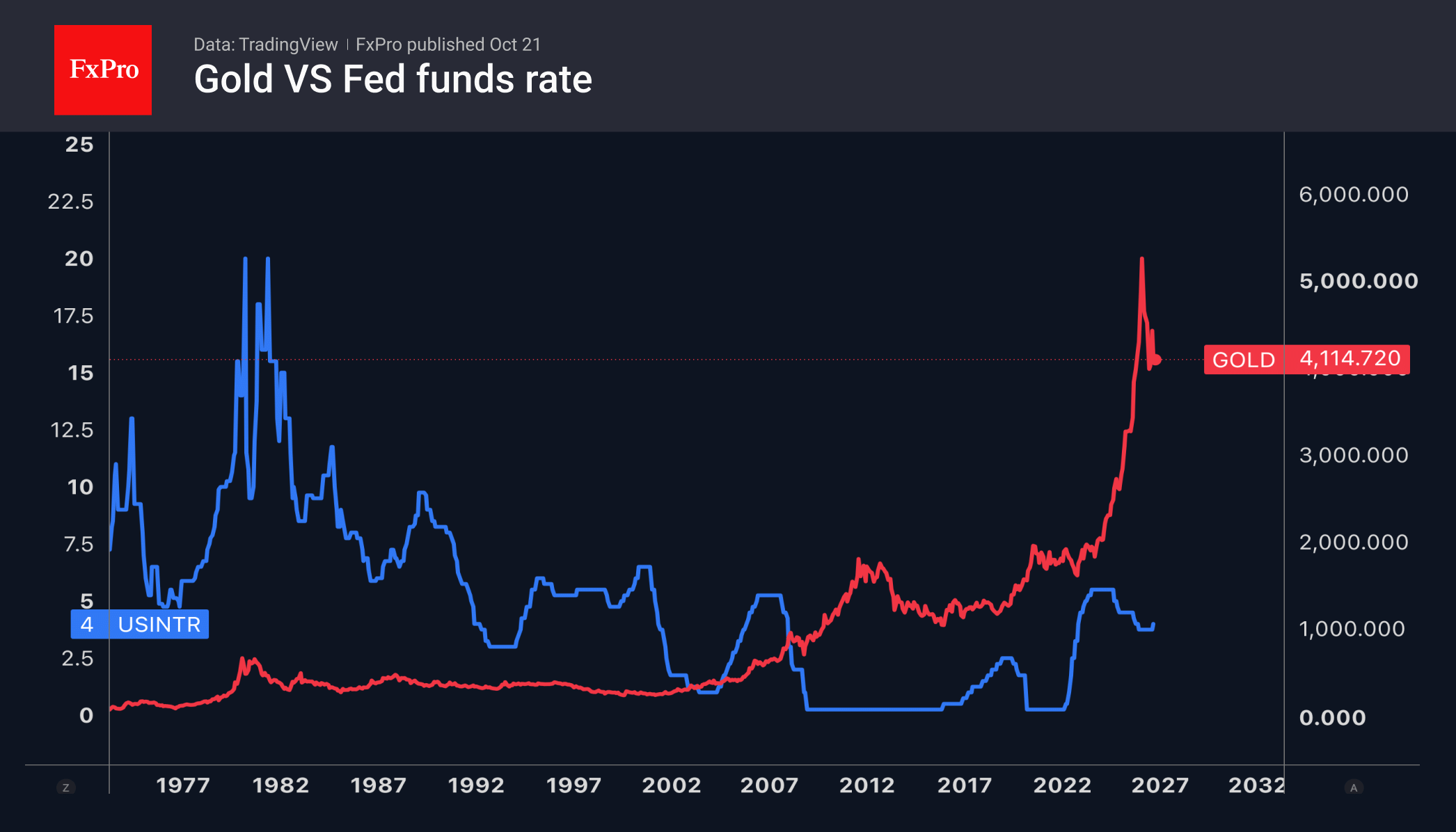
Despite these logistical adaptations and ongoing diplomatic efforts by international mediators attempting to bring the United States and Iran back to the negotiating table, Brent crude has remained remarkably resilient, holding steady at approximately $105 per barrel. For the broader financial markets, this stubborn price floor is a matter of significant concern. The longer crude oil remains at elevated levels, the greater the macroeconomic risk that high energy costs will filter through the supply chain and become embedded in core inflation metrics. Should core inflation prove sticky, the Federal Reserve will have little choice but to adopt an even more aggressive hawkish stance next year, a prospect that bodes poorly for the near-term outlook of gold.
At the same time, market analysts note that a prolonged environment of higher federal funds rates and elevated Treasury bond yields carries its own set of systemic risks, particularly for the broader equity markets. As borrowing costs mount, the vulnerability of stock valuations increases significantly. The confluence of a broader slowdown in global economic growth and the potential bursting of overextended valuations, such as the widely discussed artificial intelligence market bubble, could ultimately serve as a much more powerful market driver than the Federal Reserve’s monetary tightening policies.
In such a volatile macroeconomic scenario, the underlying dynamics governing central bank policy could shift dramatically. Should severe equity market turmoil or an acute economic downturn materialize, central banks historically pivot away from an exclusive focus on containing inflationary risks and redirect their efforts toward supporting broader economic stability and growth. In practical terms, this pivot typically translates into a return to monetary easing and interest rate cuts. For gold, a return to an easing cycle by global central banks would likely restore its traditional role as a primary safe-haven asset, potentially overshadowing the short-term pressures currently driving its four-day decline.