



Gold is currently on track to record its fourth consecutive session of losses, slipping toward the lower boundary of its established four-week trading range. This downward momentum persists despite a backdrop that traditionally favors precious metals, characterized by a softening US dollar and declining Treasury yields. Under standard market dynamics, a weaker dollar combined with falling yields creates a favorable tailwind for non-yielding assets like gold. However, financial markets are driven less by static correlations and more by shifting forward-looking expectations. Over recent trading sessions, market participants have increasingly priced in the probability of a more aggressive monetary policy stance from the US Federal Reserve in the quarters ahead, driven primarily by persistent inflationary pressures stemming from elevated global energy markets.
The shift in market sentiment is vividly reflected in survey data tracking expectations for the central bank’s future benchmark interest rate path. According to a recent poll conducted by Reuters, an overwhelming 94% of surveyed economic experts believe the Federal Reserve will opt to keep interest rates unchanged at its upcoming October meeting. At the same time, consensus remains absolute regarding the trajectory over a slightly longer horizon, with 100% of participating experts expressing full confidence that borrowing costs will be adjusted upward by the conclusion of the year.

Yet, for the gold market, the critical variable lies further out on the timeline, specifically regarding the growing conviction that the central bank may be forced to implement multiple rate increases well into 2027. This hawkish repricing has accelerated notably in recent weeks. While market surveys conducted in September showed that approximately 20% of respondents anticipated a scenario involving two distinct rate hikes by 2027, that proportion surged to 41% in the subsequent October polling. This doubling of market expectations for extended monetary tightening forms the core fundamental anchor weighing heavily on gold’s intermediate-term outlook.
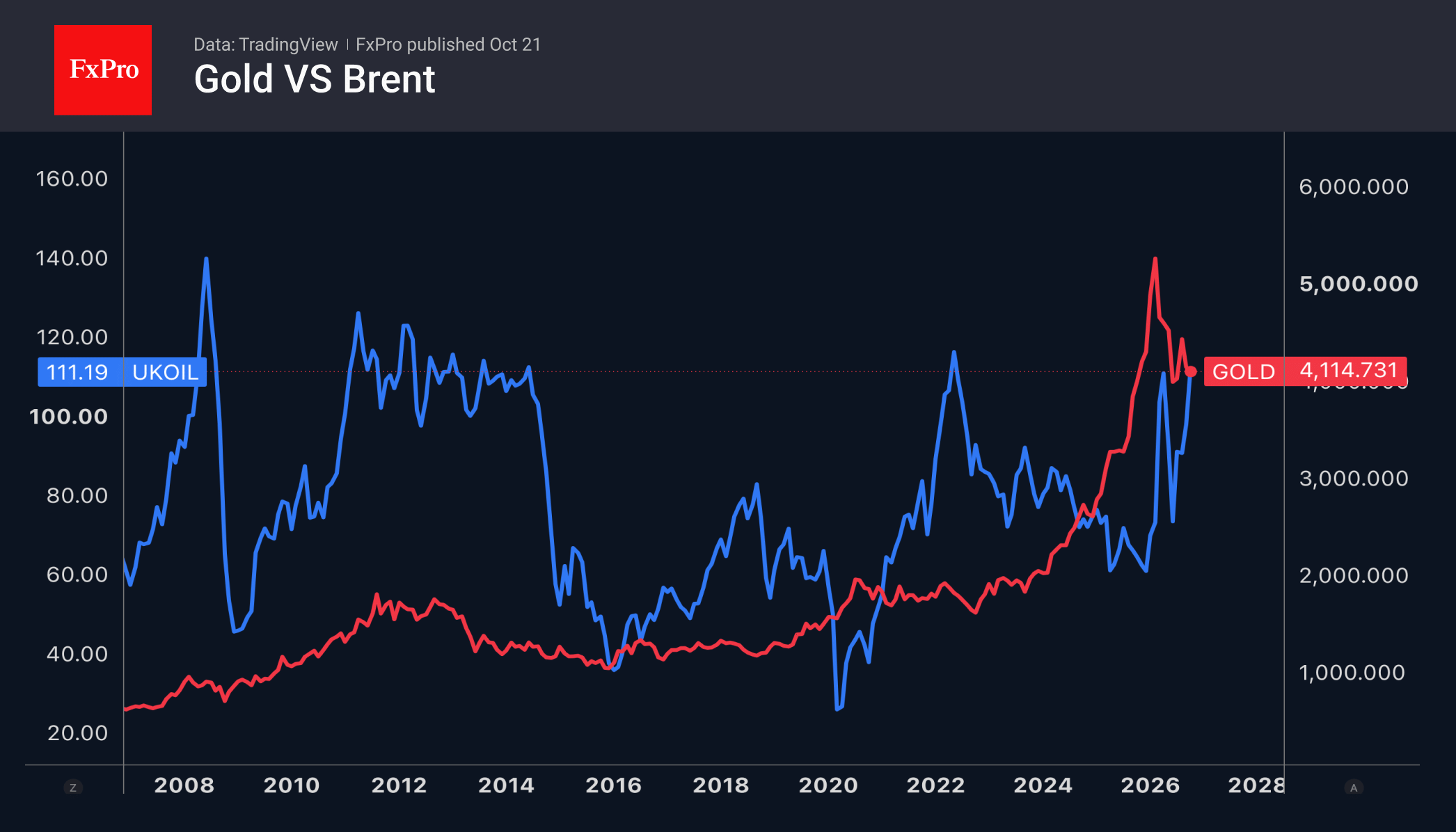
The primary catalyst behind this recalibration of monetary policy expectations is the unrelenting strength of the global energy market. Over the past month alone, Brent crude prices have surged by more than 12%, maintaining a stubborn baseline of around $105 per barrel. This price resilience comes even in the face of recovering supply metrics from the Middle East. Data compiled by shipping and commodity tracking firm Kpler indicates that regional oil exports have climbed to approximately 24 million barrels per day. This figure exceeds the 23.3 million barrels per day recorded in late February, just before the outbreak of the current geopolitical conflict.
A closer examination of regional logistics reveals significant shifts in traditional trade pathways. Approximately 14 million barrels per day, representing roughly 82% of pre-war volumes, continue to transit through the critical chokepoint of the Strait of Hormuz. However, broader supply chain adjustments mean that around 40% of the region’s overall oil flows are now actively bypassing this primary global oil artery. This marks a sharp escalation compared to the pre-crisis period in early March, when only about 17% of regional oil flows bypassed the strait.
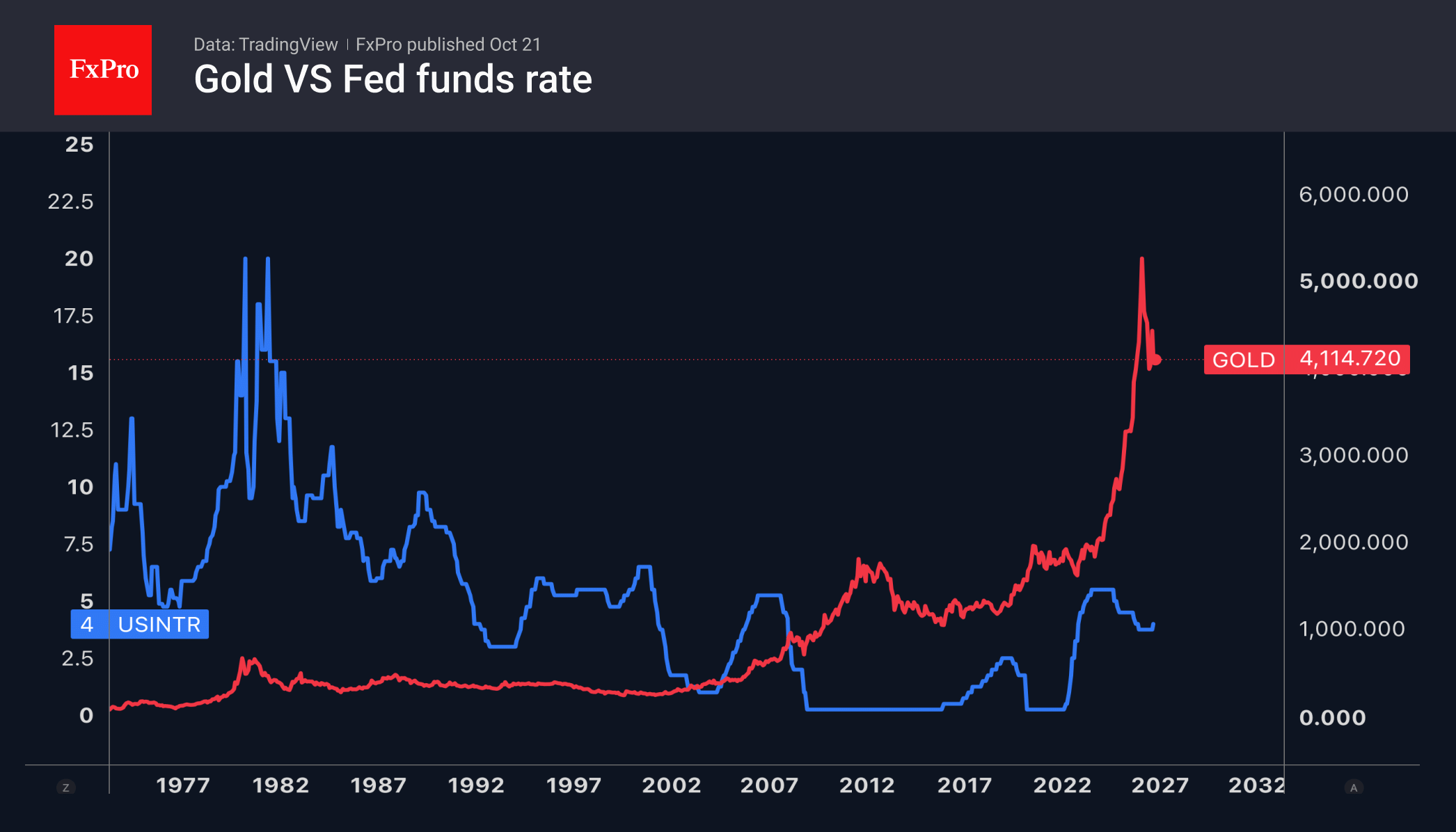
Despite diplomatic mediation efforts and ongoing attempts by international negotiators to draw the United States and Iran back to the diplomatic negotiating table, Brent crude continues to trade resiliently around the $105-per-barrel threshold. Market participants are increasingly acknowledging that the duration for which energy prices remain at elevated levels is more critical than short-term supply fluctuations. The longer oil prices sustain these highs, the greater the structural risk that high energy costs will seep steadily into core consumer price inflation figures. Such an outcome would leave the Federal Reserve with little policy flexibility, virtually compelling the central bank to adopt a more aggressive, hawkish stance in the coming year. For gold, an environment defined by higher-for-longer interest rates serves as a persistent negative driver.
At the same time, financial markets are forced to weigh competing macroeconomic risks that could complicate the monetary policy outlook. As federal funds rates and Treasury bond yields drift higher under the weight of persistent inflation, the cumulative pressure on equity markets grows proportionally. A potential confluence of factors—including a broader deceleration in global economic growth and the looming threat of a correction or bursting of the artificial intelligence investment bubble—introduces severe vulnerabilities into risk assets.
Should financial stability concerns materialize in the broader equity and corporate sectors, market dynamics could shift dramatically. A severe market downturn or economic slowdown could ultimately serve as a far more potent driver for safe-haven assets like gold than the immediate headwinds generated by the Federal Reserve’s monetary tightening cycle. In such crisis scenarios, central banks globally have historically pivoted their primary policy focus away from combating inflationary risks and redirected their efforts toward stabilizing financial systems and sustaining economic growth. In practical terms, this pivot typically translates into a return to monetary easing and interest rate cuts, altering the fundamental landscape for precious metals.
The FxPro Analyst Team