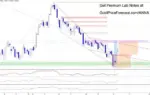





Gold markets experienced a dramatic shakeup last week, catching global investors and precious metals analysts off guard. Spot gold suffered a steep 3.5% decline on Friday, breaking key technical support below $4,000 an ounce and touching a 12-month low of $3,880. This sharp downward movement unfolded despite a backdrop that would typically favor bullion—specifically, a weakening U.S. dollar and declining bond yields.
The abrupt correction became a primary focal point on the latest episode of the Money Metals Midweek Memo. Host Mike Maharrey unpacked the underlying catalysts for the rout, evaluated the broader implications of the Federal Reserve’s ongoing monetary policy decisions, and explained why he remains structurally bullish on both gold and silver over the long term.
Despite the intensity of Friday’s flush, the market demonstrated resilience by staging a recovery of more than $80 early Monday morning. However, the episode has left market participants questioning what drove the sudden volatility and how precious metals will navigate an increasingly complex macroeconomic environment defined by stubborn inflation, massive sovereign debt, and shifting stock market dynamics.
Why Gold and Silver Sold Off
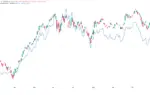
The immediate catalyst for Friday’s downward spiral in precious metals appears to have originated outside the metals complex itself, specifically within the technology sector. The Nasdaq fell 2.9% on Friday amid a wave of disappointing corporate earnings, mounting concerns over aggressive artificial intelligence spending, and corporate debt pressures. Concurrently, the broader S&P 500 retreated by 1.8%.
When equities suffer sharp, sudden losses, institutional investors and leveraged traders often face margin calls. To cover these obligations and raise immediate liquidity, market participants frequently sell their most liquid assets, regardless of their fundamental value. Analysts cited by Bloomberg and Reuters noted that Friday’s action featured classic hallmarks of forced liquidation in gold as traders scrambled for cash.
Historical precedent supports this dynamic. Similar liquidity-driven sell-offs occurred during the initial stages of the pandemic-induced market panic in March 2020, when gold dropped by roughly 3% across multiple sessions, and during the depths of the financial crisis in October 2008, when gold plunged more than 7%.
Once gold breached the psychological and technical threshold of $4,000 an ounce, the selling pressure accelerated rapidly. Automated computer-generated trading algorithms and pre-set stop-loss orders compounded the downward momentum, triggering a cascade of additional sell orders. Yet, as Maharrey emphasized, these liquidity-driven corrections are frequently temporary, a point underscored by gold’s swift rebound of more than $80 by Monday morning.
Prior to Friday’s tech-led rout, precious metals had already been contending with a hawkish pause from the Federal Reserve and growing market expectations for a potential December interest rate hike. Higher interest rates typically create headwinds for non-yielding assets like gold and silver. Furthermore, a spike in global oil prices linked to ongoing geopolitical tensions involving the Iran war added fresh fuel to persistent inflation anxieties.
What the Fed’s Rate Pause Means
The Federal Open Market Committee (FOMC) recently voted 10 to 2 to maintain the federal funds rate in a target range of 3.75% to 4%. The decision featured notable dissent, with Fed officials Lisa Cook and Beth Hammack casting votes in favor of a quarter-point rate increase.
In its accompanying policy statement, the central bank noted that inflation remains elevated and stressed the need for additional economic data before charting a definitive policy course. Federal Reserve Chairman Kevin Warsh refrained from offering explicit forward guidance regarding potential rate actions at the upcoming December meeting. Warsh remarked that he generally opposes forward guidance during ordinary economic conditions, though he acknowledges its utility during periods of acute financial crisis.
Alongside the rate decision, Warsh announced adjustments to the central bank’s operational calendar. While the FOMC will maintain its standard schedule of eight meetings per year, one session next year will be explicitly dedicated to long-term policy strategy rather than immediate rate adjustments. Looking ahead to 2028, the committee plans to institutionalize this approach by holding two dedicated strategy sessions alongside six rate-setting meetings.
The $40 Trillion Debt Challenge
The central bank’s cautious approach comes as inflation continues to outpace the Federal Reserve’s stated 2% target, a trend that has now persisted for 67 consecutive months. Recent data showed core Consumer Price Index (CPI) rising by 0.3% over the prior month.
This persistent inflationary pressure has drawn criticism from prominent market figures. DoubleLine Capital CEO Jeffrey Gundlach recently argued that the central bank should be actively raising interest rates, pointing to the 2-year Treasury yield sitting at 4.75% and the Fed’s own assessments highlighting underlying economic strength.
However, Maharrey contends that the U.S. central bank’s ability to aggressively hike interest rates is severely constrained by the nation’s staggering $40 trillion national debt. While higher interest rates are a traditional weapon against inflation, they simultaneously drive up borrowing costs for a government already burdened by historic debt levels.
In Maharrey’s view, the Federal Reserve is trapped in a difficult policy dilemma. It can choose to tighten monetary policy to combat inflation, or it can ease policy to protect borrowers, financial markets, and the broader economy. He anticipates that when faced with severe economic or financial stress, the central bank will ultimately pivot toward easier monetary conditions. Such a trajectory would likely necessitate renewed money creation, cement persistent inflation, and drive further depreciation of the U.S. dollar.
China’s Gold Buying Contrasts With U.S. Demand
Underpinning the global market are divergent regional demand trends highlighted in the latest data from the World Gold Council. Global gold demand for the third quarter totaled 1,369 tonnes, representing a modest 1% decline compared to the same period a year earlier. Total demand for the first three quarters of the year reached 3,881 tonnes, nearly matching the 3,884 tonnes recorded over the corresponding timeframe last year.
Measured in nominal value terms, third-quarter global demand surged 22% year over year to reach $188 billion, while year-to-date demand touched a record-shattering $566 billion. Central bank accumulation remained remarkably robust, and gold exchange-traded funds (ETFs) registered positive inflows across every major geographic region.
A stark contrast emerged, however, when examining physical bar and coin demand between China and the United States. Chinese demand for physical bars and coins rose 7% year over year in the third quarter to 79 tonnes. Year-to-date demand in China reached 393 tonnes, marking an 11% increase over the previous annual record set in 2013.
Total Chinese spending on physical gold reached $59 billion for the year-to-date period, eclipsing every full-year total recorded in the World Gold Council’s historical data series. Third-quarter demand value in China jumped 32% to $11 billion. In sharp contrast, U.S. bar and coin demand plummeted 40% year over year to just 8 tonnes, marking the weakest quarter for American retail bullion demand since the fourth quarter of 2019.
Maharrey’s Outlook for Gold and Silver
Looking ahead, Maharrey maintains a cautious near-term outlook, noting that he would not be surprised to see further consolidation or selling pressure before the market definitively bottoms. He suggested that gold could potentially test support around $3,500 an ounce, while silver hovers near its $50 technical support level, with some analysts unfazed by the prospect of a temporary dip below $45.
Despite these short-term downside risks, Maharrey views ongoing market corrections as strategic buying opportunities. He points out that the fundamental macroeconomic drivers powering the long-term bull market in precious metals—including unyielding national debt, mounting bond-market strains, entrenched inflation, and ongoing currency debasement—remain firmly intact.
Referencing a recent interview with SilverChartist.com founder Steve Penny, Maharrey highlighted projections that gold reaching $15,000 an ounce over the long term remains entirely plausible. Ultimately, Maharrey argues that while short-term price fluctuations are frequently dictated by liquidity events and trading pressures, the longer-term trajectory of precious metals will continue to be shaped by monetary policy and sovereign debt realities.