




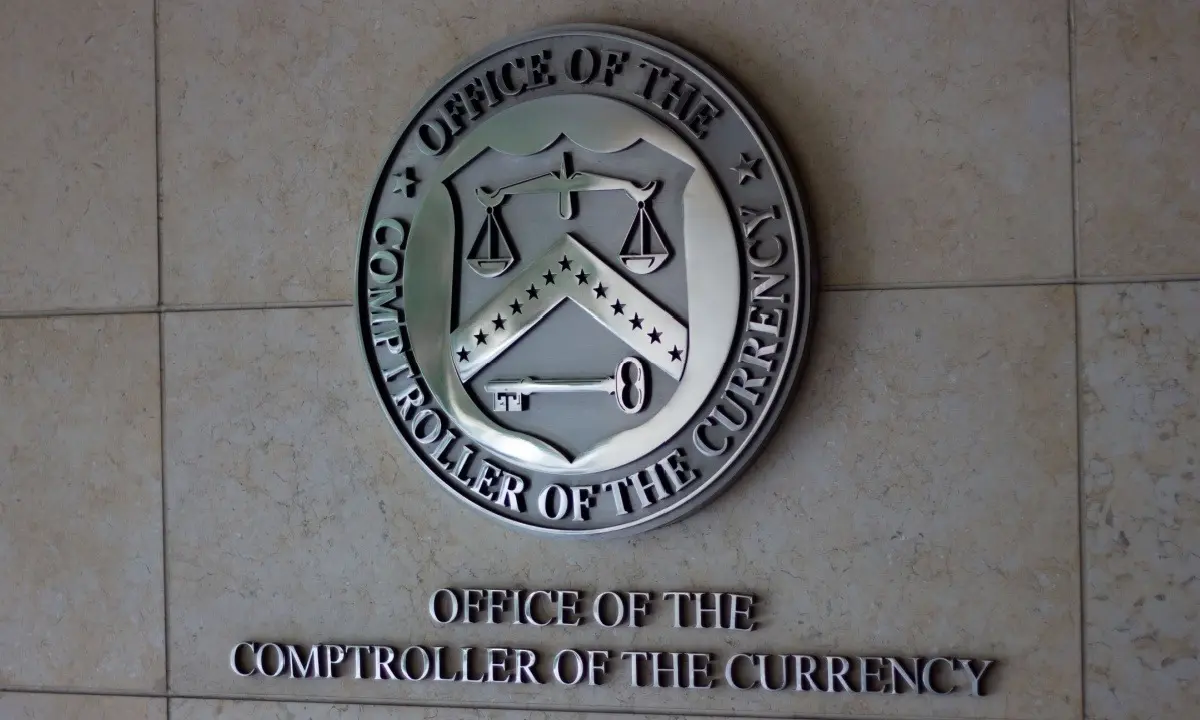
The Independent Community Bankers of America (ICBA) has filed a federal lawsuit against the Office of the Comptroller of the Currency (OCC), alleging that the federal regulator has unlawfully opened the door for cryptocurrency firms and fintech companies to enter the traditional banking system. According to the association, the regulator has permitted these novel entities to bypass the rigorous oversight, community obligations, and safety standards traditionally required of standard financial institutions.
The legal challenge, announced in a Friday press release from the association, centers on the OCC’s March 2 final rule relating to Interpretive Letter No. 1176. The ICBA’s lawsuit contends that both the final rule and the associated regulatory guidance attempt to grant the OCC sweeping new powers to charter national banks—powers that the association argues are not authorized by the National Bank Act. Consequently, the lawsuit asks a federal court to declare both the final rule and the interpretive letter unlawful.
At the heart of the dispute is the mechanism by which digital asset and fintech entities seek federal recognition. Rebeca Romero Rainey, president and CEO of the ICBA, sharply criticized the regulator’s approach in a public statement released alongside the legal filing.
"The OCC’s decision to allow companies to obtain national trust bank charters to conduct substantial non-fiduciary activities exceeds the authority Congress granted the agency," Romero Rainey said. She further emphasized that lawmakers never intended for the national trust charter to serve as a back door into the core financial system for crypto-related enterprises seeking the hard-earned credibility of a federal bank charter. According to the ICBA, these firms are attempting to avoid critical obligations such as the Community Reinvestment Act (CRA), rigorous consolidated supervision, strict capital and liquidity standards, and the safety net of Federal Deposit Insurance Corporation (FDIC) insurance that traditionally apply to insured depository institutions.
The OCC did not immediately reply to requests for comment regarding the federal lawsuit. However, when the agency originally issued the National Bank Chartering final rule, it defended its regulatory stance by asserting that the measure simply clarifies longstanding legal principles.
At the time, the OCC stated that the rule clarifies "the longstanding authority of national banks limited to the operations of trust companies and activities related thereto to engage in non-fiduciary activities in addition to their fiduciary activities." The agency maintained that the final rule would neither expand nor contract the OCC’s authority to charter a national bank, but would instead provide necessary legal stability.
The legal challenge has also drawn responses and commentary from other major industry stakeholders representing traditional banking interests. Representatives from the Bank Policy Institute (BPI) weighed in on the litigation, emphasizing that novel entities entering the financial ecosystem should be held to the exact same regulatory standards and scrutiny as established institutions.
"As we’ve said in comments filed on numerous national trust bank charter applications, BPI supports efforts to bring innovative new products and services into the regulated banking ecosystem, provided that the entities engaging in those activities are subject to the same rules and responsibilities as every other chartered institution engaging in the same activities," said Paige Pidano Paridon, executive vice president and co-head of regulatory affairs at BPI, in a statement responding to the litigation.
Paridon added that companies should not be granted trust charters unless they genuinely plan to limit their ongoing operations to traditional trust activities. She noted that if such entities truly want to engage in full-scale traditional banking activities, they should be required to seek full-service banking charters rather than leveraging specialized trust structures.
The ongoing controversy builds upon regulatory shifts that have unfolded over recent months. When the OCC published its amendment to the final rule on March 2, the agency explained that the update was designed to eliminate potential ambiguities created by earlier regulatory text. The regulator intended to align its supervisory framework more closely with the foundational tenets of the National Bank Act, ensuring a consistent approach across the federal banking system.
Historically, the OCC has supervised national trust banks for decades, with many of these specialized institutions performing non-fiduciary custody and safekeeping operations alongside their traditional fiduciary services. Industry observers have noted that by explicitly referencing the "operations of a trust company and activities related thereto," the contested rule confirms that trust-chartered national banks are not restricted solely to traditional fiduciary functions. This interpretation has provided what analysts describe as regulatory runway for an expanded scope of activities within the trust charter framework, ultimately setting the stage for the current legal showdown between community banking advocates and federal regulators.