



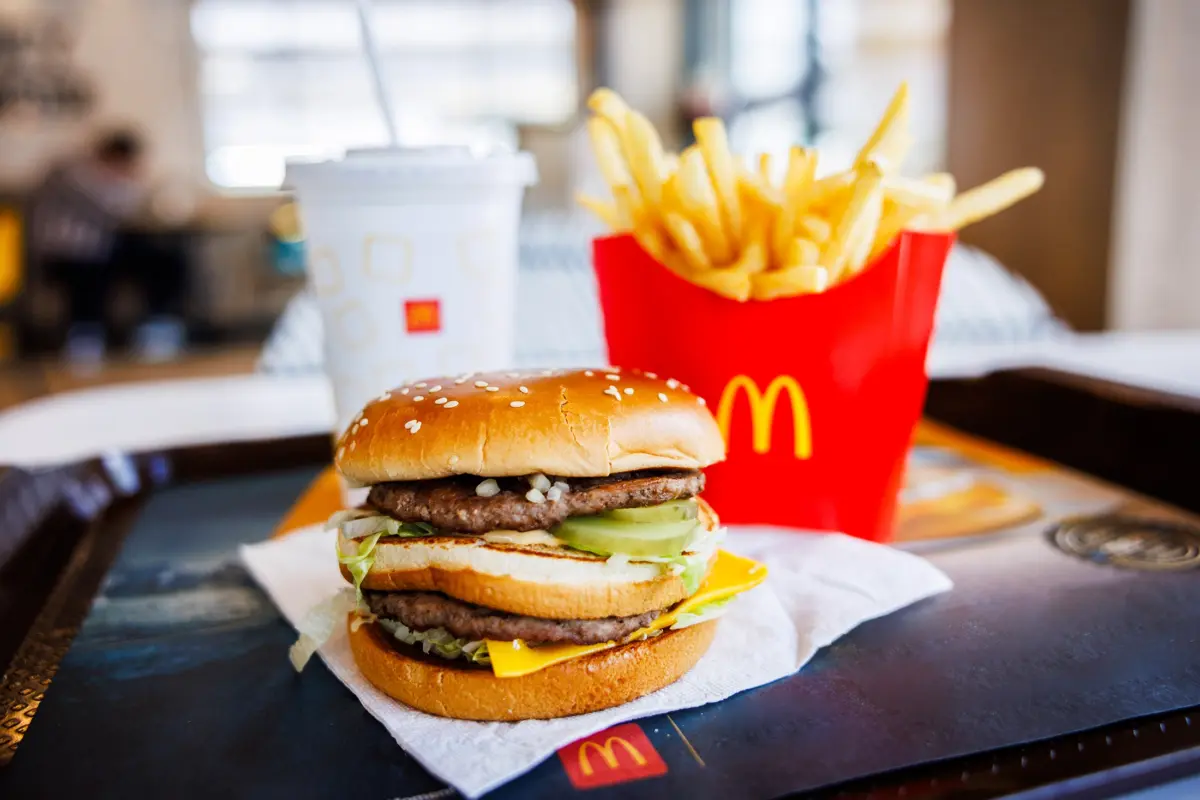
It is the largest training effort in company history, designed to win back customers who have cut back on fast food. Not every Big Mac is created equal, and McDonald’s is now asking its workers to taste bad Big Macs so they can tell the difference.
The fast-food giant is rolling out a massive coaching initiative that reaches all 2 million of its restaurant workers worldwide, focusing intensely on quality standards, management, and hospitality, according to Restaurant Business. This unprecedented undertaking forms a core component of McDonald’s broader "Next" strategy. Beyond revamping workforce education, this multi-faceted corporate blueprint also incorporates sweeping restaurant remodels, the integration of artificial intelligence across its store network, and the introduction of new menu items specifically aimed at appealing to GLP-1 users.
As part of this comprehensive training overhaul, employees are directly participating in experiential learning exercises that have them taste the difference between food made precisely to McDonald’s rigorous "gold standard" and food that falls short, representing what internal leadership describes as bronze at best.
"If you taste a Big Mac that’s made to the standard, you can tell the difference between that and one that’s not quite to standard," Chief People Officer Tiffanie Boyd told the outlet, emphasizing the hands-on nature of the curriculum. "It’s different if you actually experience that."
The strategic shift represents a significant pivot in how McDonald’s approaches quality control and store-level operations, particularly within the United States market. Domestically, the corporation has temporarily swapped a portion of its traditional, compliance-heavy restaurant inspections for dedicated coaching visits, a policy scheduled to run through next March. Rather than focusing purely on punitive measures or checklist-driven audits, these visits prioritize taste and food quality first, before expanding into shift management and hospitality best practices.
Company leadership firmly believes that investing directly in frontline workers and shifting toward a supportive coaching model will yield measurable financial results. Boyd points to internal performance data indicating a clear correlation between workplace culture and financial outcomes, noting that restaurants ranking in the top 25% for employee engagement and retention generate 15% more sales and achieve 20% more cash flow than their underperforming counterparts.
This multi-pronged push comes at a critical juncture for the fast-food industry at large, as major legacy chains navigate shifting consumer habits, economic pressures, and changing dietary trends among everyday diners. By focusing heavily on the foundational sensory experience of its most iconic menu items and empowering frontline staff through enhanced coaching and education, McDonald’s aims to reinforce consistency across its vast global footprint and reconnect with diners who have recently scaled back their fast-food spending.