




Clean energy startup Emvolon has announced the successful completion of a $22 million Series A funding round, a significant milestone that will enable the company to deploy its first commercial-scale modular chemical system. The newly secured capital is earmarked for converting waste methane into sustainable fuels designed specifically for use by hard-to-abate industrial sectors, marking a major step forward in the global energy transition.
Founded in 2021 as a technological spinout of the Massachusetts Institute of Technology (MIT), Emvolon has developed an innovative platform designed to tackle one of the most persistent challenges in environmental management: the release of potent greenhouse gases from distributed sources. The company’s technology captures waste gases directly at the source—including locations such as landfills, agricultural dairies, wastewater treatment facilities, and industrial gas flaring sites—and transforms them into valuable sustainable fuels and chemicals like methanol. These locally produced products are tailored for consumption by industries that face unique difficulties in decarbonizing their operations, such as maritime transportation, aviation, agriculture, energy, and waste management.
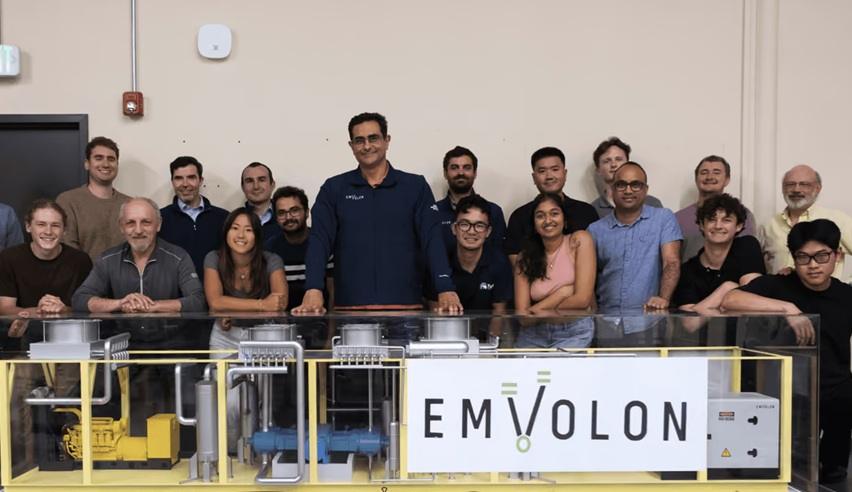
The core of Emvolon’s technical approach relies on repurposing commercially available equipment, notably internal combustion engines, to function as modular chemical reactors. By transforming existing, reliable mechanical hardware into adaptable chemical processing units, the company has created a system that can be installed directly on-site where waste gases are generated.
According to Emvolon, this distributed, prefabricated, and off-grid operational model provides distinct economic and logistical advantages over traditional gas-to-liquids processing infrastructure. Traditional facilities typically require massive capital investments and necessitate the long-distance transport of raw waste gases to centralized processing plants. By contrast, Emvolon’s modular systems eliminate the transport phase entirely, drastically lowering capital expenditure requirements and aligning with modern global energy trends that favor localized fuel and chemical production.
The announcement of the Series A funding follows important validation of the company’s technology through a pilot project conducted in partnership with renewable energy company Montauk Renewables. Building upon the success of that collaborative effort, Emvolon’s upcoming commercial deployment is set to significantly scale biomethanol production, with plans to reach an output of 50,000 tonnes annually across multiple operational sites through their joint venture. Following the rollout of this initial commercial system, Emvolon intends to expand its footprint by deploying additional modular units across North America and various international markets.

Emmanuel Kasseris, co-founder and Chief Executive Officer of Emvolon, emphasized the strategic importance of the funding and the company’s broader operational vision. He noted that Emvolon possesses a unique capability to expand available energy sources by deploying infrastructure directly on-site, establishing robust local fuel supply chains, and enhancing regional energy resilience. According to Kasseris, the newly secured capital provides the necessary resources to deploy the first commercial system, demonstrate the operational viability of the business model, and begin constructing the reliable fuel supply chains that hard-to-abate industries are actively seeking.
The $22 million Series A financing round drew participation from a diverse group of investors committed to climate technology and industrial decarbonization, including MassVentures, VX Ventures, and Wagner Carbon, among others.
Priya Yadav of MassVentures highlighted the transformative potential of the startup’s technology within the broader clean energy landscape. Yadav pointed out that Emvolon’s standardized, modular platform holds the capacity to fundamentally alter the economics associated with distributed clean fuel production. Furthermore, Yadav noted that the launch of this first commercial system represents a critical, foundational step toward scaling a repeatable and cost-competitive model across a wide array of upcoming projects. As the company prepares to roll out its technology commercially, the infusion of capital provides a clear runway to advance sustainable fuel production and meet growing industrial demand for low-carbon alternatives.